Impelix came to us to boost lead generation for their new AI-driven cybersecurity product, IMPACT. With a crowded market and risk-averse decision-makers, their sales team struggled to generate qualified leads through conferences and networking. We created several TAMs and deployed LinkedIn conversation ads with tailored messaging for different industries and seniority levels. The messaging was refined to highlight IMPACT’s unique value proposition. Results: 48 MQLs in Q4 with a CPMQL of $445.66, surpassing industry benchmarks. Adjustments to qualifying questions led to improved lead quality, a 8% click-to-open rate, and a 84.2% form completion rate.
Success Stories
15% increase in ad spend, 111% increase in LinkedIn visits
TigerConnect, a cloud-based clinical communication platform, faced challenges with low-volume search terms like "HIPAA texting" and struggled to generate qualified leads. To address this, we expanded their marketing strategy to LinkedIn and implemented account-based marketing (ABM), targeting specific job titles and healthcare roles like patient care and nursing. Testing content assets, we found that an eBook on communication challenges in clinical settings drove the most conversions. As a result, we saw a 31% increase in paid leads and a 111% rise in website visits from LinkedIn, all with only a 15% increase in ad spend.
Success Stories
100% MQL increase, 1 in 3 become customers
Giftbit approached us to enhance the performance of their LinkedIn campaigns. We tested a shift from a single-image ad with broad messaging to a conversation ad featuring a holiday-themed offer. Over a 15-day period, the incentive-driven campaign resulted in a 100% increase in MQLs, directly attributable to the targeted, ICP-specific holiday messaging. Of these, 33% advanced into sales opportunities. This success has set the stage for ongoing message testing and further optimization of Giftbit’s advertising strategy.
Budget Roadmap: B2B YouTube CPM/CPC Benchmarks and Forecasts
Budget Roadmap: B2B YouTube CPM/CPC Benchmarks and Forecasts
B2B teams rarely struggle to spend money on video. They struggle to defend YouTube advertising cost to Finance and connect it to pipeline, CAC, and payback. This guide is a finance-first roadmap for CMOs, Demand Gen, and Paid Social leaders: benchmark ranges* (CPV/CPM/CPC) by vertical, three budget scenarios with pacing, LTV:CAC guardrails, a simple calculator template, and practical scale rules with clear caveats.
*Asterisk means “directional public benchmark” sourced from third-party 2024–2025 summaries (LocaliQ, WebFX, Versa Creative, Strike Social) and/or platform guidance (YouTube). Validate in your account by format, geo, audience, and season.
How to model and forecast B2B YouTube advertising cost
If you need a plan Sales and Finance can back, treat YouTube like a forecastable input to your funnel, not a “let’s see what happens” channel. Here’s a 5-step method you can run in a spreadsheet in under an hour, then refine weekly with real performance.
Step 1: Map goal to pricing model
Pick the bidding model based on the job the campaign must do. This prevents the common failure mode: optimizing CPV while your real goal is qualified pipeline.
Awareness (reach/recall): CPM (in-stream/bumper). Great for message saturation when your creative is strong and your frequency is controlled.
Consideration (views): CPV for skippable in-stream. You are effectively buying attention at a known price per view.
Action (traffic/leads): CPC in in-feed (Discovery). Better when you need a click to an asset (demo page, webinar, case study).
Shorts: often CPM for reach; judge lift via view rate and downstream engaged-view conversions.
Worked example (goal → model): You want 500,000 targeted impressions for a new category narrative. If you model at a CPM of $8* (directional), budget ≈ (500,000 / 1,000) × $8 = $4,000. If the objective later shifts to site actions, swap the model to CPC and re-forecast clicks and leads instead of impressions.
Step 2: Pull conservative ranges*
Start with conservative public ranges*, then build a three-band forecast (low/median/high). Reference 2024–2025 sources and keep the asterisk on any public benchmark.
CPV: ~$0.01–$0.30*
CPM: ~$4–$10+*
CPC: ~$0.25–$1.50*
Worked example (choose your bands): Suppose you are planning skippable in-stream and you pick CPV = $0.05* (low), $0.10* (high), and midpoint $0.075* (median). Your model now has a base case plus realistic downside and upside bands that Finance can challenge without breaking the whole plan.
External context: LocaliQ (2025), WebFX (2024), and Versa Creative (2025) summarize typical CPV/CPC/CPM ranges*. Strike Social (2024) details how format and bidding influence cost.
Step 3: Convert cost to volume and funnel
Finance does not fund CPV. They fund outcomes. Convert your cost bands into (1) volume (views/impressions/clicks) and (2) funnel progression using your own CRM rates for SQL, opportunity creation, and wins.
Worked example (given ranges*): $15,000 at $0.05–$0.10 CPV* → 150,000–300,000 views.
If click-through to site is 1.5–3.0%* → clicks ≈ 150,000 × 1.5% to 300,000 × 3.0% → 2,250–9,000 clicks.
If lead rate (site conversion to lead) is 2–5% → leads ≈ 2,250 × 2% to 9,000 × 5% → 45–450 leads.
Then apply your CRM: SQL% and opp% (your numbers, not internet benchmarks). Example formula: SQLs = Leads × SQL%; Opps = SQLs × Opp%.
Note: Only the 1.5–3.0% click-through and CPV range are marked with * as public directional inputs. Use your own historical site conversion rates and CRM stage rates wherever possible.
Step 4: Add LTV:CAC and payback
Now turn volume into a business case. Two guardrails keep you honest across creative tests and audience expansion:
LTV:CAC ≥ 3:1 (example guardrail)
Payback ≤ 12 months (example guardrail)
Worked example (guardrails in practice): Hypothetically, if your gross-margin LTV per customer is $90,000 and you require LTV:CAC ≥ 3:1, your maximum allowable CAC is $30,000. If a tighter suitability setting raises CPM and CPV but increases SQL rate and win rate enough to keep CAC under $30,000 (and payback under 12 months), it is still a “win” even though top-of-funnel costs went up.
In other words: higher CPM from stricter brand safety can be rational when it buys better revenue quality. The model tells you whether it did.
If you need help building Finance-grade assumptions and cohort-based payback, Abe offers financial modeling services that connect media inputs to revenue outputs.
Step 5: Pacing and scale rules
Pacing prevents you from “learning” too slowly early in the month and panic-spending late in the month. Scale rules prevent you from doubling down on a vanity win.
Weekly pacing example: 20/30/30/20 across the month (Week 1 / Week 2 / Week 3 / Week 4).
Scale rule: increase budget +20–30% only after winners hit efficiency and revenue quality targets for two consecutive weeks.
Worked example (pacing math): If monthly spend is $15,000 and you pace 20/30/30/20, weekly budgets are approximately $3,000 / $4,500 / $4,500 / $3,000. If Week 2 and Week 3 both meet your CAC and payback guardrails, you can raise Week 4 by +20% (to $3,600) on the proven segment while holding everything else flat.
What drives YouTube cost in B2B (and how to control it)
YouTube is an auction. Your effective CPM/CPV/CPC is what it takes to win the audience you want, with the creative you brought, under the suitability constraints you set, during the season you chose. The levers below are the ones you can actually control.
Format mix: Non-skippable and bumper formats typically buy on CPM and can be pricier per 1,000 impressions*; use them deliberately for launches and message recall, then watch frequency.
Audience breadth: Broader usually lowers CPV but can dilute lead quality. Narrower can raise CPM/CPV and still improve CAC if SQL rate lifts.
Creative: The hook and watch time influence view rate and cost efficiency. Better creative often lowers effective cost because the system rewards engagement.
Seasonality: Q4 tends to spike competition (and costs), especially for premium audiences.
Suitability and brand safety: “Limited inventory” settings can raise CPM by reducing supply; set policies intentionally and measure quality impact, not just cost impact.
If you are splitting budget across channels, align the YouTube forecast with your other demand gen video plans and paid distribution. For example, you may compare YouTube prospecting against a linkedin advertising company for high-intent capture, then measure blended CAC and payback across both.
Benchmarks & ranges* (with caveats by industry)
These benchmarks are directional, averaged from public 2024–2025 sources and will vary by audience, geo, format, and seasonality. Use them to create a first-pass model, then replace them with in-account reality as quickly as possible.
Always validate in-account against your formats, geos, and season. If your actual CPM is above range*, that is not automatically “bad.” The only bad outcome is a CAC and payback that miss your guardrails.
Budget scenarios & pacing (worked examples)
These scenarios are intentionally simple so you can translate them into your own plan. The goal is not perfect forecasting. The goal is a budget roadmap you can defend, monitor, and adjust.
Step 1: Map goal to pricing model
$5k/month (learning-focused): At CPV $0.05–$0.10* expect ~50k–100k views. Pace 25/25/25/25. Use one or two formats, optimize for view rate and engaged-view conversions, and keep targeting simple so you can actually read signal.
Weekly pacing example: $1,250 per week for 4 weeks. If Week 1 creative is weak, you fix creative before you “fix” targeting.
Step 2: Pull conservative ranges*
$15k/month (balanced test plan): At CPM $6–$10* expect ~1.5–2.5M impressions. Mix in in-feed for site traffic, introduce audience splits, and swap creative weekly so you can separate audience effects from creative effects.
$50k/month (full-funnel): Run bumper + in-stream + in-feed/Shorts. Use brand-safety defaults, rotate winners weekly, and import offline conversions so the system learns what “good” looks like beyond clicks.
Practical split (example allocation, not a benchmark): You might assign budget across awareness and action, then hold a reserve for Week 3–4 scaling only if CAC and payback are on track.
Then set rules that prevent “scale because CPV looks good.” You scale because unit economics improved or because revenue quality improved at stable frequency.
If you are running multiple mid-funnel capture motions (for example, gated assets and lead gen), align your conversion definitions across channels. Teams often benchmark against linkedin document ads or linkedin conversation ads and conclude YouTube “doesn’t convert.” That is usually a measurement design problem, not a channel truth.
Calculator Template (module)
This is a simple template you can put into a spreadsheet and turn into a three-band (low/median/high) forecast. Keep a separate tab per industry segment if you sell to multiple ICPs.
Instruction: Build a 3-band model (low/median/high) using the table ranges*. For each band, only change the benchmark inputs (CPV*/CPM*/CPC*/CTR*) and keep your first-party conversion assumptions constant until you have enough data to justify a change.
Measurement & reporting
A clean reporting cadence is what turns “video ads cost” into a predictable growth lever.
Creative notes: which hooks and offers are earning attention
Brand-safety incidents: any suitability constraints causing delivery issues
Pacing: are you tracking to the month without back-loading spend
Monthly read (optimize the business case):
SQL%, opps, wins (as they mature)
CAC/payback, LTV:CAC vs your guardrails
Blended impact across channels if you run multi-touch demand gen video
Common misreads to avoid:
“CPV is down, so performance is up.” CPV can fall because you broadened inventory into lower intent.
“CPC is high, so YouTube is expensive.” CPC is often the wrong success metric if YouTube’s role is education and assisted conversion.
“Nothing converted, so YouTube doesn’t work.” If you are not importing offline conversions and you have a longer sales cycle, you are flying blind.
FAQ
How much should we budget to start?
Start small but signal-aware (e.g., $5k–$15k/month) and plan 4–6 weeks for a clean read. Platforms allow small daily budgets (for example, $10/day*) to learn, but B2B signal usually needs higher weekly pacing to read quality. Increase only when CAC/payback improves.
Which metric matters most?
Use LTV:CAC and payback as the north star, not CPV alone. Efficiency without revenue quality is a false win.
Why do our CPMs spike?
Tight suitability, peak seasons, and narrow audiences push CPM up. Ensure watchable creative and consider broader content signals before assuming the solution is “bid more.”
What’s a good view rate?
Public ranges show ~25–57%* for many categories; judge creatives comparatively inside your account and by stage. The best creative in your account is your real benchmark.
How do we defend cost to Finance?
Present ranges*, show pipeline math, and commit to scale rules that protect CAC and payback. Finance does not need certainty. They need controlled risk and a decision framework.
Scale Forecasting With Abe
Abe blends first-party data, financial modeling, and creative that earns attention. Our Customer Generation™ methodology turns ranges* into a budget you can defend, then proves impact in SQLs, opportunities, CAC, and payback.
Finance-first plans: low/median/high bands tied to LTV:CAC.
Smarter pacing: weekly reads and clear scale/stop rules.
Closed-loop reporting: offline conversions and cohort views.
Ready to model, launch, and scale with confidence? Talk to a partner that treats YouTube like a revenue channel.
For B2B leaders scaling advertising on YouTube, the fear is rational: one bad adjacency can undo years of trust, trigger executive backlash, and stall future investment in the channel. The goal is not paranoia. It’s repeatable controls. This guide walks through how a disciplined YouTube advertising agency approaches YouTube brand safety, YouTube placement controls, and YouTube content exclusions so you can scale without putting your brand or pipeline at risk.
How to set up brand safety and placement controls on YouTube
Here’s a practical roadmap you can follow from “we should try YouTube” to “this is a scalable channel” without playing placement roulette:
Step 1: Define brand risk tolerance and non-negotiables. Document what “unsafe” means for your company (legal, comms, HR, exec team), plus what’s merely “not our vibe.”
Step 2: Select YouTube inventory types and baseline exclusions. Decide whether Expanded, Standard, or Limited inventory fits each campaign’s risk profile, then set initial content category and label exclusions.
Step 3: Configure keyword, topic, and placement controls. Build negative keyword lists, topic exclusions, and channel/video placement exclusions (or allow lists) tied to your policy, not gut feel.
Step 4: Create an escalation and monitoring process. Assign owners, define what counts as an incident, and set a cadence for reviewing placement reports and blocked inventory.
Step 5: Review business impact with RevOps and finance. Track how controls affect reach, CPM, cost per qualified lead, and cost per opportunity, then adjust guardrails without choking delivery.
Everything below expands each lever, with an emphasis on “safe enough to scale,” not “so strict nothing runs.”
Why B2B brand safety on YouTube behaves differently
YouTube is not LinkedIn, not search, and not a neat little publisher bundle. It’s an open platform at global scale, driven by user-generated content and creators with wildly different tones. Even within a single channel, a video can shift from professional to polarizing mid-stream.
For B2B, that volatility matters more because:
Regulated and reputation-sensitive industries have less room for error. Think fintech, healthcare IT, cybersecurity, HR tech, and anything selling into government or enterprise procurement.
Niche audiences amplify context. When your ICP is small, the wrong adjacency can get noticed internally and externally fast.
Long buying cycles extend the “memory” of a bad impression. A negative association can follow a prospect across multiple touches: video, retargeting, email, SDR outreach, and meetings.
The right mental model is brand suitability, not blanket avoidance. Suitability means defining what context is appropriate for your ICP and values, then using YouTube brand safety controls to enforce that standard. Google’s framing of safety and suitability, aligned with GARM brand suitability concepts, is a useful starting point (see Think with Google’s example: How BT put brand safety and suitability first).
Core objectives and use cases for B2B brand safety controls
Sophisticated YouTube advertisers invest in placement and safety controls for three reasons that have nothing to do with “playing it safe” and everything to do with scaling responsibly:
Protect brand equity and employer brand. Your ads are a public statement about who you are and what you tolerate.
Make YouTube defensible in CFO and board conversations. A channel that can’t explain its controls gets its budget questioned first.
Enable confident budget increases. The more you spend, the more impressions you buy. Controls reduce “unknown unknowns.”
Typical B2B use cases where brand suitability controls become non-negotiable:
Post-funding category creation: you’re suddenly visible, competitors are watching, and leadership is sensitive to PR risk.
Regulated software: compliance expectations push you toward conservative inventory and tighter exclusions.
Cybersecurity: you can’t look careless about scams, misinformation, or “get-rich-quick” ecosystems that erode trust.
HR tech and people platforms: adjacency near harassment, hate speech, or exploitative content can be reputationally disastrous.
Top of funnel: risk posture when just building awareness
TOFU campaigns usually need broader reach, but still need guardrails. For most B2B brands, that means Standard or Limited inventory, plus exclusions that reduce sensational adjacency. Keep it simple: avoid violent or shocking content, misinformation-adjacent themes, and conspiracy ecosystems.
Some “news” and commentary can be acceptable if it matches your audience and values, but controversial social issues, political extremism, and scammy content clusters are almost always a net-negative for B2B awareness.
Middle of funnel: staying credible while educating buyers
MOFU creative (product explainers, case studies, webinars, POV content) benefits from relevant context: business, tech, SaaS, leadership, and industry education. This is where topic targeting can help, but it’s also where credibility becomes the point of the ad. Exclude clusters that undermine trust (scams, “overnight success,” manipulative finance content, or low-quality hype channels) even if they’re cheap inventory.
At this stage, a professional environment often matters more than raw reach.
Bottom of funnel: strict controls near high-intent offers
BOFU efforts (demos, pricing, trials, “talk to sales”) deserve the strictest posture: Limited inventory, conservative content exclusions, and potentially allow lists for known, high-quality placements. This is where one off-brand adjacency can show up in screenshots, Slack threads, and deal rooms.
Understanding YouTube’s brand safety toolkit
YouTube brand safety is not one setting. It’s a stack of levers that operate at different levels of granularity. A practitioner-friendly way to think about it:
Big levers that change scale fast (campaign-level): YouTube inventory types, digital content labels, sensitive content categories, and broader content exclusions for video campaigns.
Sharper levers for context precision (ad group/content-level): topic exclusions, keyword-based exclusions, and placement-level controls (channels/videos).
Operational layer: monitoring cadence, blocklist governance, escalation, and reporting.
Google’s official documentation is the source of truth for how content exclusions for video campaigns work and how to set them (see Google Ads Help). Treat any platform UI details as subject to change and verify before publishing internal SOPs.
Inventory types and what they mean for B2B
Inventory types are your first, most consequential suitability decision. They influence how much sensitive content you are willing to tolerate in exchange for reach.
Expanded inventory: Widest reach. More likely to include edgy, mature, or borderline-sensitive contexts. In B2B, reserve for controlled experiments or niche cases where scale is impossible otherwise.
Standard inventory: Default for many brands. Often the best starting point for B2B demand gen because it balances reach and risk.
Limited inventory: Most conservative. Useful for regulated brands, executive-visible launches, and BOFU campaigns. Tradeoff: reduced available inventory and potential CPM pressure.
For a deeper explainer of how Expanded, Standard, and Limited affect reach and safety tradeoffs, see Strike Social’s overview: Understanding YouTube Inventory Types.
If your leadership is nervous about advertising on YouTube, you can start with Limited to build confidence, then test Standard vs Limited with matched audiences and creative once you’ve proven controls and monitoring work.
Channel note: YouTube is rarely the only place your brand shows up. If you’re running multi-channel demand gen, align your suitability posture across platforms so your standards don’t contradict each other (for example, how you treat professional context on YouTube vs your LinkedIn advertising campaigns).
Content categories, sensitive themes, and digital content labels
Content exclusions typically combine three concept families:
Digital content labels: DL-G, DL-PG, DL-T, DL-MA, plus “Not yet labeled.” These labels help classify maturity and suitability.
Sensitive content categories: Categories like tragedy and conflict, sensitive social issues, mature content, and other themes you may want to avoid depending on brand posture.
Other content exclusions: Additional campaign-level content exclusions available in Google Ads video campaign settings.
A practical B2B approach: exclude what’s clearly misaligned (adult, hate, scams), be thoughtful with “news” adjacency, and avoid strangling delivery with overly aggressive exclusions. Many B2B brands can allow some commentary content if it’s relevant to the ICP, but they still exclude sensitive themes that predict controversy.
Third-party verification and brand safety partners
Third-party verification (IAS, DoubleVerify, and similar tools) can add monitoring and independent reporting, which matters when you have large budgets, global campaigns, or strict corporate policies. Treat them as an additional layer, not a substitute for correct Google Ads brand safety settings.
If you already use third-party verification in other paid channels, keep your definitions consistent. Otherwise, you end up with “safe” meaning five different things in five dashboards.
Applying keyword, topic, and placement exclusions
The tactical controls that prevent most “how did we end up there?” incidents are simple: negative keyword lists, topic exclusions, and placement exclusions. The mistake is treating exclusions like a scavenger hunt. Build them from your documented risk policy and ICP expectations, then iterate based on placement reports.
Keyword and topic exclusions for B2B advertisers
Start your negative keyword lists with obviously off-brand clusters, then add industry-specific patterns you know attract low-quality ecosystems.
Examples of “baseline” negative keyword themes (adapt to your policy):
Violence, gore, self-harm
Adult content
Political extremism, hate speech, or inflammatory identity content
Scams and fraud
Conspiracy and misinformation-adjacent phrasing
Examples of “B2B-specific” additions you often end up needing:
“hack”, “crack”, “torrent” (common in software piracy content ecosystems)
“giveaway”, “free money”, “no credit check” (varies by vertical)
Use topic exclusions to avoid entire clusters (tragedy, gossip, certain gaming subgenres) without trying to enumerate every keyword variant. Topic exclusions are especially helpful when a theme is consistently misaligned with your employer brand or buyer expectations.
Placement exclusions, blocklists, and allow lists
Placement controls are where brand safety becomes operational, not theoretical:
Placement exclusions (blocklists): Use placement reports to identify problematic channels or videos, then add them to a shared exclusion list that’s applied across campaigns.
Allow lists: Curated sets of vetted channels. Useful for high-stakes BOFU offers, regulated brands, or situations where leadership wants near-zero ambiguity.
A workable pattern for most B2B teams: start with Standard inventory plus baseline exclusions, then refine with blocklists as you learn. For regulated brands, flip it: start with allow lists and expand cautiously.
How to build a safe but scalable campaign structure
The fastest way to create confusion is mixing different risk postures inside the same campaign. The cleanest approach is mapping safety settings to funnel stages and campaign intent, then making those settings repeatable defaults.
Step 1, Define your risk profile and non-negotiables
Before you touch Google Ads settings, write down your suitability guardrails with the stakeholders who will hold you accountable later (marketing leadership, legal, comms, HR, and sometimes finance).
Use questions like:
Which types of content can we never appear next to?
Are we comfortable near news or opinion content? If yes, what kind?
What topics are uniquely sensitive in our industry?
What would create an internal incident if a prospect or employee screenshotted it?
This becomes the north star for inventory, exclusions, and monitoring.
Step 2, Map inventory and exclusions to funnel stages
Assign inventory types and baseline exclusions by campaign type, then make it a rule, not a debate. A simple framework:
Expanded: rare, experimental, and only when you can tolerate risk and need incremental scale.
Standard: the default for most B2B demand programs.
Limited: high-stakes campaigns, regulated industries, BOFU, or when exec confidence is the constraint.
Repeatability matters. If every campaign is configured from scratch, you will eventually miss something.
Step 3, Configure settings and test placements in Google Ads
Exact UI labels change, so verify against the latest Google Ads documentation before finalizing SOPs. That said, an experienced practitioner can typically find the key controls in these paths:
Campaign-level suitability: Google Ads → Campaigns → select your Video campaign → Settings → find Content exclusions / Inventory type options and apply your defaults.
Keyword and topic exclusions: Google Ads → Campaigns → Audiences, keywords, and content → Content → add Exclusions (topics) and negative keyword lists where applicable.
Shared placement blocklists: Google Ads → Tools & Settings → Shared library → Placement exclusion lists (create and apply across campaigns).
Then run a low-budget test campaign for a short window and review placement reports before scaling. You’re not only checking performance. You’re checking whether your guardrails behave as expected.
Step 4, Early performance and safety monitoring
The first 1–3 weeks are where most teams either build confidence or panic. Monitor both suitability signals and performance signals:
Blocked or limited inventory spikes: a sign your exclusions may be too restrictive for the audience/creative combination.
Cost shifts after tightening exclusions: CPM and CPV may rise when you remove cheaper inventory.
Performance drops: sometimes caused by over-filtering; sometimes caused by losing the contexts where your message resonates.
Adjust iteratively. If you tighten everything at once, you won’t know which control caused the tradeoff.
How to measure and report on brand safety performance
Brand safety is not just “we didn’t get yelled at.” The real goal is proving you can buy safe reach efficiently and still drive pipeline. Define a small set of KPIs that connect platform controls to business outcomes.
Awareness, suitability, and context metrics
Track metrics that reflect where your ads actually ran and how controlled that environment was:
Share of impressions by inventory type (Standard vs Limited)
Share of impressions on vetted placements (if using allow lists or curated bundles)
Count of excluded placements added per week (a proxy for how much refinement is happening)
Blocked impressions or “limited by exclusions” signals (where available in platform reporting)
Pair those with awareness and engagement signals that reflect creative effectiveness in the environments you’re buying: view rate, watch time, engaged views, and any brand lift study outputs if you run them.
Impact on reach, efficiency, and pipeline
To evaluate whether controls are too strict or too loose, watch for:
Reach and frequency: did you choke delivery to the point where the channel can’t do its job?
Efficiency: CPM, cost per engaged view, cost per qualified lead, and cost per opportunity
Pipeline quality: do “safer” environments correlate with better downstream conversion or deal velocity?
When possible, run side-by-side tests (for example, Standard vs Limited inventory) with matched creative and audiences. Interpret the tradeoff in terms of LTV:CAC and pipeline outcomes, not CPM alone.
Reporting brand safety to executives
Executives do not want a 40-tab spreadsheet of exclusions. They want confidence. A simple slide structure works:
Current settings: inventory type, key exclusions, whether allow lists are used
Incidents or escalations: what happened (if anything), what you changed, and why it won’t repeat
Key metrics: suitability/context metrics plus performance and pipeline
Next experiments: what you’ll test to improve scale without increasing risk
This keeps the conversation grounded: brand protection and revenue are managed together.
YouTube brand safety pre-launch checklist
Use this pre-launch checklist before pushing any new YouTube campaign live. It’s designed to catch the common “we forgot that setting” failures.
Risk profile confirmed with stakeholders (marketing, legal, comms, HR).
Non-negotiable content adjacency list documented and accessible to the team.
Inventory type selected per funnel stage (TOFU/MOFU/BOFU) and noted in the campaign brief.
Digital content label exclusions applied (per your policy).
Sensitive content category exclusions applied (per your policy).
Baseline content exclusions for video campaigns applied at the campaign level.
Topic exclusions applied for chronic misalignment categories.
Initial placement exclusions in place (known bad channels/videos removed).
Allow list created and applied for strict campaigns (if required).
Shared placement blocklist structure defined (who can add, review cadence, naming conventions).
Low-budget test run launched (limited spend, short window) before scaling.
Placement report reviewed from the test run and blocklist updated.
Escalation plan defined (what counts as an incident, who’s notified, response time).
Measurement views created: inventory type distribution, placement reporting, and pipeline tie-out plan with RevOps.
FAQ: Brand safety for advertising on YouTube
Note: Platform settings and definitions can change. Verify policy details, UI paths, and any reporting fields against the latest Google Ads and YouTube documentation before publishing or operationalizing.
What is YouTube brand safety vs brand suitability?
Brand safety focuses on avoiding clearly unsafe content (illegal, hateful, or otherwise high-risk). Brand suitability is more nuanced: it’s about the contexts that are acceptable for your specific brand and ICP. Think with Google’s guidance on safety and suitability, aligned with GARM-style suitability thinking, is a solid foundation (thinkwithgoogle.com).
How does YouTube protect brand safety for advertisers?
YouTube combines automated systems, human review, and advertiser controls to reduce the likelihood of ads appearing next to unsafe content. Advertisers can further tighten exposure using inventory types, excluded content categories, and placement controls in Google Ads. For a platform-level overview, reference Think with Google’s brand safety and suitability framework (thinkwithgoogle.com).
What are YouTube inventory types?
Inventory types (Expanded, Standard, Limited) let you decide how much sensitive content your ads can run against. Expanded allows the widest range, Standard is the default for many brands, and Limited avoids most sensitive themes but can restrict scale. Confirm the latest definitions in Google Ads Help (support.google.com).
What are content exclusions in YouTube Video campaigns?
Content exclusions let you opt out of certain content types, digital content labels, and sensitive categories (for example, tragedy, sensitive social issues, or mature audiences). They are configured at the campaign level in Google Ads and prevent matching to excluded inventory. See Google Ads Help for “About content exclusions for Video campaigns” and setup steps (support.google.com).
Can you fully block certain topics or channels when advertising on YouTube?
You can exclude topics and placements (channels/videos) and maintain blocklists or allow lists, but “fully block” depends on how you define the topic and how content is categorized. The practical approach is layering: inventory selection plus content exclusions plus topic/keyword exclusions plus placement governance.
How quickly should delivery stabilize after tightening exclusions?
Expect some short-term volatility after major changes, especially if you move from Standard to Limited inventory or add broad topic exclusions. A pragmatic approach is to make one meaningful change at a time, monitor placement reports and key KPIs for 1–3 weeks, and adjust iteratively. For official guidance on exclusions and campaign configuration, verify current recommendations in Google Ads Help (support.google.com).
Run safer YouTube advertising with Abe
Abe treats brand safety and revenue as a single problem, not a tradeoff. We help B2B teams define risk tolerance, configure YouTube’s brand suitability controls, and continuously measure impact on both brand protection and pipeline as programs scale.
Our Customer Generation™ methodology, first-party data mindset, and experience managing $120M+ in annual ad spend across social channels means brand safety is built into the operating system, not bolted on after someone panics.
GUIDES
4 minute read
Brand Safety and Placement Controls for B2B on YouTube
The real fear is not testing TikTok. It’s picking the wrong TikTok ads agency and burning budget on views that never turn into pipeline. This guide gives you a practical selection playbook with a TikTok-specific RFP kit, a revenue-tied scoring rubric, and a scorecard you can use to defend the decision to finance and sales. Abe brings the same rigor we use across $120M+ in annual ad spend and 150+ brands, so your TikTok test holds up under scrutiny.
How to select a TikTok ads agency for B2B (step by step)
This is the repeatable process: go from “we should test TikTok” to “we picked a partner and scoped a pilot” without relying on vibes. The goal is not just finding a creative shop. It’s selecting an accountable TikTok marketing partner who can plug TikTok into Customer Generation™ and the way your business actually makes money, including LTV:CAC expectations and payback guardrails.
Suggested selection funnel:
Step 1, Align on goals, ICP, and TikTok’s role in your funnel
Before you evaluate agencies, decide what TikTok is supposed to do in your mix. For most B2B teams, TikTok is not replacing high-intent search. It’s typically used to reach specific ICPs efficiently, create familiarity, and warm accounts so other channels convert better.
Write down revenue goals, guardrails, and decision-makers upfront. If finance and sales will have to defend this spend later, involve them now.
Which markets and ICP tiers will TikTok focus on?
What share of paid social budget is on the table for a 3–6 month test?
How will success be measured beyond last-click CPL? (Examples: assisted pipeline, influenced opportunities, on-site engagement quality, account-level lift, incrementality tests.)
What are your guardrails? (Target LTV:CAC, payback expectations, minimum lead quality thresholds.)
Who must sign off? (CMO, finance, sales leadership, RevOps, legal/compliance.)
Step 2, Decide the scope you actually need from a TikTok ad agency
“Agency” can mean anything from a media buyer with access to Ads Manager to a full system that produces TikTok-native creative and connects performance to pipeline. Decide whether you need a full-funnel partner or a narrower execution shop.
Core scope components to define:
Strategy and experimentation plan (testing roadmap, hypotheses, learning agenda)
Media buying and daily optimization (bidding, budgeting, targeting, placements)
UGC and creator management (briefs, sourcing, contracts, usage rights)
Editing and post-production (hook testing, cutdowns, captioning, iterations)
Analytics and attribution (pixel, Events API, offline conversions, UTMs, dashboards)
Cross-channel coordination (retargeting, sequencing, and creative alignment)
Use a simple decision grid internally: what your team owns (messaging, approvals, CRM governance), what the agency owns (TikTok-native creative systems, optimization, reporting), and what is shared (landing pages, offers, measurement definitions). If you already run coordinated programs across LinkedIn and Meta, make sure TikTok does not become a silo. This is also where it helps to align with your existing LinkedIn advertising agency support, your Meta advertising agency motion, and any supporting distribution you run through a Twitter advertising agency or a YouTube advertising agency.
Step 3, Build your longlist and shortlist
Start with places where proof is easiest to validate: the TikTok Marketing Partners directory (including the badged Agency category), peer recommendations, and partners who already know your business. A TikTok badge can be a helpful signal of platform experience, but it is not a guarantee of fit for complex B2B.
MediaPost notes TikTok added an “Agency” category to its Marketing Partners Program, positioning “badged TikTok Agency Partners” as agencies with a track record on the platform (MediaPost, 2023).
Quick disqualifiers for your longlist:
No clear TikTok examples (even adjacent to your category)
Pure DTC or ecommerce focus with no B2B motion fluency
No plan for first-party data and CRM-based measurement
Vague ownership of ad accounts, pixels, or creative usage rights
Cut to a shortlist of 3–5 agencies before issuing a full RFP. More than that and you create work without improving decision quality.
Step 4, Run a structured RFP and pitch process with clear timelines
Run the process like you would any other revenue-critical vendor selection. Clear milestones reduce bias and make it easier to compare answers across agencies.
RFP draft and internal approval: include scope, goals, budget range, tech stack, constraints
Distribution date: send to the same shortlist on the same day
Q&A window: keep a shared Q&A doc so all agencies see the same answers
Submission deadline: commonly 1–2 weeks after release, depending on complexity
Pitch meetings: commonly 60–90 minutes each, over 1–2 weeks
Final decision: after scoring and reference checks
Keep comparisons fair by sharing the same inputs with every agency: budgets, ICP, examples of past creative, performance history (good and bad), and your current stack (analytics, CRM, attribution tooling). If agencies are “guessing” what you want, you are not selecting the best partner. You are selecting the best guesser.
Step 5, Score agencies against revenue-focused criteria
Make the decision with a rubric, not gut feel. TikTok can look great in a deck because the top-of-funnel metrics are often cheap. Your rubric should force a clear answer to the harder question: can this agency translate TikTok reach into pipeline contribution in a way finance and sales will accept?
Use categories that reflect revenue impact, not presentation polish: TikTok expertise, UGC and creative engine, brand safety, measurement, B2B alignment, team fit, and commercials. If you want a ready-to-use worksheet you can share with stakeholders, request the downloadable TikTok agency RFP & scorecard through our TikTok advertising agency page and use it to standardize scoring across reviewers.
Step 6, Select your partner and design a low-risk pilot
Pick the winner based on total score and qualitative fit, then contain risk with a defined pilot. Avoid open-ended engagements where “learning” becomes a substitute for performance.
What a smart pilot looks like:
Time-boxed: 3–6 months
Clear spend range: enough budget to learn, not enough to create career risk
Specific objectives: examples include warming ICP accounts, increasing qualified registrations, improving retargeting efficiency in other channels
Pre-agreed success metrics: tied to pipeline contribution and LTV:CAC expectations, not just CTR or view-through rate
Include contract details in the RFP so negotiation is not a surprise: who owns ad accounts and creative, notice periods, data access, and how you handle creator usage rights and whitelisting.
Why B2B TikTok agency selection goes wrong
Smart teams still hire the wrong TikTok partner because they assume TikTok behaves like LinkedIn and search. It does not. Targeting can be looser, creative demands are heavier, and attribution is noisier. That means the agency’s operating system matters more than the agency’s pitch.
Mistake 1, Chasing followers and views over revenue
Some agencies sell virality: followers, views, and “we got you on trend” energy. In B2B, that can look like a flashy, trend-chasing feed that never sends qualified traffic to webinars, product pages, demo flows, or content that sales actually uses.
The impact is predictable: leadership loses trust in the channel, future tests get blocked, and your LTV:CAC looks worse because TikTok spend never connects to Customer Generation™ reporting.
Mistake 2, Underestimating UGC and creative operations
The most common failure mode is hiring a media-only shop with no real creative engine. You end up with a handful of repurposed LinkedIn assets, fast fatigue, and performance that stalls even if the buying is competent.
Abe’s POV: TikTok burns through creative faster than LinkedIn. Plan for 5–10 fresh variations per month at minimum, supported by a pipeline that can write hooks, script, edit, and iterate. Without that, you do not have a TikTok program. You have a short-lived test that fails for operational reasons.
Mistake 3, Ignoring brand safety and suitability
Brand safety and brand suitability are related but different. Brand safety is avoiding harmful content. Brand suitability is avoiding content that is not a fit for your brand’s tone or risk profile. TikTok highlights native controls and third-party verification partners as part of its advertiser safety toolkit (TikTok for Business, 2023), and it also documents suitability controls that help advertisers control where ads appear (TikTok for Business: Brand Suitability).
If you do not probe this in the RFP, regulated or risk-sensitive B2B brands can end up next to questionable content, triggering internal escalation and slowing approvals. That does not just create reputational risk. It also creates timeline risk.
Mistake 4, Accepting vague measurement and reporting
Hand-wavy reporting is easy to spot: lots of top-of-funnel metrics, no clean UTM discipline, and no credible connection to CRM or opportunity data. TikTok attribution can be inherently noisy, which makes methodology more important, not less.
Require a clear measurement plan in the RFP: which metrics you will track, how TikTok data connects to your CRM, and how assisted pipeline will be reported in a way finance can audit.
Mistake 5, Rushing timelines and skipping stakeholder alignment
The common pattern: marketing does a fast vendor search, picks based on chemistry, then hits internal friction from sales, RevOps, legal, or procurement. TikTok’s perceived “riskiness” makes a transparent process and stakeholder buy-in even more important than with safer-feeling channels.
RFP kit: TikTok ads agency requirements and scorecard template
This section is the copy-paste toolkit: TikTok-specific RFP sections you can drop into your doc, plus a scoring rubric structure you can use as an agency scorecard. Use it to keep evaluations comparable and to prevent the process from turning into “best deck wins.”
TikTok-specific requirements to include in your RFP
UGC and creative production: Ask agencies to detail their TikTok-native creative process: volume they can produce per month, whether they manage creators/UGC (including usage rights), how they script and edit, and how they test hooks, lengths, and formats. If you are evaluating a TikTok UGC agency specifically, require clarity on creator sourcing, review workflows, and how they prevent “samey” creative over time.
Brand safety and suitability: Require a section on how they use TikTok’s brand safety and suitability tools, any third-party verification partners they work with, and how they will adapt settings to your risk profile and regulatory constraints. TikTok outlines both its safety partners and its suitability controls in its advertiser resources (Introducing TikTok’s Brand Safety and Suitability Partners; Brand Suitability: Control Where Your Ads Appear).
Measurement and reporting: Specify expectations for connecting TikTok to your analytics and CRM: pixel/Events API setup, offline conversions, UTMs, dashboards, and cadence of performance reviews (weekly, monthly, quarterly). Also require definitions: what counts as a qualified lead, what counts as influenced pipeline, and how you will handle view-through and assisted conversions.
Data, privacy, and account ownership: Clarify who will own the TikTok Ads Manager account, who has admin access, how data will be stored, and what happens to audiences and creative when the relationship ends. This is also where you define security reviews and legal constraints, especially if you operate in a regulated category.
B2B strategy and Customer Generation alignment: Ask how they will align TikTok with your ICP, total addressable market (TAM), and multi-channel mix (LinkedIn, search, outbound), and how they will model TikTok’s impact on LTV:CAC. The point is to avoid a standalone “TikTok plan” that has no relationship to revenue reality.
Account structure: Require a plain-language description of how they structure campaigns and testing (naming conventions, creative testing methodology, audience strategy, learning phases), and how they keep learnings organized so your team can reuse what works.
Scoring rubric and downloadable scorecard template
Define 6–8 scoring categories with weightings that favor revenue impact over presentation polish. Use a simple 1–5 scale per category, where “3” is acceptable, “4” is strong, and “5” is exceptional with evidence. Have each reviewer score independently, then average scores per category and apply weights to produce a total score per vendor.
Recommended scoring categories and weights (example):
How to run scoring across reviewers:
Have each stakeholder score independently first to avoid groupthink.
Average each category score across reviewers.
Multiply the average by the category weight.
Sum weighted scores for a total per agency.
Use the pitch meeting to resolve major scoring gaps, not to negotiate everyone into the same opinion.
Questions to ask a TikTok ads agency in B2B pitches
Use pitch meetings to pressure-test the agency’s operating system. The best questions are the ones that force specifics: who does the work, how fast they iterate, how they manage risk, and how they connect performance to revenue. For more practical question framing, 9 Clouds publishes a helpful checklist of TikTok vetting questions (9 Clouds, updated 2025).
Strategy, creative, and UGC questions
How do you adapt B2B stories to TikTok’s culture without making the brand cringe?
What does your creative pipeline look like month to month? Who writes, who edits, who approves?
How many fresh concepts and variations can you realistically produce each month?
How do you test hooks, lengths, and formats, and how do you document learnings?
How do you source and manage creators or UGC, and how do you handle usage rights?
Show us 3 TikTok campaigns where you turned views into tangible B2B outcomes.
What do you do when performance drops due to creative fatigue?
What do you need from our team to keep production moving fast?
Brand safety, data, and account ownership questions
Which brand safety and suitability controls do you use on TikTok, and how do you configure them by risk profile?
Do you leverage any third-party verification partners? If yes, when, and how is it reported?
Who will own the TikTok ad account and audiences? Will our team have admin access from day one?
How do you handle compliance reviews for regulated industries?
What is your process when an ad is rejected or flagged, and how do you prevent repeats?
What is your policy for creator whitelisting, dark posting, and disclosure requirements?
Measurement, reporting, and ROI questions
How do you attribute TikTok’s impact when it rarely gets last click?
What does your standard reporting deck look like (weekly and monthly)?
How do you connect TikTok data to CRM and opportunity reporting?
How do you collaborate with RevOps and finance on LTV:CAC modeling?
What early indicators do you use before pipeline builds?
How do you run incrementality tests or holdouts when the business needs stronger proof?
Timeline: how long a TikTok agency selection should take
Based on general digital marketing RFP best practices, most organizations should plan on roughly 8–12 weeks from initial scoping to signed contract, plus onboarding and launch. Mighty Roar’s RFP guidance is a useful reference point for how to structure the process and manage selection mechanics and cites anywhere from a few weeks to a few months (Mighty Roar, 2025). Adapt the timeline to your procurement and compliance requirements.
Reminder: validate any SLAs, pricing, and platform-badge claims directly with vendors and in your contract language.
Draft the RFP using the TikTok-specific sections above
Build the initial longlist and cut to a shortlist
Week 3–6, RFP live, Q&A, and pitches
Issue the RFP to the same shortlist on the same date
Run a structured Q&A process with a shared Q&A doc
Collect submissions and normalize them into a comparable format
Invite shortlisted agencies to present with a standard pitch format
Score each pitch using the same rubric across reviewers
Week 7–10, Final diligence, contracting, and pilot setup
Check references (ideally including a client with similar complexity)
Run security and compliance reviews
Negotiate scope and commercials (including creative volume commitments)
Align on pilot success metrics and reporting cadence
Confirm account ownership, admin access, and data retention terms
Do not stretch this indefinitely. Momentum matters, and the longer you delay, the more likely internal stakeholders will treat TikTok as “nice to have” instead of a disciplined test.
FAQ: TikTok ads agencies for B2B
What should B2B marketers look for in a TikTok ads agency?
Look for proven TikTok experience, a real creative and UGC production system, clear brand safety processes, and the ability to tie performance back to pipeline and revenue, not just views. Ask for B2B case studies or adjacent examples that show how they turn attention into measurable business outcomes. (Source: 9clouds.com)
How can I tell if a TikTok ad agency is officially recognized by TikTok?
TikTok runs a Marketing Partners Program with an Agency category; you can use the directory to see if an agency holds an Agency Partner badge. It is a helpful signal of platform experience, but it is not a guarantee of fit for your specific B2B motion. (Source: mediapost.com)
How do agencies keep B2B brands safe on TikTok?
Reputable agencies use TikTok’s brand safety and suitability controls, and may use third-party verification partners where relevant. Your RFP should require them to name the tools, settings, and processes they use to control where ads appear and how risks are escalated. (Source: ads.tiktok.com)
Do I need a TikTok-specialist agency, or can my general social media agency handle it?
Many full-service social agencies can run TikTok, but B2B teams often see better results with partners who have TikTok-specific creative systems and testing processes. Ask directly about TikTok-native edit capacity and how they translate B2B narratives into short-form video that holds attention. (Source: 9clouds.com)
What budgets make sense for a TikTok test?
The right budget is the minimum needed to test multiple creative concepts, audiences, and offers without underpowering learning. If you cannot fund consistent creative iteration and measurement setup, you are likely to get inconclusive results. Start with a controlled spend range that your finance partner can live with, but that is large enough to produce decisions, not opinions.
How long does it take to select and onboard a TikTok ads agency?
General RFP guidance suggests planning for roughly 8–12 weeks from scoping through pitches and contracting, plus onboarding and launch time. In regulated environments, compliance and procurement can extend that timeline, so build in buffer and keep stakeholders aligned. (Source: mightyroar.com)
Scale B2B TikTok Performance With Abe
Even with a strong rubric, most internal teams do not have the time to deeply assess creative systems, measurement setups, and cross-channel implications. Abe is the B2B paid social partner that treats TikTok as one part of a disciplined Customer Generation™ methodology, not a standalone stunt channel.
We bring TikTok into the same first-party data and financial modeling rigor used on LinkedIn and Meta, balancing TikTok’s low-cost reach with accountable pipeline and LTV:CAC discipline. We will not promise virality. We will design TikTok to support revenue.
Design TikTok tests that align with your ICP, TAM, and revenue model instead of generic “brand awareness” goals.
Build and refresh TikTok-native creative systems (including UGC-style video and creator collaborations) without overloading your internal team.
Implement measurement that connects TikTok impressions to CRM, opportunities, and assisted revenue, so spend decisions hold up in front of finance.
Coordinate TikTok with LinkedIn and other paid channels so warm audiences see the right message, on the right platform, at the right time.
Most B2B teams either do not have TikTok benchmarks, or they are borrowing e-comm numbers that do not translate to long sales cycles and high-consideration offers. This guide gives realistic performance reference points you can actually use inside TikTok advertising manager, plus a practical playbook for turning CPM, CTR, and cost per conversion into budgets, goals, and creative tests. The goal is not to “grade” your account, it is to set expectations, create internal benchmark bands, and improve month over month inside a broader Customer Generation™ program.
How to use TikTok benchmarks inside TikTok Ads Manager
This is the single actionable module in this article: a five-step Steps Playbook for using benchmarks as guardrails (not scorecards). Expect 2–3x swings by vertical, geo, and offer. Prioritize trend over perfection.
Define the business goal and your north star metric. Start with what the business needs, not what the platform makes easy to measure. Examples of north star metrics for B2B TikTok ads include pipeline created (influenced), qualified lead volume, cost per opportunity, or blended CAC impact. Decide where TikTok sits in your funnel (awareness, consideration, or retargeting conversion) so you do not hold a TOFU campaign to BOFU standards.
Pull your current baseline from TikTok Ads Manager (and lock the timeframe). In TikTok Ads Manager, export performance for a consistent window (for example, the last 30 days) and segment by campaign objective and audience temperature. Pull at least: impressions, spend, CPM, CTR, clicks, and your primary conversion event (demo request, trial, content download). If your CRM is the real source of truth, ensure UTMs and lead source fields are mapped before you interpret anything.
Compare to industry benchmarks (general vs. B2B), then pick the right “peer set.” Many public TikTok benchmarks skew toward ecommerce and consumer apps. Use cross-vertical stats as a sanity check for platform-level reality (for example, typical CPM levels or average CTR across verticals), then anchor your expectations to B2B-specific datasets where you have them. When your numbers are “worse” than cross-vertical benchmarks, ask: is that because of B2B targeting, offer friction, geo competition, or creative?
Decide how aggressive you can be based on LTV:CAC (and deal economics). Benchmarks are useless if they ignore unit economics. Translate “cost per conversion” into an acceptable CAC range using your funnel math: conversion-to-opportunity rate, close rate, ACV, and gross margin. This is where a CFO becomes a partner instead of a veto. Higher CPLs can be acceptable if the downstream revenue per opportunity and LTV:CAC pencil out.
Turn that into concrete budgets, bids, and creative test plans. Set a test budget that is large enough to learn (stable delivery, enough impressions, enough clicks), then write down the hypotheses you are testing: audience, offer, hook, format, landing page. Separate “learning campaigns” from “efficiency campaigns” so you can keep experimenting without breaking your reporting. Benchmarks tell you where to look first (creative vs. audience vs. measurement), not what to blindly copy.
Reminder: treat benchmarks as a starting point, not a scoreboard. The healthiest programs improve month over month, even if they never match a generic “good TikTok CTR” screenshot from a consumer brand.
Key TikTok advertising benchmarks B2B teams should know
Most published TikTok benchmarks are dominated by ecommerce and consumer subscription products, which typically have simpler offers, shorter conversion paths, and broader targeting. For a baseline across verticals, Enrich Labs’ 2025 roundup (synthesizing 2024 Lebesgue data) cites roughly ~0.84% average CTR, ~0.46% conversion rate, and ~$3.21 CPM across verticals (Enrich Labs – TikTok Benchmarks 2025).
In B2B, lower CTRs and higher CPLs can still be healthy if pipeline quality is strong and LTV:CAC holds. Sanity-check TikTok against your LinkedIn and Meta programs, but do it with the right lens: TikTok is often an influence channel that improves blended performance, not a last-click lead machine.
Use this as a directional anchor for B2B SaaS efficiency, then map to your funnel math (conversion to opp, close rate) before judging success.
Reach and engagement benchmarks (CPM, CPV, CTR)
For B2B TikTok, your reach and engagement metrics tell you whether your creative is earning attention, not whether your product is “going viral.” The core metrics to watch in TikTok Ads Manager:
Impressions and CPM: your cost to reach the market.
Video engagement: 3-second views, 6-second views, average watch time, completion rate.
CTR: a proxy for “did the message create enough intent to leave the feed?”
Cost studies commonly put TikTok CPMs in the mid-single digits. Darkroom’s 2025 analysis cites roughly $4.20–$9.00 CPM as a typical range, with audience competition, geo, and format moving it up or down (Darkroom Agency – How Much Do TikTok Ads Cost in 2025?). On the engagement side, Enrich Labs’ cross-vertical CTR baseline (~0.84%) is a useful “platform reality” check, while Varos’ B2B SaaS median CTR (~0.64%) is often a more realistic peer set for B2B offers.
Creative is the lever. A practical rule of thumb in TikTok creative guidance is the “3-second rule”: if you do not earn attention immediately, the rest of the ad does not matter. For B2B, that usually means opening on a concrete GTM pain, not a logo animation. Examples:
“Your outbound reply rates did not drop. Your message did.”
“If your pipeline dashboard is green, but cash is not, here’s why.”
“Most ‘AI SDR’ demos hide the real cost. Let’s unpack it.”
One caution: low CPMs with very low CTR can be misleading. Cheap reach is not the goal. Affordable reach plus meaningful engagement is the goal, especially when you compare TikTok engagement to other paid social channels.
Conversion and cost-efficiency benchmarks (CPC, CPL, cost per conversion)
Efficiency metrics are where B2B teams can get themselves in trouble if they treat TikTok like a direct-response search channel. Define and monitor:
CPC: cost per click (useful, but easy to game with clicky creative that attracts the wrong audience).
CPL: cost per (qualified) lead (requires a definition of “qualified” that sales and RevOps agree on).
Cost per conversion: cost per defined TikTok conversion event (trial, demo request, high-intent asset).
Varos’ B2B SaaS benchmark cites a roughly $100 median cost per conversion (April 2025). That is a helpful anchor for planning and expectation setting, especially when your offer is genuinely high intent. It also reinforces a reality B2B leaders already know: higher-intent outcomes cost more, and that can be fine.
Do not chase the lowest CPC or the lowest CPL on TikTok. Instead, tie spend back to Customer Lifetime Value (CLTV) and LTV:CAC. A higher CPL can be acceptable if TikTok is expanding TAM coverage, reaching new buying committees, improving retargeting pools, or lowering blended CPL and cost per opportunity across channels.
Compared with LinkedIn and Meta for the same ICP, TikTok often trades precision for reach. LinkedIn tends to win on native B2B targeting. Meta tends to win on mature conversion tooling. TikTok can win when you have strong creative, strong first-party audiences, and the discipline to evaluate it on assisted pipeline, not last-click lead volume.
How benchmarks vary by funnel stage, geo, and offer
Benchmarks change meaningfully based on what you are asking the user to do.
Funnel stage: awareness campaigns optimized for reach or video views will usually show strong CPM and view metrics, but weak direct conversion. Retargeting and lead-focused campaigns typically have more expensive CPMs but better downstream efficiency.
Geo: Tier 1 markets and competitive metros tend to cost more than broad global targeting, consistent with TikTok cost analyses like Darkroom’s CPM range discussion.
Offer: low-friction content (short guides, checklists, webinars) typically converts more easily than high-commitment asks (demo requests, “talk to sales”).
Instead of forcing one universal benchmark, create internal benchmark “bands” by funnel stage. Keep them directional unless you have enough of your own data to be precise. A clean approach is to track three bands in reporting: TOFU (reach and views), MOFU (CTR and engaged sessions), BOFU (cost per conversion and downstream CRM quality).
What makes TikTok advertising different for B2B marketers
TikTok is a high-reach, often relatively low-CPM channel that can humanize complex B2B products quickly, but it lacks the firmographic precision B2B teams are used to on LinkedIn. Abe’s POV is straightforward: TikTok is best used as an awareness and influence layer that feeds LinkedIn, search, and outbound. It is usually not a standalone SQL engine.
Concrete differentiators vs. LinkedIn and Meta:
Creative-first culture: TikTok rewards native-looking creative and fast iteration more than polished brand ads.
Algorithmic distribution: the platform can find pockets of attention quickly, but you have to give it enough creative volume to learn.
Weaker native B2B targeting: you can still target, but it is not “job title and company size” out of the box like LinkedIn.
Creative refresh cadence: fatigue can arrive faster, so you need a repeatable creative system.
Messier attribution: view-through influence matters, and last-click often undercounts TikTok’s contribution.
Abe mitigates the limitations with first-party data (CRM lists, site audiences), disciplined retargeting, and finance-first modeling. If you are looking to balance TikTok with other channels, see how a Meta advertising agency and a YouTube advertising agency approach measurement and creative systems across the portfolio.
Core objectives and use cases for B2B TikTok campaigns
In B2B, TikTok works best when objectives map to revenue outcomes, even if the KPI is not “demo requests tomorrow.” Think awareness, education, and assisted conversion, then measure the handoff into the rest of the funnel.
Top of funnel, awareness
TOFU objectives include reach, ad recall, and video view completion behavior. Strong B2B TikTok ad concepts often look like:
POV rants: “POV: you are judged on pipeline, but you cannot control lead quality.”
Day in the life: show the ICP in context (RevOps, finance, IT, sales enablement) and the moment the problem shows up.
Myth-busting: “Job titles are not an ICP. Here is what actually predicts conversion.”
Quick frameworks: a 3-step teardown of a common process (handoffs, routing, scoring, onboarding).
Problem-solution stories: short, specific narratives that make complex products feel concrete.
Measurement here should connect to business outcomes like brand search lift, direct traffic, and increased engagement in channels where conversion happens (LinkedIn, email, sales outreach). TikTok is often the attention spark that makes later touches cheaper and more effective.
Middle of funnel, consideration
MOFU is where you convert attention into education. Retarget video viewers or site visitors with thought leadership clips, webinar promos, case-study snippets, and ungated assets that reduce friction. A simple play is “the playbook in 60 seconds” with a clear link to the full guide.
“Good” often looks like rising CTR and watch time among warm audiences, plus healthy click-to-consumption behavior relative to your other paid social channels. Judge performance by engaged sessions and CRM quality, not just raw clicks.
Bottom of funnel, conversion
BOFU TikTok for B2B is typically a retargeting engine: social proof, objection handling, pricing context, and offer-led creative (demo, trial, ROI consult) served to people who already signaled intent. This can show up as “TikTok cost per conversion” improvements in retargeting audiences even when cold traffic looks mediocre.
TikTok rarely drives last-click closed-won deals alone. It can, however, accelerate opportunities in flight and improve win rates by making the brand feel familiar and credible when the buyer later sees a LinkedIn ad, a Google search ad, or an outbound email.
Types of TikTok ad formats and placements for B2B
TikTok offers multiple placements, but most B2B teams should bias toward formats that allow fast testing and clear benchmarking in TikTok Ads Manager: in-feed and Spark Ads, plus retargeting audiences. High-impact takeovers can work, but they are rarely the best first step for B2B budgets and learning velocity.
In-feed and Spark Ads as core building blocks
In-feed ads are the standard units that appear in the For You feed. Spark Ads let you boost organic posts or creator content while keeping native engagement signals. For most B2B advertisers, these are the workhorses because they blend in and support iterative creative testing.
Cons: creative fatigue is real, and you need steady iteration.
Example creative angles that tend to move CTR and watch time without gimmicks:
Cold open with a bold claim: a precise statement your ICP agrees with.
Fast on-screen text framework: “3 reasons your attribution is lying.”
Product-in-use screens with VO: show, do not tell, especially for workflow tools.
High-impact placements (TopView, Brand Takeover)
TopView and Brand Takeover formats are built for mass awareness and major launches. They can deliver significant reach quickly, and their CPMs can sit above auction-based in-feed units because you are buying premium attention.
When a B2B brand might consider them: large ACV, category creation, major events, or moments where a short burst of reach has real strategic value. When to skip them: early-stage testing, limited creative bandwidth, or when you still need baseline benchmark data from in-feed performance.
Retargeting and support formats
Retargeting is where many B2B TikTok programs find their most defensible efficiency. Use video-view and engagement audiences (for example, people who watched meaningfully) plus website visitors and CRM lists to deliver BOFU creative: customer quotes, objection-busting, short “what happens after you book a demo” explainers, and pricing-context clips.
TikTok Promote can be useful for light boosting, but serious B2B teams should primarily rely on full Ads Manager campaigns for control, testing rigor, and benchmarking.
How to set up your first B2B TikTok benchmark campaign
The goal of a benchmark campaign is not to scale immediately. It is to generate clean baseline metrics you can compare to the benchmarks above, then use to plan the next wave of creative and funnel experiments.
Step 1, Set the foundation: goals, ICP, and economics
Pick one primary objective and make it measurable. For most B2B teams, a strong first test is either (a) mid-funnel content engagement (building qualified retargeting pools) or (b) retargeting conversions to a demo or trial page. Define ICP and TAM clearly, then run a quick LTV:CAC back-of-the-napkin model to set acceptable CPL and cost per opportunity guardrails.
Use first-party data wherever possible: upload CRM lists (customers, open opportunities, high-intent MQLs) to seed custom and lookalike audiences. This is consistent with Abe’s TAM verification ethos: start with who you actually want, then let the platform expand intelligently.
Step 2, Plan structure and audiences
Keep structure simple: one campaign, 2–3 ad groups, clear roles.
Ad group 1: CRM list and lookalike (if available).
Ad group 2: broad or interest proxies aligned to the ICP problem space.
Ad group 3: warm retargeting (video viewers, site visitors).
Use naming conventions that encode audience, offer, and funnel stage so reporting is not a scavenger hunt later. For initial budget allocation, skew toward TOFU reach if you need market coverage, but reserve a portion for warm retargeting so you can observe conversion behavior sooner. Avoid prescribing hard dollar amounts if you do not have spend constraints and unit economics defined.
Step 3, Build and launch in TikTok Ads Manager
Inside TikTok Ads Manager, choose an objective that matches your truth. If conversions are the goal, do not default to a traffic objective just because it delivers clicks. Select the right optimization event, keep placements consistent for learning, and avoid creating too many ad groups with tiny budgets.
QA checklist before you hit launch:
Pixel and/or Conversions API is firing correctly for the right events.
UTM parameters are present and consistent (campaign, content, creative hook).
Attribution windows are understood and documented for reporting.
Creative specs are correct, captions are readable, and CTAs are explicit.
Naming system supports later experimentation and creative-level analysis.
In days 3–14, you are mostly diagnosing delivery and creative, not “declaring winners.” Monitor: delivery stability, CPM and CTR relative to relevant benchmarks, and early conversion signals where applicable. If results are volatile day one, that is normal. Make changes after meaningful spend and enough data to reduce noise.
Reasonable CPM, weak engagement: rotate new hooks, improve first 3 seconds, adjust pacing and on-screen text.
Good CTR, weak conversion: check landing page-message match, form friction, and offer clarity.
Higher CPM but better lead quality: do not panic. Validate downstream pipeline before optimizing for cheaper reach.
How to measure and report on TikTok performance
A finance-first measurement philosophy for B2B: TikTok is judged on its contribution to pipeline and revenue, not on cheap impressions. That means you should expect multi-touch influence, view-through impact, and assisted conversions. If your reporting only rewards last-click, TikTok will always look worse than it is.
Metrics that matter at awareness and engagement
Track 3–5 TOFU metrics consistently:
Impressions and CPM
View-through behavior (3-second/6-second views, average watch time)
CTR (use cross-vertical baselines like ~0.84% as context, and B2B SaaS anchors like ~0.64% where relevant)
Common misreads: celebrating ultra-cheap CPMs paired with extremely low watch time, or over-optimizing for three-second views while ignoring whether people actually click or engage meaningfully.
Metrics that matter at consideration and pipeline
Connect TikTok clicks and sessions to mid-funnel actions: content consumption, webinar registrations, product page depth, self-reported attribution (“How did you hear about us?”), MQLs, and opportunities created. Use UTMs and CRM fields so RevOps can segment “TikTok touch” opportunities over time.
Include two reporting lines in your regular deck to educate stakeholders:
Assisted pipeline created (opportunities with TikTok touchpoints)
Opportunities influenced by TikTok (by campaign and creative theme)
Metrics that matter for efficiency and ROI
Track cost per key outcome (CPC, CPL, cost per opportunity, cost per customer), payback period, and LTV:CAC. Frame performance in terms of blended CAC across channels, not siloed CPL. TikTok can be “more expensive” on a narrow metric and still be net-positive if it improves the overall portfolio.
With executives, speak in tradeoffs: you might accept higher CPL on TikTok if it expands TAM coverage or improves win rate through familiarity, while LinkedIn and search capture the high-intent demand.
How TikTok connects to your B2B revenue stack
TikTok should plug into the same revenue engine as every other channel: CRM, marketing automation, and analytics. If you cannot see TikTok touches in your opportunity data, you will underinvest or overreact based on incomplete attribution.
Workflow example with HubSpot or Salesforce
An ideal workflow (HubSpot or Salesforce) looks like this:
TikTok ad click (and/or view) drives to a landing page with pixel/CAPI tracking and UTMs.
User completes a form (demo request, webinar, download) or starts a trial.
Lead is created in HubSpot or Salesforce, with lead source and channel fields populated from UTMs.
MAP scoring and qualification run (HubSpot scoring, or Salesforce + Marketo scoring), then routing rules assign to sales.
Opportunities are created and later analyzed for TikTok touches, including view-through nuance where appropriate.
TikTok-specific nuances that improve later reporting: consistent UTMs at the creative level (so you can map which hooks worked), and a clear policy for how you will treat view-through conversions in dashboards so stakeholders do not argue over definitions every month.
Governance and ownership
In most B2B orgs, paid social owns execution, RevOps owns data hygiene and attribution definitions, and finance or leadership owns budget and ROI expectations. A simple governance model works:
Quarterly strategy review: role of TikTok in the channel mix, creative themes, audience strategy.
Monthly performance sync: benchmarks vs. trend, creative learnings, pipeline influence.
SLAs: lead follow-up expectations so TikTok-sourced or TikTok-influenced leads are not ignored.
Testing roadmap and optimization playbook
Prioritize high-impact levers first: audience and offer combinations, then hooks and creative concepts, then bid and budget tweaks. Limit simultaneous variables so your learnings stay clean.
If your programs are not performing at all
This looks like: weak delivery, wildly off-benchmark CPM or CTR, and no meaningful conversions. Likely root causes:
Pixel/Conversions API misconfiguration or wrong event mapping
Hyper-narrow audiences that cannot deliver
Mismatched objective (optimizing for traffic when conversion is the goal)
Offer is off for TikTok context (too much friction, too little clarity)
Creative does not communicate the ICP pain fast enough
Tests to run first: broaden audience, simplify structure, validate measurement, and adjust offer clarity. Save micro-optimizations for later.
If your programs are underperforming
Underperformance is when campaigns deliver, but sit slightly worse than your benchmark bands on CTR or cost per conversion. This is usually a creative problem first, not a bidding problem.
Creative tests Abe consistently sees move engagement and conversion quality:
Add on-screen copy that summarizes the hook in plain language.
Shift to UGC style delivery (even for enterprise brands), less “brand video,” more “smart person talking.”
Reframe the opening line around a sharper pain or a clearer promise.
Use proof earlier (customer outcome, specific workflow moment), not at the end.
How to interpret your test results
CTR improves but conversion rate does not: the ad is earning clicks, but the landing page or offer is not closing. Fix message match and friction before changing targeting.
CPM rises but qualified leads improve: you may be paying more to reach the right buyers. Validate in CRM before optimizing for cheaper impressions.
Small differences early: assume noise when volume is low. Avoid declaring winners based on tiny samples.
Seasonality and geo shifts: costs can move with competition. Track trends month over month, not single-week snapshots.
One change at a time: if you change creative, audience, and landing page simultaneously, you learned nothing.
Expert tips and real world lessons
Treat TikTok as an assist channel, not your hero closer. Build it to influence pipeline and make the rest of your mix work harder.
Benchmark by funnel stage. A TOFU video views campaign should not be judged like a demo retargeting campaign.
Win the first three seconds. Lead with the buyer’s problem, not your product category.
Make the ad readable on mute. Strong on-screen copy improves clarity and often improves CTR and downstream quality.
Use proof earlier than you think. A customer result, a specific workflow, or a crisp “before/after” beats generic value props.
Expect creative fatigue. Plan for consistent shipping, not occasional “big campaigns.”
Do not optimize for cheap clicks. Cheap clicks can be expensive pipeline. Optimize for qualified outcomes.
Build first-party audiences early. CRM lists, site audiences, and engagement pools are where B2B efficiency often improves.
Report TikTok touches in opportunities. If you do not show influence, TikTok will always look optional.
Compare TikTok to your portfolio, not to internet screenshots. The right question is “does this improve blended performance?”
If you are pressure-testing partners or building your broader paid social bench, this roundup of best social media marketing agencies can help you see how different teams approach creative systems and measurement rigor.
FAQ: TikTok advertising manager benchmarks, pricing, and strategy
What is TikTok Ads Manager and how is it different from TikTok Promote?
TikTok Ads Manager is TikTok’s self-serve platform where advertisers create campaigns, choose objectives, set budgets and bids, target audiences, and monitor performance in one place. It is the control center for paid placements on TikTok. TikTok Promote is a lighter-weight boosting tool, but Ads Manager is where serious B2B teams run controlled tests and benchmark performance. Source: ads.tiktok.com.
How much does it cost to advertise on TikTok (CPM basics)?
Recent analyses suggest most advertisers pay roughly $4.20–$9.00 CPM (cost per 1,000 impressions) on TikTok, with costs moving based on geo, competition, and format. B2B targeting and Tier 1 geos often sit toward the higher end because the audiences are more contested. Source: darkroomagency.com.
Are TikTok ads right for B2B SaaS and services?
They can be, if your buyers are active on TikTok and you approach it as awareness plus influence, not just last-click lead gen. Creative demands are high, and attribution can be messy, so success usually comes from strong first-party audiences, retargeting, and measuring contribution to pipeline. Sources: embryo.com and shopify.com.
Is TikTok Ads Manager easy for marketers to use?
Most guides describe TikTok Ads Manager as relatively user-friendly: you can pick objectives, define audiences, upload creatives, and control budgets from a single dashboard. The complexity shows up in testing discipline, measurement, and reporting, especially for B2B funnels. Source: bir.ch.
How long does it take to see meaningful TikTok performance data?
You can learn quickly on reach and engagement (CPM, watch time, CTR), but meaningful conversion learnings often take longer in B2B because sales cycles are longer and attribution is multi-touch. The practical goal is to establish baseline benchmark bands in the first few weeks, then validate pipeline influence over the following months as CRM data accumulates.
Scale B2B TikTok performance with Abe
Abe treats TikTok as one piece of a disciplined Customer Generation™ methodology, grounded in first-party data, TAM verification, and financial modeling. The focus is not viral moments. It is predictable learning velocity, benchmark clarity, and pipeline-backed impact.
What that looks like in practice:
Benefit 1: Faster path to reliable benchmarks by plugging into Abe’s cross-client TikTok data and B2B-specific testing frameworks, instead of guessing or relying on ecom stats.
Benefit 2: Creative excellence at scale, motion-first and TikTok-native, produced in a system that can ship 5–10+ new variations per month without burning out internal teams.
Benefit 3: Revenue-focused measurement, including multi-touch attribution, assisted pipeline reporting, and LTV:CAC modeling so marketing, RevOps, and finance agree on TikTok’s role.
If you want a partner to interpret your TikTok Ads Manager data, compare it to B2B benchmarks, and design a roadmap to profitable programs, Abe can help as a TikTok advertising agency.


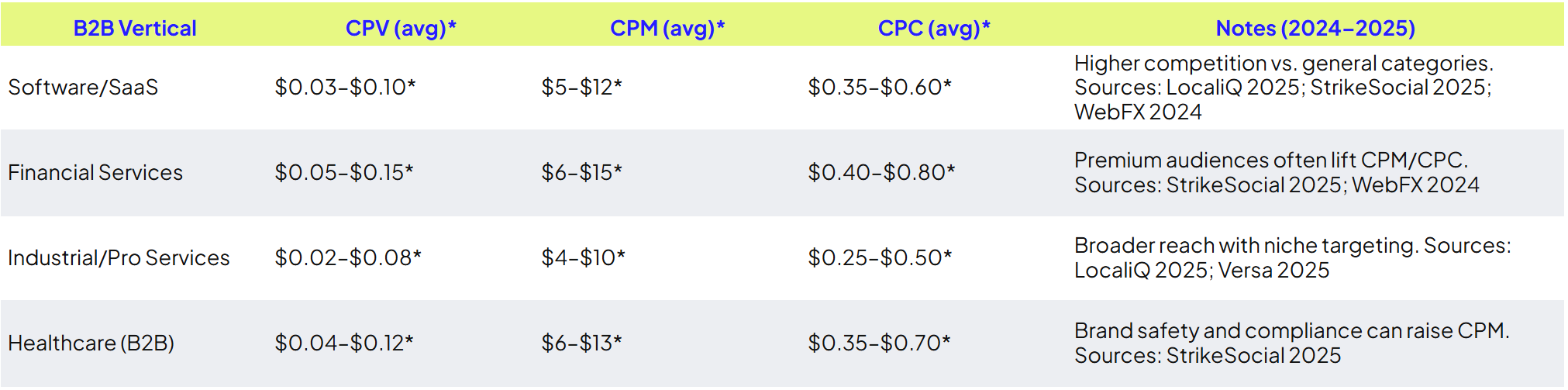
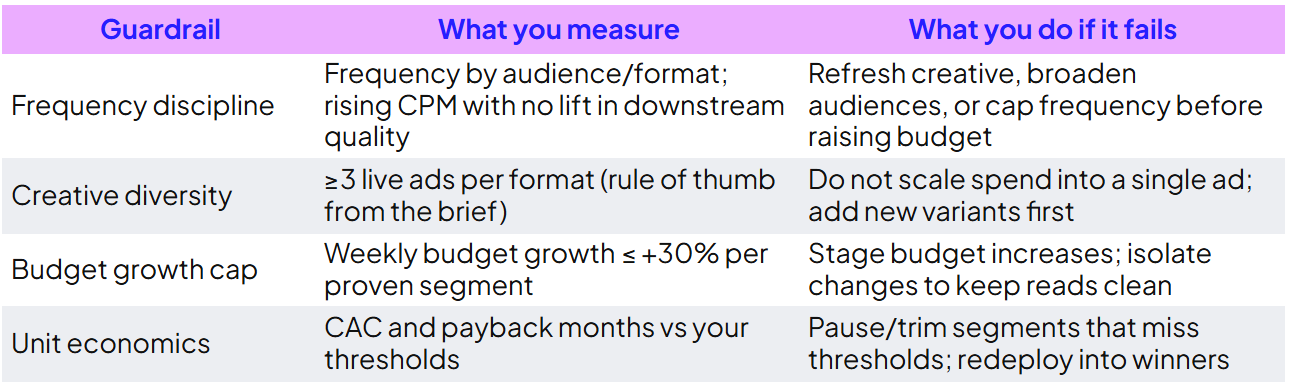
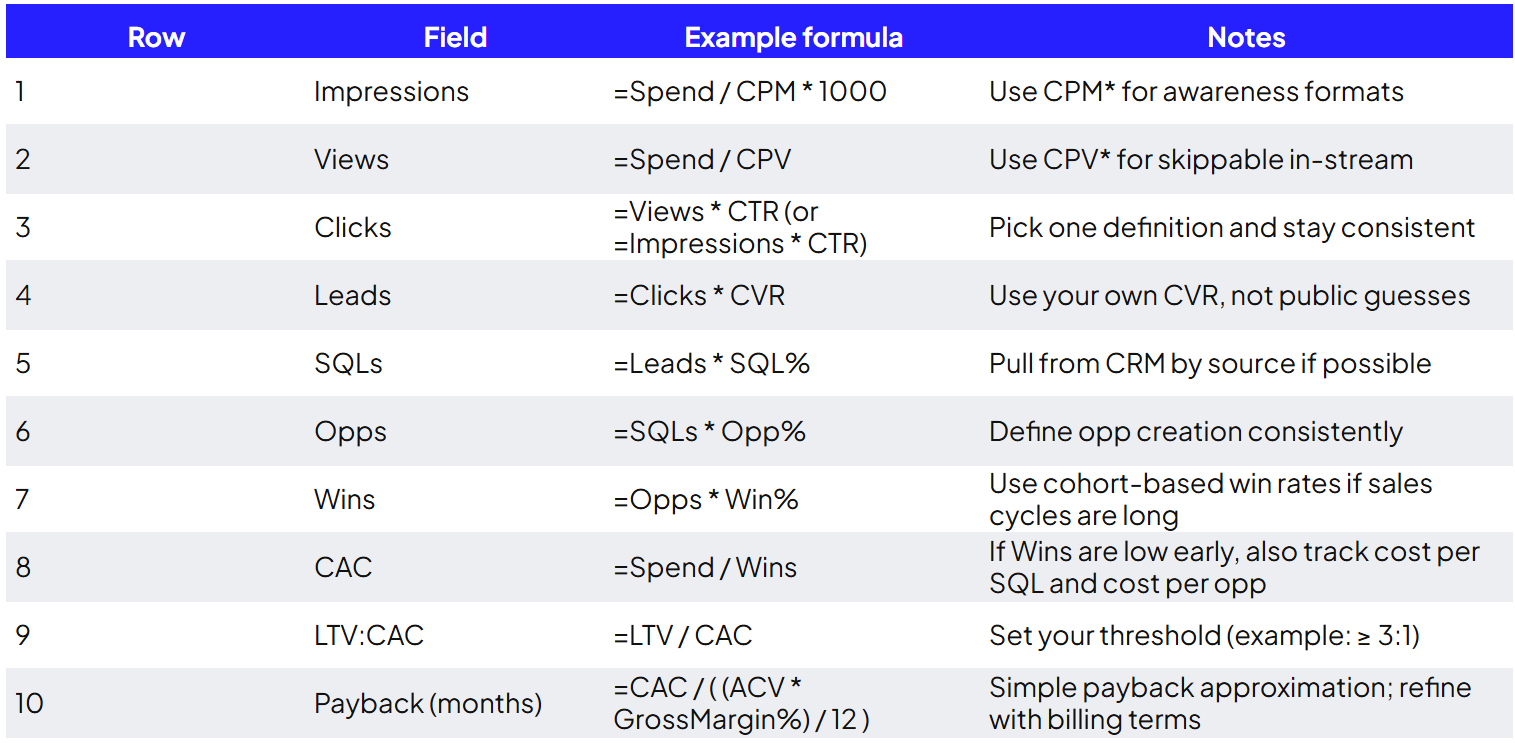



.png)
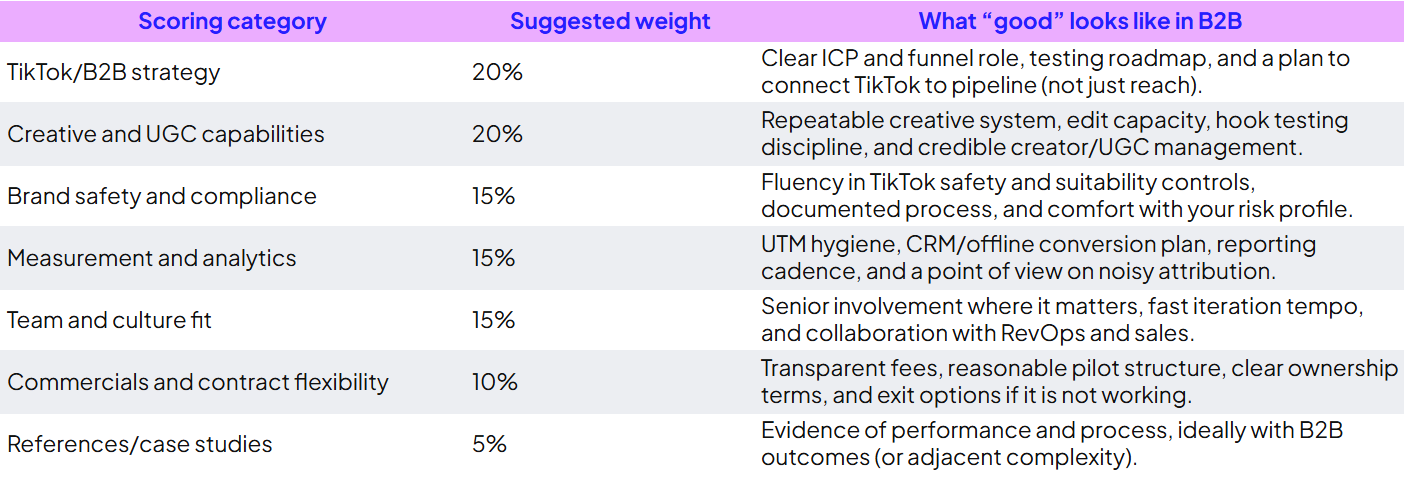
.png)

.png)