Impelix came to us to boost lead generation for their new AI-driven cybersecurity product, IMPACT. With a crowded market and risk-averse decision-makers, their sales team struggled to generate qualified leads through conferences and networking. We created several TAMs and deployed LinkedIn conversation ads with tailored messaging for different industries and seniority levels. The messaging was refined to highlight IMPACT’s unique value proposition. Results: 48 MQLs in Q4 with a CPMQL of $445.66, surpassing industry benchmarks. Adjustments to qualifying questions led to improved lead quality, a 8% click-to-open rate, and a 84.2% form completion rate.
Success Stories
15% increase in ad spend, 111% increase in LinkedIn visits
TigerConnect, a cloud-based clinical communication platform, faced challenges with low-volume search terms like "HIPAA texting" and struggled to generate qualified leads. To address this, we expanded their marketing strategy to LinkedIn and implemented account-based marketing (ABM), targeting specific job titles and healthcare roles like patient care and nursing. Testing content assets, we found that an eBook on communication challenges in clinical settings drove the most conversions. As a result, we saw a 31% increase in paid leads and a 111% rise in website visits from LinkedIn, all with only a 15% increase in ad spend.
Success Stories
100% MQL increase, 1 in 3 become customers
Giftbit approached us to enhance the performance of their LinkedIn campaigns. We tested a shift from a single-image ad with broad messaging to a conversation ad featuring a holiday-themed offer. Over a 15-day period, the incentive-driven campaign resulted in a 100% increase in MQLs, directly attributable to the targeted, ICP-specific holiday messaging. Of these, 33% advanced into sales opportunities. This success has set the stage for ongoing message testing and further optimization of Giftbit’s advertising strategy.
Guides for everything from choosing an agency to in-depth LinkedIn how-tos.
Abe's got opinions
Thoughts, insights, and data-driven perspectives on the ever-evolving world of advertising. Whether you're looking for bold opinions, deep dives into industry trends, or practical strategies to level up your campaigns, this is where sharp ideas meet real impact.
Most B2B teams still treat TikTok as a risky “nice to have” compared to LinkedIn. But UGC-style creative, stronger compliance hygiene, and better use of first-party data are making it a real demand channel for 2026 planning. This is a curated roundup of 15 TikTok ads agency options B2B leaders actually shortlist, with notes on UGC creative operations, governance, and revenue-focused performance. It’s built for CMOs, VPs of Demand Gen, and paid social managers at SaaS and services companies who want vetted partners and a practical checklist to de-risk selection.
The list of 15 TikTok ads agencies for B2B in 2026
The agencies below are ordered to create variety across geographies, models (performance vs. creator-led), and vertical strengths, not as a strict #1–#15 ranking. Shortlist three to five based on ICP fit, UGC model, and compliance maturity, then validate with TikTok-specific case studies and third-party profiles.
Editorial note: Pricing, ratings, minimums, and case-study numbers change frequently. Re-verify all figures and quotes directly on agency sites and recent G2/Capterra/Clutch profiles before publishing.
Abe
Abe is a B2B paid social advertising agency known for LinkedIn performance, now folding TikTok into a broader Customer Generation™ methodology. The throughline is first-party data and financial modeling: TikTok runs as an awareness and influence layer that still ladders into pipeline reporting, not a siloed creative experiment.
Best for: B2B SaaS and services teams that want TikTok integrated with LinkedIn, Meta, and search, with rigorous LTV:CAC discipline and cross-channel attribution.
Benefits: Connect TikTok audiences to CRM-based retargeting and nurture.
Benefits: Ship UGC-style creative at scale without crushing internal teams.
Benefits: Use TikTok to reduce blended CPL across channels, not just “add spend.”
Standout features: Customer Generation™ framework applied to TikTok testing and scaling.
Standout features: TAM verification and segmentation that informs TikTok creative and targeting.
Standout features: Motion-first creative ops and reuse of TikTok assets across LinkedIn and Meta.
Pricing is typically structured as a model (channel add-on to existing retainers or project testing sprints) unless a starting price is published. Abe manages $120M+ in annual ad spend and has driven 45% average savings in CPL across channels; that operational rigor carries into TikTok. Source: tiktok advertising agency.
Adworkly
Adworkly positions as a TikTok-first UGC marketing partner built for modern growth teams. The appeal for B2B is speed: turning creator-led concepts into testable ad variants quickly, then scaling what converts, not what merely “looks on brand.”
Best for: B2B teams that need high-volume TikTok-native UGC from creators who can speak to professional audiences, plus a fast test-to-scale workflow.
Benefits: Higher creative throughput for hook and angle testing.
Benefits: Creator briefing and production support that reduces internal coordination.
Benefits: A process designed to produce Spark Ads-ready assets.
Standout features: UGC optimized for performance, not just influencer reach.
Standout features: Emphasis on TikTok-first concepts and iteration.
Confirm starting engagement ranges, creative volume per month, and any published B2B outcomes directly in Adworkly materials before citing. Source: Adworkly.
Mangrovea
Mangrovea presents as a Frace-based TikTok ads agency serving EU marketers, combining creative production with full-funnel media management. For 2026, that “specialist plus full-funnel” mix matters when you need both TikTok-native creative and disciplined lead-quality reporting.
Best for: European B2B brands, agencies, and SaaS teams running multilingual campaigns across EU markets.
Benefits: Tailor-made TikTok strategy for B2B offers.
Benefits: Content production support for teams without video capacity.
Benefits: Reporting designed to discuss lead quality, not just reach.
Standout features: Native TikTok formats and trend-aware creative direction.
Standout features: Potential enablement support (workshops/consulting) for internal teams.
Standout features: EU-friendly execution across languages and markets.
Verify minimum engagement sizes and B2B sample results via Mangrovea’s site and third-party profiles before publishing. Source: Mangrovea TikTok Ads Agency.
Pearl Lemon Leads
Pearl Lemon Leads frames TikTok as a lead-generation lever for B2B, with an emphasis on turning attention into booked calls and SQLs. The practical angle is pairing TikTok-native formats with lead capture flows that make sense for SDR and outbound-heavy motions.
Best for: Outbound-heavy B2B companies that want TikTok to warm up prospects before SDR outreach and follow-up.
Benefits: Guidance on offers that convert from TikTok traffic (webinars, tools, trials).
Benefits: Lead-gen framing that prioritizes meetings and qualification.
Standout features: Explicit “TikTok B2B” positioning in service messaging.
Standout features: TikTok channel management plus lead-gen-oriented campaign structure.
Standout features: Social-selling context for turning reach into sales conversations.
Confirm whether they publish package tiers or starting prices, and pull at least one relevant B2B proof point before quoting. Source: Pearl Lemon Leads TikTok B2B Agency.
Z Digital Agency
Z Digital Agency positions as a Swiss/European performance partner running TikTok ads for engagement and conversions, with parallel strength in LinkedIn. For B2B, that pairing can be useful when TikTok creates demand and LinkedIn harvests it with stronger job-title intent.
Best for: European B2B brands that want TikTok plus LinkedIn execution, and need measurement in privacy-sensitive markets.
Benefits: Blended paid social strategy across platforms.
Benefits: Storytelling and creator collaboration formats that feel native.
Benefits: Performance reporting that translates engagement into lead outcomes.
Standout features: Cross-platform expertise, especially TikTok + LinkedIn.
Standout features: Creative approach that supports UGC-style narratives.
Pull indicative budgets, minimum retainers, and B2B case examples from their site and reviews before citing. Source: Z Digital Agency TikTok Ads.
ARYU Advertising
ARYU Advertising is a US-based digital marketing agency that can use TikTok inside a broader mix, leaning into educational content and thought leadership rather than hard-sell. That’s often the right starting point for B2B teams who need a content system before they need aggressive scaling.
Best for: B2B brands early in TikTok that want a channel strategy, content calendar, and lightweight production system.
Benefits: Strategy support for short-form video that fits limited internal resources.
Benefits: Production help for TikTok-style educational creative.
Benefits: Ability to coordinate paid and organic execution across platforms.
Standout features: Emphasis on expert storytelling and humanizing complex offers.
Standout features: Creative systems and calendars, not just media buying.
Standout features: Integration with broader paid media services.
Verify their TikTok engagement model and any B2B TikTok examples in public materials before including performance claims. Source: ARYU Advertising.
NoGood
NoGood is a growth marketing agency that tests TikTok alongside Meta, search, and other channels. The B2B fit is their experimentation posture: treating TikTok as a variable in a broader growth system, with learning velocity as a core deliverable.
Best for: B2B brands that want a performance partner already running multi-channel experiments and budgets that can move fast.
Benefits: Structured testing roadmaps and iteration discipline.
Benefits: Budget reallocation based on learnings across channels.
Benefits: Creative experimentation that supports educational B2B formats.
Standout features: Published POV on TikTok for B2B and content formats.
Standout features: Pragmatic approach to creative testing and scaling.
Confirm pricing models and any TikTok-specific B2B outcomes directly from their site before citing. Source: NoGood B2B TikTok guide.
inBeat Agency
inBeat is a micro-influencer and UGC partner that feeds TikTok ads with creator-generated content, plus a platform angle that helps scale production. For B2B, inBeat often works best as the “UGC engine” while your in-house team or performance partner owns media buying.
Best for: B2B and B2B2C brands needing a steady stream of authentic UGC variants to test.
Benefits: Access to vetted creators and micro-influencers.
Benefits: Multiple versions of assets for creative A/B testing.
Benefits: Repurposing content across TikTok, Instagram, and YouTube.
Standout features: TikTok-specific creative and editing support.
Standout features: Matching creators to narrow audience criteria when needed.
Standout features: UGC production workflows that support paid performance needs.
Check whether engagement is package-based, project-based, or retainer-based and cite only what’s publicly documented. Source: inBeat TikTok Advertising Agency.
House of Marketers
House of Marketers is a TikTok-first shop spanning influencer campaigns, UGC production, and paid support. The enterprise-friendly value is governance: clearer guardrails for creator programs, approvals, and brand safety when multiple stakeholders have opinions and risk tolerance is low.
Best for: Larger B2B brands and scale-ups needing deep TikTok expertise plus strong campaign governance.
Benefits: Influencer selection and management with operational rigor.
Benefits: Full-funnel campaign structure from awareness to conversion.
Benefits: Analytics that help standardize what “good” looks like.
Standout features: Spark Ads and whitelisting workflows.
Standout features: Brand safety and compliance via creative guidelines and approvals.
Standout features: TikTok-native production aligned to platform formats.
Pull any published engagement minimums and quantified outcomes from their case studies before citing. Source: House of Marketers.
The Influencer Marketing Factory
The Influencer Marketing Factory is a global influencer and TikTok advertising agency that builds campaigns around creator content, then tests and optimizes it as paid media. For B2B, they can be a strong fit when your TikTok strategy is creator-led and you need end-to-end campaign management.
Best for: Brands that want to center TikTok on creators and also need paid optimization support.
Benefits: End-to-end creator campaign management.
Benefits: Structured creative testing and iteration.
Benefits: Access to formats that spark community participation (when relevant).
Standout features: Global reach across regions and verticals.
Standout features: Editing and multivariate testing built into the process.
Standout features: Emphasis on governance: contracts, disclosures, and approvals.
Ubiquitous is a creator marketing partner with heavy TikTok focus, oriented around running always-on creator programs and amplifying winners with paid. B2B teams typically use them to produce volume and learn which narratives resonate, then plug those learnings into a broader paid social plan.
Best for: Brands with meaningful creator budgets and an “always-on” UGC testing appetite.
Benefits: Large creator network for scalable testing.
Benefits: Faster identification of winning creators and angles.
Benefits: Reporting to support creative and creator decision-making.
Standout features: Performance-oriented creator programs designed for amplification.
Standout features: Governance considerations at scale (disclosures, licensing, approvals).
Standout features: Process built to feed Spark Ads and ongoing creative refresh.
Treat them as a UGC engine you can pair with a B2B performance hub, and verify contract terms and pricing tiers from public sources. Source: Ubiquitous TikTok service.
Sapphire Studios
Sapphire Studios positions as a high-volume UGC production partner, including work aligned to TikTok’s ecosystem (Creative Exchange positioning). For B2B, this is most useful when media buying is handled elsewhere, but creative volume is the bottleneck.
Best for: B2B brands with a media-buying partner (or in-house buyer) that need a specialist UGC studio.
Benefits: Rapid production of TikTok-native UGC variants.
Benefits: Parallel concept testing to avoid “one video at a time” cycles.
Benefits: Clear handoff of assets for paid testing and iteration.
Standout features: Studio-style creative operations built for throughput.
Standout features: Format variety to support hook and offer testing.
Standout features: Quality controls and approvals suited to brand governance.
Clarify whether pricing is per-asset or package-based and cite only documented benchmarks. Source: Sapphire Studios.
TikToks Agency
TikToks Agency focuses on pairing UGC with TikTok ads using repeatable frameworks for sourcing, scripting, and optimizing content. B2B applicability depends on whether they can adapt hooks and proof points to business buyers without drifting into consumer-only promises.
Best for: Brands that want a managed creator-led workflow with repeatable UGC scripting and testing habits.
Benefits: Structured UGC frameworks for consistent output.
Benefits: Reduced internal admin for creator sourcing and coordination.
Benefits: Content designed to be turned into ads quickly.
Standout features: Emphasis on hooks, scripts, and scalable creative systems.
Standout features: Creator-led production tailored for ad amplification.
Standout features: Operational playbooks brands can reuse internally.
Verify any revenue/ROAS claims and package structures directly from their materials before quoting. Source: TikToks Agency.
GrowMojo
GrowMojo offers TikTok advertising services that pair creative strategy with performance campaigns. For B2B, the best fit tends to be prosumer, SMB, or B2B2C offers where product-led motion and direct response can coexist with brand building.
Best for: Brands seeking a balance of creative and performance, especially prosumer and SMB-facing motions.
Benefits: Full-funnel campaign design that considers both brand and response.
Benefits: Ability to connect ad clicks to on-site conversion improvements (when included).
Standout features: TikTok-focused service offering with platform-specific framing.
Standout features: Testing mindset across formats and concepts.
Standout features: CRO-aware execution for turning traffic into signups.
Confirm minimums, budget guidance, and vertical fit details from public sources before making hard claims. Source: GrowMojo TikTok Advertising Agency.
Avenue Z
Avenue Z positions as a full-stack visibility and social commerce partner that blends creator-led storytelling with performance media and optimization. For B2B, the value is often cross-channel coordination and measurement when TikTok drives demand that later converts through search, LinkedIn, and direct response retargeting.
Best for: Mid-market and enterprise teams that want TikTok tightly integrated with broader social and search measurement.
Benefits: Cross-channel media planning and optimization.
Benefits: Creative built to support both awareness and performance goals.
Benefits: Operating model designed for larger programs and stakeholders.
Standout features: UGC and creator-driven storytelling as a core lever.
Standout features: Governance considerations at scale (music rights, disclosures, policies).
Standout features: Measurement focus across channels, not just in-platform metrics.
Summarize pricing only from reliable public sources and cite relevant B2B or B2B2C case examples where documented. Source: Avenue Z TikTok Marketing Agency.
Cross-agency comparison table
Use this table for a first-pass shortlist. It’s intentionally compact: match your funnel goals, UGC needs, and compliance risk profile before you get impressed by vanity metrics.
Footnote: “Pricing model” entries are indicative. Only publish specific starting prices if confirmed via a reliable public source (agency site, Clutch, or G2) and re-verified at publish time.
How we evaluated these TikTok ads agencies
This is a curated, opinionated list, not a scraped directory. The bar is B2B outcomes: can the partner ship TikTok-native creative, manage risk, and still talk credibly about lead quality and pipeline.
Proven TikTok execution: evidence via case studies and documented processes.
UGC operations: capacity to produce and iterate UGC-style creative at scale.
B2B relevance: examples in SaaS, services, fintech, or B2B2C motions.
Compliance maturity: disclosures, usage rights, restricted claims, and governance.
Measurement depth: ability to connect TikTok to CRM and revenue, not just views.
We used public materials and roundups to triangulate options, including Influencer Marketing Hub’s agency list (source) and B2B TikTok guidance from NoGood (source) and Databox (source).
How to use this list in your 2026 TikTok roadmap
Use these agencies as archetypes. Some are best as a performance hub. Others are a UGC engine. Your winning setup for 2026 is usually a tight pairing.
Shortlist one multi-channel performance partner and one UGC studio, then run a structured pilot.
Request TikTok-specific case studies in your vertical and ask for the exact creative volume behind the results.
Ask how they handle creator usage rights, whitelisting, and disclosure requirements (before creative ships).
Decide upfront whether TikTok is measured on assisted pipeline or direct SQLs, and build reporting accordingly.
Use this as a take-to-the-board checklist. Score each item Yes/No (or 1–5) and you’ll surface risk fast, especially on compliance and measurement.
Strategy & fit
We know what role TikTok plays in our funnel (awareness, demand creation, or both).
The agency has B2B case studies in our or a similar vertical.
They can work with our existing channels and data stack (CRM, analytics, attribution).
Creative operations & UGC
They can commit to X–Y new TikTok concepts per month (and define “concept” clearly).
They own or manage a vetted creator network relevant to our ICP (role, industry, tone).
They provide scripts, shot lists, and clear creative briefs for every UGC asset.
Compliance & risk
They have standard processes for FTC/ASA disclosure, licensing, and claims reviews.
They can walk us through how they’ve handled regulated categories before.
Their contracts clearly define usage rights, time windows, and whitelisting permissions.
Measurement & economics
They can model TikTok’s role in our LTV:CAC targets and spend guardrails.
They can connect TikTok to our CRM and analytics stack for pipeline reporting.
They are transparent about fees, margins, and optimization levers.
For deeper compliance context, reference Darkroom’s TikTok UGC guide (source) and Click Digital’s FTC UGC compliance overview (source).
FAQ: hiring a TikTok ads agency for B2B
How long does it take to see results from a TikTok ads agency?
Plan for a real learning window. In the first 30 days, “success” often looks like validated creative angles and reliable on-platform signals. By 60–90 days, you should expect clearer trends on CPL quality and assisted pipeline contribution, assuming tracking and follow-up are in place.
What should be in a B2B TikTok creative brief?
A clear ICP (role, pains, objections), one offer per asset, a single “proof” (data point, demo, customer story, or POV), disclosure requirements, and exactly how the video will be used (Spark Ads, whitelisting, landing page, retargeting sequence).
How do agencies handle brand safetycd and moderation?
Look for written guardrails: restricted claims, comment moderation expectations, creator do’s and don’ts, and a documented approvals process. For UGC, contracts and usage rights matter as much as creative review.
What KPIs should we track beyond views and followers?
Track creative-level hold rate and engagement as leading indicators, then downstream metrics like lead-to-SQL rate, cost per qualified lead, and influenced pipeline. Databox’s B2B demand gen discussion is a useful framing reference.
How do we run a fair pilot test between agencies?
Give each agency the same product context, budget range, and success definition. Standardize creative volume (same number of concepts and variants), standardize measurement (same tracking setup), and evaluate on learning velocity plus lead quality, not just early CPL.
How Abe fits into your TikTok stack
Abe sits on the “B2B performance hub” side of the spectrum: a paid social advertising agency that treats TikTok as part of a Customer Generation system, not a disconnected experiment. That’s especially useful when TikTok targeting is noisy and you need first-party data, economic modeling, and cross-channel retargeting to keep spend honest.
Abe can own TikTok end-to-end or partner with specialist UGC shops from the list, acting as the strategic and performance hub across channels.
We need to prove TikTok’s impact on pipeline and revenue, not just views.
We want TikTok creative that can also work on LinkedIn and Meta.
We need help connecting TikTok engagement to CRM and sales follow-up.
Scale B2B TikTok pipeline with Abe
TikTok is now a serious B2B awareness and demand channel when it’s powered by strong UGC, disciplined compliance, and tight integration with first-party data and the rest of the paid social mix. If your 2026 plan is “test TikTok,” the real question is whether you’re testing creative and measurement with enough rigor to learn quickly and scale safely.
TikTok campaigns designed around verified TAM and ICP lists.
Creative ops that can ship 5–10+ UGC-style variations per month (based on your program scope).
Cross-channel retargeting that turns TikTok viewers into LinkedIn and search leads.
Reporting that ties performance to pipeline and LTV:CAC decision-making.
Choosing a partner for B2B social is not about viral posts or clever memes. It is about verified TAM, clean first‑party data, finance‑grade modeling, and creative that turns into pipeline and revenue. This guide is for B2B marketing and revenue leaders who want to shortlist a B2B social media agency built for revenue, not vanity metrics, with LinkedIn at the core and Meta/YouTube supporting the mix.
Every agency on this list shows evidence of B2B focus, LinkedIn mastery, ABM experience, and a willingness to report into CRM stages, not just impressions. The goal: help you move faster to a credible shortlist, then run structured pilots that your CFO will actually sign off on.
Why specialization matters for pipeline
Most social agencies were built for engagement, not earnings. B2B buying cycles, committees, and deal sizes demand something different: finance‑first social programs that stand up to LTV:CAC and CAC payback scrutiny. If your partner cannot model payback windows or explain how LinkedIn touches show up at SAL and SQL, you are funding awareness, not growth.
Specialized B2B social shops design around how pipeline is actually created. That means verified TAM and named‑account workflows, clear exclusions to cut waste, and creative mapped to jobs, titles, and problems in your ICP. The LinkedIn B2B Institute’s 95‑5 Rule (95% out of market, 5% in market at any time) makes this tighter focus essential: you need programs that warm the 95% while capturing demand from the 5% and connecting both to CRM stages.
These agencies also understand the politics of B2B. They arm you with budgets justified by LTV:CAC, show CAC payback scenarios by channel, and align with RevOps so that every campaign has a path into Salesforce or HubSpot. Instead of “social reach,” you get conversation quality, opportunity influence, and pipeline attribution.
Finally, specialization matters for compliance and governance. When your buyers operate in regulated categories or complex technical domains, you need a partner who knows what can and cannot be said in LinkedIn Conversation Ads, what legal needs to see, and how to keep creative agile without skipping approvals.
Selection criteria (apply consistently)
Use one consistent scoring lens for every agency you evaluate. The following criteria line up with Abe’s pillars: first‑party data, LTV:CAC modeling, TAM precision, and creative tied to revenue.
Platform focus. Prioritize partners with clear LinkedIn proficiency, not just a generic “paid social” line item. Look for:
Hands‑on experience with LinkedIn Conversation Ads, Document Ads, Lead Gen Forms, and matched audiences.
A point of view on where Meta and YouTube help at the top of funnel without wrecking CAC at the bottom.
Clear playbooks for retargeting and audience sequencing, not just single‑touch campaigns.
B2B proof. You want case studies that show pipeline, not just followers. Per directories like Clutch’s Top 50 B2B Marketing Agencies*, credible B2B shops will highlight:
SQL, opportunity, or revenue outcomes* attributed to social.
Stories in SaaS, professional services, industrial, or other B2B verticals.
Complex buying committees, not just one‑click ecommerce wins.
Define and validate TAM, including named‑account lists and exclusions.
Implement UTM discipline and match social touchpoints to HubSpot/Salesforce stages.
Run suppression logic for customers, disqualified leads, and current opportunities.
Pricing transparency. Most B2B social agencies use retainers, project scopes, or hybrids. As Clutch profiles show*, good partners explain:
How fees map to deliverables (strategy, creative, ops, reporting).
What is included vs. treated as out of scope.
The change‑order process so your experiments are not surprise invoices.
Compliance & governance. Your SLA should outline data processing, content approval, and brand safety. At a minimum, agree on:
DPA/data ownership terms, including who controls ad accounts and audiences.
Approval cadences for copy and creative so performance work does not bypass legal.
Brand safety filters and negative placements where relevant.
The list of 25 agencies (ordered for variety, not rank)
This list is intentionally not a ranking. It is a curated set of 25 B2B‑ready social partners spanning pure‑play social shops, performance agencies, and integrated B2B firms. Use the “Best for” notes to align each one to your needs, then dig into case studies, Clutch reviews, and reference calls.
Leadtail
Leadtail is a B2B social specialist focused on strategy, influencer relations, and executive social programs for tech and SaaS buyers. They blend organic, paid, and influencer motions so your brand shows up through practitioners and leaders, not just corporate handles.
Best for: Mid‑market SaaS teams needing influencer + executive social layered onto LinkedIn paid.
Benefits:
Integrated organic + influencer playbooks that complement your paid social.
Practitioner‑led point of view that resonates with technical buyers.
Flexible engagement models for pilots, advisory, or full programs.
Standout features:
Influencer mapping across your niche and TAM.
Thought‑leadership and executive social programs for founders and C‑suite.
Analyst and executive amplification frameworks paired with LinkedIn content systems.
Snapshot: Services: social strategy, organic, influencer programs, executive social; Industries: SaaS and B2B tech; Starting price*: quote
Sculpt
Sculpt is a 100% B2B social agency with organic, paid, and influencer services under one roof and a long operating history in LinkedIn for B2B. They specialize in turning ICP insights into consistent, accountable social cadences.
Best for: Brands that want a unified paid + organic rhythm and channel education that finance and executives can trust.
Benefits:
Sharp ICP messaging that translates into scroll‑stopping social content.
Cadence discipline so channels do not go dark when campaigns shift.
Cross‑functional coordination with content, demand gen, and sales.
Standout features:
Reusable content series frameworks for LinkedIn and adjacent channels.
Tight paid/organic integration with shared themes and offers.
Stakeholder messaging kits to keep CFOs and execs aligned.
Snapshot: Services: organic social, paid social, influencer programs; Industries: B2B tech and professional services; Starting price*: quote
OST
OST is a global B2B social media agency that emphasizes paid and organic programs mapped to specific decision‑makers and regions. They are experienced in orchestrating complex, multi‑market social campaigns across EMEA, North America, and beyond.
Best for: International B2B brands needing multi‑market social execution with central governance.
Benefits:
Multi‑region operations that respect local nuance and compliance.
Repeatable content formats that scale across markets.
Process rigor that enterprise teams are comfortable with.
Standout features:
Audience research and persona work tailored to each geography.
Executive social programs for global and regional leaders.
LinkedIn video and document systems for thought leadership.
Snapshot: Services: strategy, paid and organic social; Industries: tech, industrial, and B2B services; Starting price*: quote
Walker Sands
Walker Sands is a B2B PR and integrated marketing firm where social media services are tightly aligned with communications, analyst relations, and demand creation. Their strength is turning complex stories into cohesive, multi‑channel narratives.
Best for: B2B brands seeking PR + organic social cohesion with demand gen support baked in.
Benefits:
Strong narrative development that carries through PR, content, and social.
Editorial and content depth for technical or emerging topics.
Executive communications capability across owned and social channels.
Standout features:
Thought leadership engines that feed both PR and social.
Integrated PR/social campaigns that connect to demand gen.
Analytics reporting that tracks content and social impact.
Snapshot: Services: organic social, content, PR; Industries: B2B tech, fintech, and related fields; Starting price*: quote
TopRank Marketing
TopRank Marketing is a full‑service B2B agency with deep social and influencer capabilities, especially strong in content‑led social for complex buyers. They excel at pairing experts and influencers with in‑depth content and amplification plans.
Best for: Content‑heavy programs that need influencer + social activation in enterprise environments.
Benefits:
Influencer alignment around your strategic narratives and ICP.
High editorial standards for long‑form and short‑form content.
Comfort working with enterprises and complex approvals.
Standout features:
B2B influencer operations that integrate with campaigns.
Social amplification systems for cornerstone content.
Sagefrog is a B2B integrated agency where social plays a role in brand, demand, and field programs, often in regulated arenas. They are comfortable navigating healthcare, manufacturing, and other compliance‑sensitive spaces.
Best for: Mid‑market B2B companies with regulated or complex offerings needing integrated support.
Benefits:
Experience with regulated industries and compliance constraints.
Integrated planning across social, content, and events.
Pragmatic reporting aligned to pipeline and MQL/SAL metrics.
Standout features:
Persona frameworks that inform social messaging.
Structured social calendars for always‑on and campaigns.
Analytics dashboards that consolidate channel performance.
Snapshot: Services: organic and paid social within integrated programs; Industries: healthcare, tech, industrial; Starting price*: quote
Ironpaper
Ironpaper is a B2B growth agency that ties social programs directly to pipeline and revenue, with strong conversion optimization chops. Their work often blends content, web, and paid media into one demand engine.
Best for: B2B teams that want social woven into a full‑funnel demand generation engine.
Benefits:
Clear linkage between social traffic and funnel stages.
CRO discipline applied to landing pages and offers.
Alignment between content strategy and paid social execution.
Standout features:
ABM support with named‑account social programs.
Lifecycle and cohort reporting from awareness to revenue.
WebFX is a large digital agency with a dedicated B2B social practice and breadth across SEO, paid media, CRO, and analytics. For teams wanting one vendor across multiple channels, they are a common choice.
Best for: Brands needing breadth (social + SEO + CRO) under one roof with established processes.
Benefits:
Operational scale and bench depth across disciplines.
Cross‑channel coordination to align search, social, and web.
Mature processes for reporting and QA.
Standout features:
Paid social operations spanning LinkedIn, Meta, and more.
Reporting suites that can roll up to executive dashboards.
SEO and social integration for content amplification.
Snapshot: Services: paid and organic social, SEO, CRO, analytics; Industries: multi‑vertical including B2B; Starting price*: tiered packages
NinjaPromo
NinjaPromo is a social‑forward agency with B2B campaigns and influencer execution, particularly active in SaaS and fintech. They bring creative throughput and multi‑platform reach to performance‑minded programs.
Best for: Brands seeking high creative volume and influencer support around launches and campaigns.
Benefits:
Strong creative velocity for paid social assets.
Experience across LinkedIn, X, Meta, and niche platforms.
Ability to incorporate influencers into B2B motions.
Standout features:
Paid social playbooks tailored to SaaS/fintech funnels.
Influencer operations including sourcing and management.
Social Driver is a digital communications and social agency with strong creative craft and storytelling. They serve public sector, associations, and B2B brands that need message discipline.
Best for: Narrative‑driven brands balancing brand building and demand capture on social.
Benefits:
High‑quality visual and motion design.
Storytelling frameworks for complex topics.
Stakeholder alignment across communications and marketing.
Standout features:
Visual systems for social feeds and campaigns.
Content series planning across channels.
Reporting that ties storytelling work to engagement and pipeline influence.
Snapshot: Services: organic and paid social, creative; Industries: public sector, nonprofits, B2B tech; Starting price*: quote
Gravity Global
Gravity Global is a global B2B agency where social is tightly integrated with brand strategy and performance media. They support complex, multi‑market enterprises with serious governance needs.
Best for: Enterprise brands needing multi‑market scale, creative excellence, and strict governance.
Benefits:
Governance frameworks that satisfy enterprise risk and legal teams.
Scale across regions, languages, and business units.
Blend of brand strategy and performance analytics.
Standout features:
Brand/performance frameworks that connect awareness to pipeline.
Multi‑region operations and localization support.
Analytics that track creative effectiveness across markets.
Elevation Marketing is a full‑service B2B agency that embeds social into integrated demand and brand programs. They specialize in complex buying committees, especially in industrial and tech.
Best for: Complex B2B buying committees that need coordinated content and social motions.
Benefits:
Persona clarity based on real buying journeys.
Content depth across web, thought leadership, and social.
Integrated operational support from planning through reporting.
Standout features:
Campaign architecture that includes social from day one.
Persona mapping to guide creative and offers.
Social operations processes for repeatable execution.
Directive is a performance‑oriented B2B marketing agency where social is tied tightly to pipeline, often in tandem with paid search and revenue operations. They position themselves as finance‑first and experiment‑heavy.
Best for: Mid‑market to enterprise SaaS focused on measurable demand and CAC control.
Benefits:
Finance‑first planning that models LTV:CAC and payback windows.
Rigorous testing culture to tune offers and creatives.
Conversion optimization built into media planning.
Standout features:
Paid social + search integration with shared reporting.
CRM reporting to show SQLs and pipeline per campaign.
Structured experimentation frameworks.
Snapshot: Services: paid media including social, search, CRO; Industries: SaaS and B2B tech; Starting price*: retainer
Obility
Obility is a B2B performance agency with strong paid media roots where social and search are orchestrated for pipeline. They are known in the SaaS ecosystem for disciplined targeting and reporting.
Best for: B2B tech companies needing precise paid social + search orchestration.
Benefits:
Tight ICP definition and enforcement in campaigns.
Data rigor in tracking, attribution, and optimization.
Collaboration with sales and CRO resources.
Standout features:
LinkedIn campaign operations tuned for SaaS funnels.
Audience development and list‑based ABM tactics.
Reporting at lead, opportunity, and pipeline levels.
Godfrey focuses on industrial B2B, where social supports technical storytelling and complex sales cycles. They translate engineering‑speak into content and campaigns that buyers can act on.
Best for: Industrial and manufacturing firms with complex offerings and long sales cycles.
Benefits:
Technical fluency with engineers, product teams, and SMEs.
Awareness of industry regulations and safety/compliance needs.
Stakeholder coordination across marketing and sales.
Standout features:
Content + social integration for technical narratives.
Executive social programs tuned to industrial audiences.
Industry‑specific creative and positioning.
Snapshot: Services: organic and paid social, content, campaigns; Industries: industrial and manufacturing; Starting price*: quote
The Mx Group
The Mx Group is a full‑service B2B agency that embeds social in integrated go‑to‑market programs. They work with enterprises that need coordinated efforts across channels, segments, and regions.
Best for: Enterprise programs with multi‑channel needs and complex internal alignment.
Benefits:
Strategy depth spanning brand, demand, and digital.
Creative teams equipped for multi‑format social work.
Robust analytics that map campaigns to pipeline.
Standout features:
Campaign orchestration across media, content, and social.
ABM capabilities including named‑account social plays.
Analytics and dashboards for marketing and sales leaders.
New North is a B2B agency serving tech and services firms, pairing social with content and email. They are geared towards SMB and mid‑market teams that need practical scopes.
Best for: SMB/mid‑market B2B with constrained budgets and lean teams.
Benefits:
Practical, right‑sized scopes for growing organizations.
Clear reporting and communication cadences.
Consistent social cadence tied to content and email.
Standout features:
Content‑social mixes designed for lead nurturing.
Basic ABM and account‑list programs.
Dashboarding for leadership visibility.
Snapshot: Services: social, content, email programs; Industries: tech and professional services; Starting price*: quote
Zen Media
Zen Media is a B2B PR and social agency with strong executive social and trend‑led content. They help brands show up in feeds and the press at the same time.
Best for: Brands seeking PR/social synergy and thought leadership around executives or founders.
Benefits:
Fast path from idea to published social content.
Fluency in trends and conversation formats across platforms.
Executive amplification that aligns with PR efforts.
Standout features:
Social PR programs bridging earned and owned channels.
Kuno Creative is an inbound and RevOps‑aware B2B agency where social is tied to lifecycle and marketing automation, particularly on HubSpot. They are adept at building nurture‑ready audiences from social.
Best for: Teams on HubSpot wanting tight social + lifecycle alignment.
Benefits:
RevOps mapping from social touch to lifecycle stages.
Linkage between social, email nurture, and content offers.
Deep familiarity with HubSpot features and reporting.
Standout features:
HubSpot integration and workflow design for social leads.
Gorilla 76 is an industrial marketing specialist where social supports demand creation and sales enablement for manufacturers. They translate complex offerings into content that sales can actually use.
Best for: Mid‑market industrial companies targeting technical buyers.
Benefits:
ICP precision around plants, facilities, and technical roles.
Alignment with sales to turn content into conversations.
Depth of content for long sales cycles.
Standout features:
Account list programs integrated with LinkedIn.
Video and visual content tailored to industrial buyers.
97th Floor is a performance and content agency where social is part of growth programs that prioritize testing. They mix creative experimentation with analytics rigor.
Best for: Brands seeking testing velocity and creative experimentation on social.
Benefits:
Structured experimentation across audiences, offers, and formats.
Creative variations tuned to buyer stages.
Analytics rigor for evaluating test outcomes.
Standout features:
Paid social frameworks for demand creation and capture.
Content motions that feed social and SEO together.
Dashboards for tracking multi‑channel performance.
Disruptive Advertising is a performance agency with paid social depth and a B2B/B2C mix of clients. They are built for scale and constant testing across platforms.
Best for: Paid‑media‑first teams who need social scale and structured testing.
Benefits:
Testing rigor, from creative to bidding strategies.
Budget management for high‑spend paid social accounts.
Broad platform operations across LinkedIn, Meta, and more.
Standout features:
Paid social frameworks tuned for both lead gen and pipeline.
Creative testing methodologies with clear learning agendas.
Viral Nation is a social and influencer powerhouse with robust enterprise governance. Historically strong in consumer and creator programs, they also support B2B brands that want serious influencer reach.
Best for: Enterprise brands with influencer + social at scale and complex compliance needs.
Benefits:
Access to extensive influencer and creator networks.
Compliance and brand safety discipline for large brands.
Creative volume for big campaigns and always‑on programs.
Standout features:
Influencer networks with structured contracting and approvals.
Multi‑platform operations including LinkedIn for B2B.
Measurement frameworks for influencer and paid social work.
Acadia is a modern digital agency with social, paid media, and analytics under one umbrella, serving a mix of B2B and B2C brands. Their pitch centers on data‑driven growth.
Best for: Brands needing analytics‑heavy social programs across multiple channels.
Benefits:
Data rigor and instrumentation across the funnel.
Integrated paid media including social and search.
Analytics strategy that goes beyond simple dashboards.
Standout features:
Paid social programs designed with clear KPIs and tests.
Analytics and experimentation across customer journeys.
Social Motto is a social‑focused agency with a storytelling emphasis across paid and organic, serving both B2B and B2C brands. They focus on narrative and consistency.
Best for: Brands wanting narrative depth and a steady cadence across social channels.
Benefits:
Story‑led creative aligned to brand strategy.
Consistent operations that keep feeds active and on‑message.
Covers both paid and organic to keep signals flowing.
Standout features:
Social calendars with themes and series.
Creative kits for campaigns and evergreen content.
Reporting focused on both engagement and lead generation.
Snapshot: Services: organic and paid social; Industries: B2B and B2C; Starting price*: quote
Comparison table (summarize buyers’ view
Use this quick comparison to shortlist 4–6 agencies aligned to your goals, ICP, and operating model, then go deeper on case studies and references.
* Pricing and capability claims may change from time of publishing
How to choose (checklist)
Once you have a shortlist, evaluate partners with the same rigor you apply to product or sales investments. Use this checklist to structure internal alignment and vendor conversations.
Map goals to LTV:CAC and CAC payback; define max CAC and target CPL by channel.
Ask for first‑party data workflows: verified TAM, exclusions, UTM discipline, CRM stage mapping.
Demand CRM screenshots tying spend to SAL/SQL/pipeline; reject vanity dashboards.
Clarify pricing model and SLAs (response times, deliverables, QA) with change‑order rules*.
Run 2–3 vendor pilots for 90 days with pre‑agreed gates; scale only on modeled performance.
Layer in buyer‑style questions your stakeholders will ask, informed by search behavior and resources like Sprout Social and Clutch:
What does a B2B social media agency actually do? In practice, they plan and run paid and organic programs (often LinkedIn‑first), map activity to CRM stages, and align content and targeting with pipeline goals, not just impressions or clicks (source: Sprout Social).
How much do B2B social media agencies cost? Most operate on retainers or hybrid models. Monthly fees vary widely by scope, channels, and creative needs; use Clutch and G2 profiles to see current ranges and always confirm details in writing before signing (source: Clutch).
Is LinkedIn still the best platform for B2B? LinkedIn remains the highest‑intent channel for reaching professional buyers. Pair it with retargeting and search to close the loop from attention to opportunity (source: LinkedIn B2B Institute).
What should my agency SLA include? Your SLA should spell out response times, deliverable cadence, QA steps, reporting schedules, escalation paths, and data ownership terms tied to pipeline outcomes, not just media spend (source: industry standards).
Move Beyond Manual Vendor Vetting With Abe
Abe builds paid social programs that turn first‑party data into pipeline. We validate channels with LTV:CAC, verify TAM, and ship creative tied to revenue. Our Customer Generation™ methodology aligns Marketing and Sales from day one.
First‑party data: verified TAM + exclusions to reduce waste and lower CPL.
Finance‑first: LTV:CAC and CAC payback models drive budgets and gates.
Creative that sells: role‑specific ads and offers across TOF → BOF.
Clarity: CRM‑stage reporting (SAL/SQL, pipeline) you can take to Finance.
Instead of sifting through dozens of vendor decks alone, use a partner built for B2B social that already thinks like your CFO. Want a shortlist tailored to your ICP and goals? Book a consult and we will map your 90‑day plan, including channel mix, budget ranges, and pilot success gates.
If you are evaluating X (formerly Twitter) as a pipeline channel, your agency pick matters more than your media budget. The right Twitter ads agency aligns targeting, creative, and reporting to LTV:CAC and payback, not just CTR. This guide is built for B2B marketing leaders who want a clean selection process, the right RFP questions (brand safety, follower and keyword strategy, reporting), and a scorecard you can actually use.
If you are comparing partners across platforms too, start with best B2B social media agencies. And if your mix includes additional paid social beyond X, pressure-test how an agency handles adjacent channels like a Meta advertising agency (creative velocity and conversion measurement tend to separate good from “busy”).
Why agency selection fails (even for smart teams)
Most B2B teams do not fail on effort. They fail on incentives and missing controls. A weak agency selection process inflates CPL, hides wasted spend behind “engagement,” and delays the one thing that matters: a repeatable path from impressions to qualified pipeline.
Trap 1: “Engagement-first” goals
Teams optimize for likes, replies, or cheap video views. Result: high engagement, low opportunity volume. Set finance guardrails (target CAC, payback) and map objectives to revenue milestones so the account is forced to optimize for outcomes, not activity.
Example: a Reach/Engagement campaign drove 0 opportunities; a Website Conversions campaign with the same budget generated MQLs at target CPL once pixel/CAPI events were implemented.
Trap 2: Overbroad follower look-alikes
Spraying look-alikes of large publishers or generic influencers expands reach but not ICP fit. Require follower look-alikes from credible B2B handles (for example, industry analysts) plus tight geo and language filters and exclusions.
Impact: irrelevant traffic, high CPR, shallow time on site.
Trap 3: Keyword lists with mixed intent
Ambiguous terms (for example, “security”) pull consumer chatter. Build intent-weighted clusters and negatives; X guidance for keyword targeting emphasizes starting with a sufficiently sized, relevant keyword set (X recommends adding at least 25 relevant keywords) and iterating with exclusions to protect relevance.
Running a single asset per ad group stalls delivery. Require a weekly test plan across copy, formats, and vertical video assets so creative does not become the bottleneck.
How to select an X (Twitter) ads agency: step by step
Use this sequence to force clarity: inputs up front, checkpoints during evaluation, and acceptance criteria before you hand over spend. The goal is not a “great pitch.” The goal is a repeatable operating plan for Twitter advertising for B2B.
Step 1: Define outcomes and finance guardrails
Inputs: target CAC, payback period, LTV, win rates by segment, SQL and opportunity goals, acceptable CPL/CPR by objective.
Thresholds: if modeled CAC payback > target months or LTV:CAC < 3:1 for paid social, flag and adjust targeting or offer before launch. This is where many “X is too top-of-funnel” takes come from: the finance model was never agreed, so the channel gets judged on vibes.
Step 2: Build a tight shortlist and RFP
Shortlist 3–5 agencies with proven B2B references. Share budget bands, ICP, and goals, and ask for a lightweight diagnostic (no spec work). You want to see how they think, not how many slides they can produce.
RFP must include: brand safety plan, follower/keyword strategy, measurement/reporting, creative/testing cadence, and a pilot plan with milestones.
Step 3: Vet X targeting strategy (follower look-alikes + keywords)
Follower look-alikes: ask which accounts anchor similarity, how many, and how performance will be pruned. Interests: cap sub-topics to 10; refine by results (as commonly recommended in X targeting guidance).
Keyword targeting: require at least 25 tightly relevant keywords, clustered by intent; include negative keywords and a refresh cadence. Reference: Keyword targeting (X Business Help).
Step 4: Assess creative formats and testing plan
Expect a weekly test matrix across Text, Image, Video, Carousel, and vertical video. If the agency cannot show how it produces motion-first assets with strong hooks in the first 1–2 seconds, you will not get stable learnings.
Require landing page QA and message-market match for each audience cluster. If they can run paid social but cannot diagnose why the page does not convert, you are buying traffic, not pipeline.
If your team is also investing in community-style placements, ask how learnings transfer across channels such as a Reddit advertising agency approach (audience intent and creative truthfulness tend to correlate with downstream lead quality).
Step 5: Require measurement and reporting discipline
Must-haves: X Pixel or Conversions API, objective-aligned results, cost per result, reach/frequency, and conversion reporting from Ads Manager; breakdowns by audience, keyword, and creative.
Ask for weekly commentary and decisions: what we learned, what we are changing, and projected impact on CAC and pipeline. For metric definitions and common reporting fields, reference: X/Twitter ad metrics (Hootsuite Help, 2025).
Step 6: Lock in brand safety and suitability controls
Controls: Sensitivity Settings tier, adjacency controls, keyword/author exclusions, and third-party measurement (IAS and DoubleVerify). Note: IAS pre-bid optimization is available for specific surfaces like vertical video in the U.S.; post-bid measurement supports feed placements in additional markets.
If the agency name-drops GARM brand safety but cannot explain how sensitivity settings, adjacency controls, and exclusion lists are operationalized weekly, treat it as a red flag.
Step 7: Pilot, contracting, and SLAs
90-day pilot with phase gates: week 2 (tracking verified), week 4 (first learnings and creative swap), week 8 (midpoint goals review), week 12 (scale/hold/stop decision).
Also decide up front how the agency will coordinate with your other performance partners (for example, a linkedin advertising agency) so attribution and audience overlap are handled intentionally instead of debated in month three.
Template: X Ads Agency RFP Scorecard
Use this template as your single source of truth during evaluation. Score every vendor the same way, require proof, and attach artifacts in an appendix (screenshots, sample reports, example test plans, brand safety documentation).
Scoring rubric: 0 = does not meet, 3 = meets, 5 = exceeds with proof. Require artifacts in an appendix. If a vendor cannot provide proof (sample Ads Manager reporting, example exclusion lists, an actual weekly test matrix), treat the score as a 0 until proven otherwise.
What tactics are most prone to wasted spend on X?
It is rarely the tool; it is targeting, creative, or measurement. Calibrate each tactic for intent and safety so you are not buying “cheap” results that never turn into pipeline.
Engagement-only campaigns: fine for awareness; for pipeline, use Website Traffic/Conversions with pixel/CAPI and post-click retargeting.
Overbroad follower look-alikes: anchor in credible B2B accounts; cap interest sub-topics; prune weekly.
Use these as pass/fail gates before you scale spend or sign a longer contract. If the agency cannot pass these, the risk is not “performance.” The risk is unmeasurable work.
Tracking: X Pixel or Conversions API implemented and validating standard events (pass/fail).
Keywords: ≥25 active, intent-clustered terms with at least 5 negatives (pass/fail).
Follower/interest targeting: ≤10 sub-topics per campaign; seed handles documented (pass/fail).
Third-party verification: IAS/DV in place (pre-bid where applicable; post-bid for feed), weekly reports (pass/fail).
Creative: ≥4 active assets per ad group, including vertical video; weekly refresh plan (pass/fail).
Reporting: weekly Ads Manager exports with objective results, CPR, and breakdowns by audience/creative (pass/fail).
FAQ
What is a Twitter ads agency?
A partner that plans, buys, and optimizes X (formerly Twitter) campaigns, aligning targeting, creative, and measurement to your B2B pipeline and revenue goals.
Why use X for B2B?
Real-time conversation targeting, keyword intent, and vertical video can efficiently reach decision-makers when paired with first-party data and tight measurement. For a platform overview and setup guidance, see Brandwatch’s overview of X ads and X Business resources.
How long to see results?
Expect signal within 2–4 weeks (traffic/CPR trends) and pipeline indicators by weeks 6–8, assuming tracking and creative velocity are in place.
What budget do we need?
Plan for a 90-day pilot with enough daily budget to hit learning thresholds across 2–3 audiences and 3–4 creatives per audience. Tie spend to CAC/payback targets, not fixed CPM goals.
How will we measure success?
Objective-aligned results and CPR in Ads Manager, conversion events from pixel/CAPI, and CRM-validated opportunity creation and CAC against LTV. For metric definitions, reference: X/Twitter ad metrics (Hootsuite Help, 2025).
Move Beyond Manual Agency Selection With Abe
Abe is a B2B paid social advertising agency built for revenue. Our Customer Generation™ methodology aligns first-party data, financial modeling, and creative testing to make X a pipeline channel, not just an awareness line item.
Efficiency: 45% average CPL savings driven by tighter audiences and rapid creative iteration.
Quality: TAM verification and finance-first reporting tie spend to SQLs, opportunities, and CAC payback.
Velocity: Weekly test plans across formats, including vertical video, to compound learnings.
Ready to pressure-test your RFP plan and pilot? See how Abe runs X for B2B and map it to your pipeline goals, then move into a 90-day test with clear milestones.
4 minute read
How to select a Twitter ads agency for B2B (with RFP)
B2B teams don’t need more impressions; they need opportunities and revenue. When you hire a social advertising agency, you should judge it on pipeline, SQLs, and CAC payback, not on follower counts or CTR vanity screenshots. This guide gives you selection criteria, 25 short profiles, a comparison table, and a buyer’s checklist so you can run a disciplined RFP and a 90‑day pilot that Finance will actually sign off on.
Why these agencies made the list
These agencies are curated for B2B outcomes, not surface‑level social “engagement.” We prioritized partners with proven paid social execution across LinkedIn, Meta, and YouTube (with selective X/TikTok/Reddit testing), measurable influence on SQLs and pipeline, and finance‑grade reporting.
Criteria:
Channel expertise by platform and format (Conversation Ads, Document Ads, short video).
First‑party audience strategy (verified TAM, exclusions, and list refresh).
Measurement into CRM (MQL→SAL/SQL→Opp→Revenue) and model triangulation.
Brand safety, data governance, clear pricing model* and SLAs.
How to use this list
Treat each profile as a pattern library, not a script. Shortlist 3–5 that match your ACV, segment, and channels; then run a 90‑day pilot with predefined gates on CPL vs. model, SQL rate, and CAC payback before you scale.
If you also need organic and community support alongside paid, you can pair this list with the 9 best B2B social media agencies to cover the full social mix. For LinkedIn‑heavy programs in particular, keep a separate shortlist of specialist B2B linkedin advertising agencies.
The list of 25 agencies (ordered for variety, not rank)
Each item includes a short overview, who it’s best for, benefits, standout features, and where to verify reviews and references. Use the “Verification” notes as a starting point, then confirm Clutch/G2/directory scores, quotes, and pricing details before you sign anything.
Abe
Overview: B2B paid social specialist focused on LinkedIn as a revenue engine. Runs first‑party data workflows, LTV:CAC modeling, and creative tied to pipeline via Customer Generation™.
Best for: B2B teams that want finance‑first LinkedIn programs and fast SQL lift.
When you get to proposals and pitches, score agencies on how they handle data, targeting, creative, and reporting. Use these red/green flags to keep the conversation grounded in revenue.
Red: “We optimize for CTR,” unclear data ownership, no UTM governance, last‑click only reporting, set‑and‑forget creative.
Ask for two recent LinkedIn case studies mapping to SAL/SQL and CAC payback*; require dashboards/screenshots.
Run a 90‑day pilot with gates: CPL vs. model, SQL rate vs. baseline, payback window; scale only after two green cycles.
FAQ
How do you rank a social ad agency for B2B?
Weight platform expertise (LinkedIn first), ABM, first‑party audience strategy, CRM reporting to pipeline, and brand safety over vanity metrics. Ask each agency to show how these capabilities show up in real accounts, not just in pitch decks.
What pricing models should I expect?
Commonly retainers or hybrid retainers with project add‑ons; insist on scope, SLAs, and change‑order rules, and verify ranges on directories like Clutch*. Clarify what’s included in “media management” vs strategy, creative, and analytics before you compare quotes.
How fast should I see results?
Signal in 30–45 days, qualified pipeline in 60–90 days for mid‑market; validate with a 90‑day pilot and clear gates. If an agency promises overnight SQL volume without caveats, treat it as a red flag.
What proof should I require?
Recent, role‑relevant case studies, CRM screenshots, and a measurement plan covering UTMs, view‑throughs, and campaign influence. Make sure their examples map to your deal size, sales cycle, and regions, not just generic lead gen.
Move Beyond Manual Vetting With Abe
Abe turns paid social into a revenue engine with first‑party data, LTV:CAC modeling, and creative built for decision‑makers. We verify TAM, wire CRM reporting, and ship weekly iterations so your ads earn proper credit—and bigger budgets.
First‑party data: verified ICP lists and exclusions reduce waste and lift SQL rate. As your linkedin advertising agency & services partner, Abe operationalizes those lists directly into LinkedIn and Meta.
Finance‑first: CAC payback and LTV:CAC guide scaling—not clicks. Whether you think of us as a focused linkedin advertising agency or a broader meta advertising agency, every recommendation starts from revenue math.
Clarity: dashboards tied to SAL/SQL and pipeline, ready for Finance. You get reporting that reconciles platform numbers against CRM so you can defend budget requests with confidence.
Ready to build a shortlist and 90‑day pilot? Book a consult and see our Customer Generation™ approach in action.
After managing over $75 million in LinkedIn ad spend for 150+ leading brands, we've discovered a troubling pattern: the average B2B company spends at least half of their LinkedIn advertising budget on audiences that will never convert. This results in a tragedy of missed opportunities and revenue.
What's worse, waste of this kind is completely avoidable when the right tactics are implemented.
How LinkedIn spend gets wasted
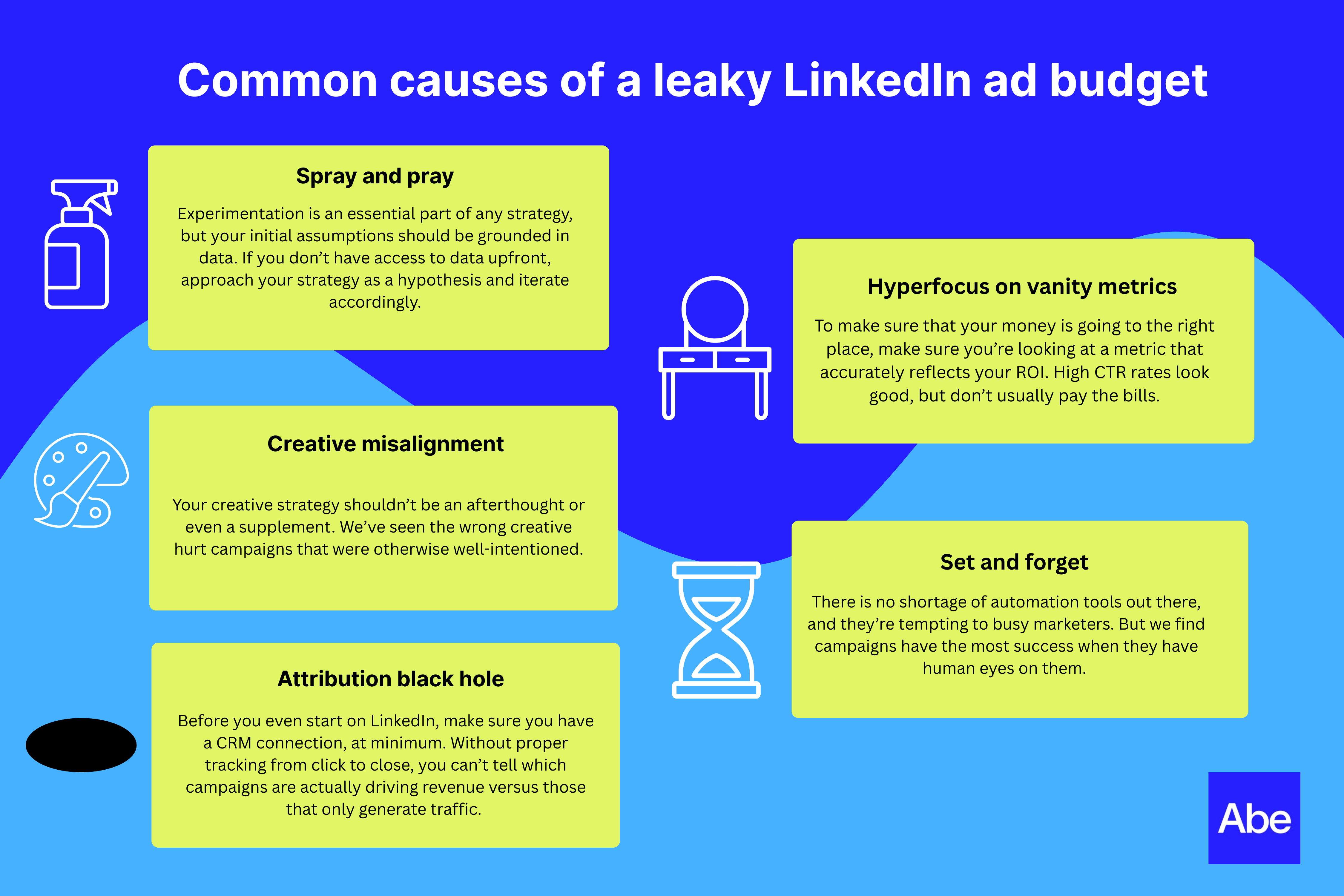
Nobody sets out to misspend on LinkedIn. In fact, it usually happens as a byproduct of another well-intentioned and even well-thought-out strategy. When we see misspend on LinkedIn, here are the common causes that we usually see:
1. The "spray and pray" targeting trap
Most agencies cast too wide a net, believing LinkedIn's professional data alone will find the right people. Because they’re self-reported, relying on job titles for targeting on LinkedIn is generally not enough. The only real way to ensure efficient ad spend is by having a list of companies that you’ve manually verified are within your core audience.
Because they're self-reported, relying on job titles on LinkedIn is generally not enough.
2. The vanity metrics mirage
High click-through rates feel good, but they don't pay the bills. We've seen campaigns with stellar CTRs that generated zero pipeline because they optimized for curiosity, not intent.
One caveat to this is that it might be acceptable if you’re running a plan with a mission to generate awareness. But it’s very important that the expectations of these campaigns be set, so that you and those you’re working with don’t expect ROI.
3. The creative-audience mismatch
Generic messaging + specific audiences = wasted impressions. Your ads might be reaching the right people, but if your message doesn't resonate with their specific pain points, you're just expensive wallpaper in their feed. Good creative is never an afterthought, and mediocre creative almost always is. Trust that your audience can always tell.
4. The attribution black hole
Without proper tracking from click to close, you can't distinguish between campaigns that drive revenue and those that just drive traffic. To make sure that you can fully oversee the success of your campaign, you should make sure that you have your CRM and your LinkedIn campaigns set up properly (Hubspot is the easiest one to set up!)
5. The set-and-forget syndrome
LinkedIn's algorithm changes, your market evolves, but many campaigns remain static. What worked six months ago is probably wasting money today. Automated flows are really enticing, but it’s really important that you keep a close human eye on your campaigns, no matter how much it seems like they can run themselves.
How to spot wasteful spending on LinkedIn
Step 1: Financial checkup
You can’t determine whether you’re ROI-positive or not unless you know what being ROI-positive looks like to you. Simply put, you need to know how much a customer is worth to you so you can determine how much you can spend on acquiring each customer.
What's your acceptable Customer Acquisition Cost (CAC)?
What's your current LinkedIn CAC vs. other channels?
Step 2: Closed won/closed lost analysis
We analyze your actual customers. Not who you think they are, but who actually buys:
Which titles actually sign contracts (vs. just engage with content)?
What company characteristics predict purchase likelihood?
What triggered their buying journey?
This data becomes the foundation for eliminating waste. You should only spend money on an audience that has already proven they will buy from you.
You should only spend money on an audience that has already proven they will buy from you.
Step 3: TAM Verification & Segmentation
We manually verify every account in your Total Addressable Market:
Do they have the budget?
Do they have the need?
Are they in a buying cycle?
Then we segment based on likelihood to convert, ensuring your highest spend goes to your highest-probability accounts.
What ad types are the most prone to ad spend waste?
Ad waste is not as simple as choosing the wrong ad type. The real issue comes from how you target your audience and what you expect from the campaign. Even the most effective ad format can fail if it is shown to people who are unlikely to buy, or if you are measuring success with unrealistic benchmarks. When campaigns are built with broad targeting or poorly defined goals, it is not the ad type that is causing the problem. It is the strategy behind it.
To reduce wasted spend, you need to focus on audience quality rather than creative or format. The most successful campaigns are designed around targeting people who have shown intent or a clear connection to your offer. This means refining your audience, testing segments, and using data-driven insights to find the prospects who are most likely to convert. When your targeting matches the customer journey, even simple ad formats can deliver strong results.
Your expectations also play a critical role. A prospecting campaign is not designed to deliver immediate sales, but it can be highly effective for building awareness and filling your funnel with the right audience for future retargeting. Retargeting campaigns, on the other hand, are better suited for driving conversions, but only if your targeting is precise and your messaging is relevant. By aligning your expectations with the purpose of each campaign, you can reduce wasted spend and get the most out of every advertising dollar.
Mini LinkedIn spend audit
Not ready to bring in an agency? Start with these diagnostic questions:
What percentage of your LinkedIn leads become opportunities? If it's below 15%, you have a targeting problem.
Can you calculate LinkedIn's true ROI? If not, you're likely wasting money without knowing it.
When did you last analyze your closed-won deals for patterns? Ideally, this has happened in the past 4-6 months. Otherwise, your ICP may have shifted due to macro-environmental factors.
What percentage of budget goes to Conversation Ads? If it's under 30%, you're missing LinkedIn's most efficient format.
How many targeting parameters do you use? More than 5 usually means you're guessing, not targeting.
The Abe difference
Not sure auditing yourself is the right move? Reach out to Abe, and we'll perform an audit for you. We don't just identify waste, we transform it into revenue!
Since 2015, we've managed over $75 million in LinkedIn ad spend for 150+ leading B2B brands. Our Customer Generation methodology has saved our clients an average of 45% on their cost-per-lead while improving lead quality. Get in touch today.
4 minute read
How to prevent wasted ad spend on LinkedIn
How much of your LinkedIn advertising budget is actually reaching your ideal customers? If you're like most B2B companies, the answer is probably “not enough”.
Choosing the wrong LinkedIn Ads agency doesn’t just waste your budget. It delays growth!
For B2B companies, where cycles are often long and each lead matters, the cost of a poor partner isn’t just in dollars. It’s in lost time, internal team frustration, and campaigns that never connect with the right people.
LinkedIn advertising is uniquely suited for B2B when it’s done with precision. That means targeting the right roles, using the right creative, and knowing how to move buyers through a well-intentioned sales process.
In many cases, it might make sense for a company to hire an agency. This guide outlines how to recognize the signs that an agency might be the right move for you. Then — if you happen to see your org in these signs — we’ll talk about how to know that you’re choosing the right agency.
When it makes sense to hire a LinkedIn agency
Hiring an agency isn’t always the right move. It only makes sense if:
You’re spending $5,000/month or more on LinkedIn Ads
You’re targeting multiple products, personas, or regions, and it’s become a bit cumbersome for the marketing team to keep up with
Your team can’t realistically dedicate 20+ hours/week to campaign setup, optimization, and reporting
You need help with attribution, ABM, CRM integration, or creative testing at scale
You don’t have anybody on your team who is a LinkedIn specialist (this is not to say that your team can’t do other things really well — it’s just that LinkedIn is a specialty all on its own. LinkedIn is so complex, some marketers dedicate their entire careers to it)
If your campaigns are simple, your budget is small, or you already have internal execution in place, you may be better served with a freelancer, a part-time specialist, or even a generalist hire. Agencies are best when the stakes are higher, the complexity is greater, and you need both strategic and technical expertise—not just help pushing buttons in Campaign Manager.
Can you hire a LinkedIn agency if you’ve never run LinkedIn ads?
Yes, and in fact this is when it can be the best investment.
A good LinkedIn agency won't expect you to show up with a perfect strategy or fully built campaign infrastructure. Actually, if you do this, don’t be surprised to see the agency start from scratch anyway (it’s not personal, just their methodology).
A good agency will help you build from the ground up: clarifying your goals, identifying your best-fit audience, and shaping offers that resonate with decision-makers. Look for a partner that treats onboarding as a collaborative process, not a handoff. They should set clear expectations for ramp-up time, be comfortable educating your team as you go, and show patience while early tests generate directional learnings.
If the fit is right, it’s likely that your team will actually come off of the engagement having learned a lot about LinkedIn ads and feeling more confident in running campaigns by themselves.
What to look for in a LinkedIn advertising agency
Not all agencies that offer LinkedIn services actually specialize in it, but many companies will seek out a specialized shop. That is more likely to guarantee a partner who can handle strategy, creative, execution, and analytics without needing to be hand-held.
Platform focus
A LinkedIn-only agency is ideal, but at the very least, LinkedIn should be a core part of their business, not an add-on. Ask how much of their revenue comes from LinkedIn-specific work. Look for teams who are familiar with the nuances of the platform — especially things like audience segmentation, bidding strategies, ad format rotation, and lead routing. Don’t be afraid to ask to meet with the person who will be working on your account on a day-to-day basis while you’re talking to sales and operations teams.
Industry specialization
Selling software, services, or anything with a long sales cycle is different from eCommerce. Your agency needs to understand how deals actually close: who’s involved, how long it takes, and what kind of creative makes an impression on a skeptical buying committee.
Be aware of any shop that claims to be an expert in both B2C and B2B. This is possible but unlikely.
Reporting style
Whenever you sign up for an engagement with an agency or a freelancer (or basically anything that is significant on your bottom line), it’s important to be able to prove ROI. This means you need visibility into performance that ties back to sales not just impressions and CTR. Ask how they report on lead quality, pipeline impact, and budget pacing.
At minimum, expect weekly or biweekly updates, with full access to your Campaign Manager and CRM data. Best case scenario, they can give you access to a dashboard that you can reference at any time (like a Looker Studio dash).
Defined roles
Good agencies build cross-functional teams. That means a strategist who sets direction, a campaign manager who handles execution, a creative team who develops the assets, and an analyst who interprets the data. Ask about how your prospective agency staffs their accounts. If it’s all one person, corners will be cut.
Clear pricing and terms
You should understand exactly what you’re paying for, and what happens if you decide to stop. Be wary of long lock-in periods, vague line items, or fees for things like basic reporting or asset access.
However, keep in mind that it can sometimes take months for get results from LinkedIn advertising, so you might want to budget for a few anticipatory months before you get true ROI.
Agency red flags to watch for
They treat LinkedIn as “just another paid channel”
Their campaign optimization only includes bid adjustments
They use templated, generic reporting
The agency won’t give you admin access to your own ad account
They talk about results in terms of "leads generated" but don’t mention anything about sales quality (a successful agency partnership requires a willingness to work with BOTH the sales and the marketing teams — not one or the other)
They don’t have a unique methodology, thought process, or philosophy when it comes to LinkedIn
Agency green flags to watch for
They optimize campaigns based on audience quality, funnel stage, and creative performance—not just bid changes
They treat LinkedIn as a strategic B2B channel—not just another paid platform
They provide custom reporting that ties directly to pipeline and sales metrics
They give you full admin access to your ad account and data
They align with both sales and marketing to measure qualified leads and revenue outcomes
They share a clear methodology for how they approach LinkedIn strategy and execution
They onboard your team with collaboration, education, and transparency
They start with simple, testable campaigns before scaling budget or complexity
They explain performance in context—using relevant benchmarks and business goals
They prioritize long-term growth, not just short-term clicks or lead volume
What you should expect to pay
Here’s a breakdown of standard ranges for serious LinkedIn campaigns. It’s common for agencies to charge a different amount depending on ad spend.
Some, but not all, agencies may also charge a one-time “set-up fee”, usually within the first month of discovery.
These are market rates. If an agency is quoting significantly less, you should assume they’re using a templated approach, offshoring execution, or assigning a junior marketer with limited platform knowledge.
Also ask about what's not included. Creative production, landing page support, or tracking setup/CRM integration could cost you extra.
How to evaluate an agency
Here’s a process that avoids guesswork and keeps things structured:
Shortlist candidates
Look for 3–5 agencies with visible expertise in LinkedIn and your industry. Prioritize those with a point of view—not just case studies, but a methodology they can explain clearly.
Ask for proposals
Request a short proposal that includes team structure, sample strategy, pricing, expected timelines, and references.
Check references
Actually call them. Ask about performance, communication, and how the agency handled unexpected challenges.
Make the call
Pick the agency that shows clarity, focus, and alignment—not just enthusiasm. The best partner should be able to explain what success looks like before the first dollar is spent.
What a strong agency relationship looks like
The best agencies act like an extension of your team. They push back when needed, explain trade-offs, and share data regularly. You know what’s happening with your spend, and you trust the team managing it.
They don’t chase vanity metrics. They focus on qualified leads, cost efficiency, and driving revenue. And they’re not just running ads—they’re helping you figure out what message matters to whom, and how to scale it.
Final thoughts
LinkedIn Ads aren’t for everyone—but for many B2B companies, they’re one of the few paid channels where the right message can reliably reach the right people at the right stage of a deal.
If you're at the point where growth depends on more than just organic reach and warm referrals, it’s time to take the selection process seriously.
Pick the wrong partner, and you’ll waste six months. Pick the right one, and LinkedIn becomes a lever—not a line item.
4 minute read
Buyer’s guide: How to choose a LinkedIn Ads Agency
Thinking about outsourcing your LinkedIn ads to an agency? Read this first.
As a specialized LinkedIn advertising agency, we've managed hundreds of campaigns. At this point, we have a pretty good idea of how much it costs to get results. In this guide, we're sharing real cost data from our campaigns, an overview of how pricing on LinkedIn works, and a guide to setting a budget for your own LinkedIn campaigns.
Note: for a full overview of costs associated with LinkedIn advertising PLUS a guide on how to assess your results, check out our free Benchmarking report.
LinkedIn ad costs (2025 data)
Based on our analysis of 500+ campaigns managed through our methodology, here are the median LinkedIn advertising costs for 2025:
Cost Per Click (CPC): $7.63
Cost Per Conversion: $549.51
Cost Per Lead: $932.18
Cost Per Mille (CPM): $85.24
Cost Per Video View: $0.51
Sample monthly LinkedIn advertising budgets
One of the most common questions we get is: "How much should I spend on LinkedIn ads?" The answer depends on your business size, goals, and market maturity. But that answer isn’t terribly helpful. So here is an example of the kind of budgets we usually see, keeping in mind that we’re speaking in broad strokes and the actual budget and allotment will depend on the specific account:
Startup (<$5,000)
Sample campaign mix: 70% lead generation, 30% web traffic
Targeting: narrow (1-3 job titles, specific industries)
Creative testing: 2 to 3 variations
Mid-level ($5,000-$10,000)
Sample campaign mix: 50% lead generation, 30% web traffic, 20% retargeting
Targeting: medium (3-5 audiences with different messaging)
Creative testing: 5 to 8 variations with A/B testing
LinkedIn uses a second-price auction model where advertisers compete for ad placements by bidding on actions like clicks or impressions. Your actual cost isn’t just your bid. It’s determined by what it takes to beat the next-highest bidder, plus relevance factors.
This means you can win auctions at a lower price than your bid if competition is weak, but you’ll pay more in competitive segments. High bids improve delivery by making you more competitive in auctions, but without proper controls, they can drive up average costs quickly. Managing bids carefully is essential to balance delivery volume with cost efficiency.
Guide to LinkedIn bidding strategies
LinkedIn offers three main bidding options. Each controls how your budget is spent and determines both cost per result and required management effort.
Maximum delivery (automated delivery)
How it works: LinkedIn sets bids automatically to get as many results as possible within your budget.
Cost: typically 10–20% more per result than manual bidding. LinkedIn will pay higher prices in auctions to maximize delivery.
When it makes sense: when you want volume and don't want to manage bids manually. Useful for new campaigns or when testing audiences.
Bottom line: You’ll spend your budget quickly and reliably, but at a higher average cost per result.
Manual bidding
How it works: you specify the maximum amount you're willing to bid for each click, impression, or send.
Cost: manual bids make it easy to anticipate how much a campaign will cost and keeps you from over-spending. But if your bid is too low, you risk under-delivery.
When it makes sense: when you want to control costs tightly and don't mind checking in every day and making adjustments.
Bottom line: less spender, but requires active hands-on optimization.
Cost cap
How it works: you set a target average cost per result. LinkedIn tries to maximize delivery while staying at or below that cost.
Cost: Helps heep average costs predictable, but delivery may slow if auction prices rise above your cap.
When it makes sense: you want to scale campaigns while enforcing a strict cost ceiling.
Bottom line: balances cost control with delivery. You sacrifice some volume flexibility to keep costs in check.
LinkedIn advertising vs. other platforms
More expensive, but more lucrative
LinkedIn charges a premium price because it’s built to reach valuable decision-makers and professionals. It is the only platform with the innate ability to deliver niche B2B audiences with precise targeting by industry, job title, or company size. These audiences have higher deal values and longer sales cycles.
It's for this reason that, on the surface, LinkedIn can seem like a more expensive option. However, while this may be true for TOFU (Top of Funnel) costs, our data shows LinkedIn provides better outcomes at the BOFU (Bottom of Funnel) level. This, of course, is what actually affects your bottom line. This is why we recommend LinkedIn as the best platform for teams looking to forgo vanity metrics and instead show ROI.
LinkedIn provides better outcomes at the BOFU (Bottom of Funnel) level. We recommend LinkedIn as the best platform for teams looking to forgo vanity metrics and instead show ROI.
How to calculate ROI on LinkedIn ad campaigns
To assess LinkedIn advertising ROI for our clients, we use LTV:CAC. LTV (Lifetime Value) refers to the amount that a customer spends over the course of their lifetime. In B2C, this is usually a one-time or recurring purchase. In B2B, it’s usually a monthly subscription cost.
We then compare that with CAC (Cost of Acquisition). The gold standard is 3:1, i.e., where you get $3 back for every $1 you invest in advertising.
Frequently Asked Questions
How much should I budget for LinkedIn ads per day?
LinkedIn requires a minimum daily budget of $10, but most budgets start at $50-$100 per day.
What's the minimum budget to see results?
For B2B lead generation, we recommend a minimum of $2,000-$3,000 per month. Anything less doesn't provide enough data for optimization or meaningful lead volume. Consumer-focused campaigns might work with lower budgets, but B2B requires higher investment due to longer sales cycles and higher-value prospects.
How do LinkedIn ads charge you?
LinkedIn uses objective-based pricing. You're charged based on your campaign objective:
Website Visits: Pay per click
Lead Generation: Pay per lead form submission
Brand Awareness: Pay per 1,000 impressions
Video Views: Pay per view (3+ seconds)
Sponsored Messaging: Pay per message sent
Can you advertise on LinkedIn for free?
No, LinkedIn doesn't offer free advertising like Google Ad Grants. However, you can:
Post organic content to build audience
Use LinkedIn's free job posting feature
Engage in LinkedIn groups and discussions
Leverage employee advocacy programs
For paid advertising, LinkedIn requires a credit card and minimum daily budgets.
Why are LinkedIn ads more expensive than [insert platform]?
LinkedIn ads cost more because:
Professional audience: Higher-value prospects command premium pricing
B2B focus: Smaller audience pool increases competition
Targeting precision: Ability to target specific job titles and companies
Platform positioning: LinkedIn positions itself as a premium professional network
The higher cost is often justified by better lead quality and higher conversion rates for B2B companies (see chart above).
B2B sales cycles mean you might not see closed deals for 3-6 months, but you should see lead generation within the first month.
LinkedIn advertising isn't cheap, but it doesn't have to break the bank either. The key is understanding that you're paying for quality, not quantity. When executed properly, LinkedIn ads deliver some of the highest-quality B2B leads available.LinkedIn advertising is worth the investment when:
You're targeting B2B decision-makers
Lead quality matters more than lead volume
You have a clear value proposition for professionals
Your average deal size justifies higher acquisition costs
You can commit to 6+ months of consistent testing and optimization
Ready to Get Started?
If you're ready to make LinkedIn advertising work for your business, we're here to help. As a specialized LinkedIn advertising agency, we've helped hundreds of companies navigate the platform's complexities and achieve profitable growth.
Our Customer Generation methodology focuses on precision targeting and continuous optimization to maximize your LinkedIn ad ROI. We don't just manage campaigns—we become an extension of your marketing team, providing strategic insights and hands-on execution. Click here to book a call with our friendly sales team.
4 minute read
How much do LinkedIn ads cost in 2025?
If you're trying to decide where LinkedIn fits into your marketing budget, this article is for you.
If you were to ask B2B marketers what their most important channel to invest in was this year, they’d probably say LinkedIn. And that makes sense. There is a lot that makes this platform desirable.
LinkedIn stands apart not just for its targeting options or bidding models, but because it’s one of the few places online where professionals are primed to think about work before they even log in. It’s a lot easier to grab attention when you’re not competing with a video of a family of raccoons throwing a party on somebody's patio.
The trouble is, while LinkedIn is a platform that we at Abe believe in so much that we literally built an agency for it, we will be the first to admit that it is not the easiest channel to use. Appearances can be deceiving if you're not looking at the right metrics or models. Understanding how well you’re doing on LinkedIn requires context, which, until now, was hard to find.
Fortunately, we’ve developed a LinkedIn Advertising Benchmarks for B2B report, drawing on a large sample of real client campaigns to provide meaningful reference points for budget planning, performance reviews, and strategic decisions.
We’ve made the main takeaways public in this article, but if you’re running LinkedIn ads, please do grab a copy of the free report once it's live. We worked hard to make sure it would be jam-packed with information to help you on your way.
Where do these benchmarks come from?
This data comes from real campaigns run by yours truly as well as our sister agency, Directive Consulting.
The data comes from brands with monthly LinkedIn budgets ranging from $3,000 to $300,000. It spans small businesses and enterprise players, with a strong focus on B2B SaaS. All results were cleaned for outliers and anonymized to ensure data integrity and privacy.
The goal isn’t to prescribe a single “ideal” number, but to provide realistic, defensible ranges that marketers can use to evaluate their own performance.
How to use benchmarks
Effective data analysis depends on context. Your data storytelling is only as good as your details. A good example of this is if you were presenting on LinkedIn advertising costs. On the surface, it might seem expensive, but that would only be the case if you're looking at lead costs comparative to other platforms. If you look at lead quality, suddenly LinkedIn looks like the most valuable channel to ever exist.
Your data storytelling is only as good as your details.
Benchmarks won't tell your unique story for you, but they will help you provide relative measures. As marketers who are relying on reporting to convey how well you're hitting your KPIs, we hope these benchmarks will help you to:
Set expectations that stakeholders can understand
Identify underperforming areas worth optimizing
Justify budget allocation with credible industry data
LinkedIn benchmarks by metric
Cost Per Click (CPC): Around $4.34
Reflects the price to generate a single click. Higher than many social platforms, but typical for LinkedIn’s professional audience.
Cost Per 1000 Impressions (CPM): Approximately $85.24
Reflects the price to generate a single click. Higher than many social platforms, but typical for LinkedIn’s professional audience.
Cost Per Lead (CPL): Roughly $550
A typical cost to capture a qualified lead. While this can seem high, it often reflects better sales conversion rates downstream.
Click-Through Rate (CTR): Typically ~0.66%
LinkedIn CTRs tend to be lower than channels with broader audiences, reflecting its niche professional targeting.
These are overall medians—but the report also includes low-range and high-range values, showing the variability you might expect depending on your industry, offer quality, and targeting strategy. For instance:
CPL values can range from ~$335 on the low end to $885 or higher in more competitive contexts.
CPM can range from ~$56 to $144 or more, depending on audience granularity and creative impact.
CTR typically ranges between ~0.46% on the low side and over 1% in well-optimized campaigns.
These spreads help marketers understand not only what’s “typical,” but what’s possible with strong creative, targeting, and value propositions.
Ad type-specific callouts
Conversation Ads
Median CPC: ~$3.23
Median Cost Per Lead: ~$884
Median Open Rate: ~40.9%
Notes: Strong open rates reflect the direct-message format, but CPL can be higher due to the need for personalized offers and incentives.
Sponsored Content
Median CPC: ~$11.16
Median Cost Per Lead: ~$1,192
Median CPM: ~$32.66
Median CTR: ~0.56%
Notes: A flexible format for both awareness and engagement, with performance shaped heavily by creative quality and audience targeting.
Matching ad types to funnel stages
One of the most consistent findings in our work is that LinkedIn ad performance can’t be separated from funnel stage strategy. Different formats excel at different goals. Most brands will want to do a mix of around 70% lead generation, 30% awareness. The exact blend will depend on your brand notoriety and market penetration. We would virtually never recommend that a brand spend nothing on brand awareness.
Most brands will want to do a mix of around 70% lead generation, 30% awareness.
Top of Funnel (TOFU)
Goal: Build awareness among target audiences
Formats: Sponsored Content, Video Ads
Metrics to watch: Impressions, CPM, reach
Even for cautious budgets, allocating some spend to brand awareness campaigns supports long-term efficiency by increasing recognition before asking for a conversion.
Middle of Funnel (MOFU)
Goal: Capture interest and generate leads
Formats: Document Ads, Lead Gen Forms
Metrics to watch: Cost Per Lead, conversion rate
This is the stage for value exchanges: offering genuinely useful content in return for contact information. Whether it's a whitepaper, webinar, or other gated resource, the content needs to answer real questions your audience has.
Bottom of Funnel (BOFU)
Formats: Conversation Ads, ABM campaigns
Metrics to watch: MQLs, SQLs, Opportunity creation
Here, relevance is everything. Conversation Ads, for example, work best when they feel personal and include compelling incentives—like free trials, credits, or carefully considered offers that encourage direct engagement.
It’s also important to recognize that performance varies significantly by ad format. Below are a few sample median metrics from our dataset, showing how costs and engagement typically differ across common LinkedIn ad types:
Conclusion
It’s easy to think of benchmarks as just numbers on a page. But they’re really about enabling better choices.
By understanding typical cost ranges and outcomes, marketers can communicate performance more credibly, plan budgets based on evidence,
Communicate performance more credibly internally
Plan budgets based on evidence, not guesswork
Spot opportunities for incremental improvement
LinkedIn remains one of the most valuable platforms for B2B marketing, but also one of the hardest to get right. If you don't have a LinkedIn advertising expert on your team, Abe would love to fill in any gaps you're experiencing. Get in touch with our friendly team today.
4 minute read
LinkedIn advertising benchmarks
What does "good" look like on LinkedIn ads? This is the exact question that our benchmarking library answers.
For marketers worldwide, LinkedIn is heralded as the most important platform to master. But does this sentiment hold up under scrutiny? We took to the proverbial streets to find out what those in the weeds truly think about the potential for LinkedIn to deliver on business goals. Here's what they said.
On transcending the "job board" mindset:
''What I wish I had known — and what other people should know — is that LinkedIn is a great platform for growing your business and it is not strictly a corporate job-seeking business-focused social platform. You can build a community and you can build your business with LinkedIn alone." - Alexis Quintal , Rosarium
Abe’s reaction
We like to think of LinkedIn’s advantages as falling into one of two categories.
On one side, you have the external advantages that you can apply to the platform (like strategy or methodology).
On the other side, you have LinkedIn’s very real inherent advantages that make it a good investment before your approach even hits the table. One of these inherent advantages is that LinkedIn is the only social media platform where people go in expecting to talk shop, not watch cat videos. We couldn’t agree more with Alexis.
On the humility to be proven wrong
"I was surprised to learn that most people reading my articles were not the buyers but someone on their behalf. I used to write my articles expecting the freight managers or the heads of procurement to read them.
I then discovered the actual conversations and questions were from their assistants, advisors, or individuals from the same department observing quietly. It shifted the way I wrote my articles. I made the words straightforward and emphasized clear outcomes. This resulted in more referrals and fewer cold starts." - Allan Hou, TSL Australia
Abe's reaction
We often find ourselves telling our clients that we are (ironically!) the worst people to make assumptions about the behavior that our ICP will engage in. And it’s not because we’re not good at our jobs. It’s because we’re too in it!
Much like we sometimes need a close friend to tell us something about our own lives that we are unable to see ourselves, we often need to take a step back and observe our ICP without preconceived notions. This takes a degree of humility, but if you get into that mindset, you might be surprised at what you learn.
On thinking outside of the post
Conventional wisdom said, flood LinkedIn with posts, daily if possible. It’s what’s supposed to drive reach. But the real shift came when I dialed back and focused on something less obvious: strategic commenting.
Instead of scattershot content, I mapped out a list — a handful of industry folks, a few possible client companies — and made it a habit to actually contribute to their posts. Not generic, “Nice post!” stuff, either. Instead, taking the time to add a dissenting idea, or to flesh out a point left hanging.
Profile visits increased. The right kind of DMs landed, too. It became a testing ground: refining your ideas in front of peers without burning out on your own content treadmill." - Yevhenii Tymoshenko, Skylum
Abe's reaction
We love this idea from Yevhenii because it brings up the most important attribute of networking of any kind: authenticity.
When you’re sharing opinions you actually care about with people who are well positioned to care, that’s where the magic happens. And where you’re much less likely to be accused of being a bot programmed to comment “great post!” 10,000 times.
On why brand advertising remains relevant
“Early on I was way too focused on perfecting my posts and waiting for the ‘right moment’. But instead, I found out that by being regular, even with simple, natural updates, the momentum would be there quicker. Publishing about projects, lessons learned, and wins contributed to raising our engagement by approximately 22% for six months.
For someone who is beginning, I’d say keep up with your real story, make sure your content is relevant to your audience, and don’t hesitate to display the human face of your business." -Daniel Roberts, Dan Roberts Marketing
Abe's reaction
Imagine you had to sit through an award ceremony — an Academy Awards or a Grammy’s, if you will — and all the hosts did was rattle off stats. Boring, right? You don’t watch these shows to know how many tickets a movie sold or how many streams a single received. That might be an interesting supplemental detail, but it’s not what makes the event special. You tune in for the story and the passion.
As Daniel eloquently states, brand marketing lives by the same rules. Don’t put your accolades or even your features at the forefront. Decide what your purpose is, what your belief is relevant to that purpose, and proliferate it to the highest degree possible. Your audience will follow, more tuned in than ever.
On resisting the urge to Cmd C + Cmd V
"For the new ones, be patient and try out. What will go down well with a specific group of people may not necessarily work in the same way with another group of people, hence the need to try using different content, messaging and the best times of posting will be a good idea.
This trial and error process is one of the elements of developing a LinkedIn strategy that will work."- Tracie Crites, HEAVY Equipment Appraisal
Abe's reaction
As tempting as it is to adopt a copy cat approach, this is good advice from Tracie. When we analyze competitors for our clients, we always make it clear that we are only seeing a sliver of the entire picture. While we can see what’s going on on the outside, we can’t see in their first-party analytics, their CRM, or their business goals. These are important determinants in how any strategy will perform. It’s best to stick to your own parameters.
On relying on empathy above all
"Our bios are about US but for THEM. In other words, you should promote yourself but think about how that serves a potential employer or client or customer. What are they struggling with that you can help them with?" - Danielle Z Hughes, More Than Words
Abe's reaction
This comment from Danielle gave us pause, because it’s not one that we hear spoken of often. But it is actually such a uniquely good point. The ability to take a step back and ask yourself what kind of clients you want to work with, or what kind of customers you want to attract, is a necessary way to make sure that you're fulfilling real business goals to the depth of their potential. Otherwise, your performance might look okay on paper, but actually distracted you from your greater purpose.
Let Abe help you scale with LinkedIn advertising
If you want to elevate your platform with a LinkedIn advertising strategy that will land you a steady flow of ideal-fit clients for your business and maximize your ROI — talk to us. Our true, unfiltered thought on LinkedIn is that we know how to win.
4 minute read
We asked marketers for their honest thoughts on LinkedIn
Love it or hate it, LinkedIn is a non-negotiable part of any marketing strategy — especially in B2B. We asked some of our fellow marketers for their honest, unfiltered thoughts on LinkedIn.
With billions of users across platforms like Facebook, Instagram, Twitter, and TikTok, it’s the no-brainer space for reaching and engaging your audience. The problem is most audiences hate to see brands on social media. They're scrolling to decompress by looking at silly memes and cat videos. You're going to have to work extra hard to earn their attention, let alone their respect.
This is hard work, so most companies outsource social media work to agencies. Not only does this save effort but it also in many cases ends up being more cost-effective. A (good) agency will create compelling strategies, target the right people, and drive measurable results. But the operative word here is "good"!
We’ve compiled a list of 9 top-tier social media marketing agencies that know how to make every post, click, and dollar count. Consider them if you're looking for social media ROI.
Why hire an agency?
Social media marketing is its own beast. Unless you have a specialized social media marketer on your staff, it's likely either an unfair or unrealistic expectation for your team. Otherwise, don't be surprised if your team overspends or underperforms. This is easy to do.
A great agency does much more than just schedule posts. They blend strategy, creativity, and analytics to enhance your campaigns and maximize your return on investment.
The right agency will help you with:
Precision audience targeting
Engaging content and ad creatives
Continuous campaign optimization
Smart A/B testing for better performance
Deep analytics and strategy adjustments
Clear, results-driven campaign planning
Budget management that stretches your resources
Some agencies will handle multiple social media platforms, but we recommend finding a specialized partner. Usually, even if an agency will handle multiple platforms, their raison d'être is just one or two of these channels.
1. Abe
🏷️ Pricing starts at $5,000 a month ✔️ Offers 1:1 account support ✔️ In-house writers and designers 📱 LinkedIn only
Of course we'd trust...ourselves. Abe was built from the ground up based on proven strategies we fine-tuned at our sister company, Directive Consulting. What started as a killer LinkedIn playbook quickly grew into an agency focused 100% on dominating LinkedIn for B2B brands. Now, we’re doing our own thing, bringing fresh ideas with one laser-sharp focus: LinkedIn.
Please don't try to hire us to do TikTok, YouTube, or Meta ads. But if you're curious about LinkedIn, we should be on speed dial (remember that?)
Should you choose Abe, you'll experience the one-on-one account support that we offer to all of our clients. We take a data-driven approach, using the same financial modeling that high-performing marketing teams rely on to get promoted.
Before any ads go live, a member of our team personally verifies every account on your target list to ensure your budget is spent effectively and nothing goes to waste. Finally, our in-house creative team, made up entirely of skilled professionals rather than AI, crafts original, attention-grabbing ads that make your brand truly stand out.
Abe highlights
Exclusive focus on LinkedIn. No distractions, just top-tier LinkedIn ads that work.
1:1 account support. Forget one-size-fits-all campaigns. We personalize every outreach, building lasting relationships with your target accounts.
Data-obsessed. We run all of our campaigns on the same financial modeling that elite marketing teams get promoted on.
Targeted outreach. At Abe, a human will literally double-check every account that's on your target list before we send ads out to them. This is how a lot of ad spend would otherwise get wasted.
Homemade creative. We have an in-house (human! not AI) creative team that will make ads that make your brand pop and gather attention.
2. 310 Creative
🏷️ Starts at $8,000 per month ✔️ Offers 1:1 account support ✔️ In-house writers and designers 📱 LinkedIn, Twitter, Facebook, Instagram
Though they do offer many services you'd expect out of an agency, 310's main thing is Account-Based Marketing, which could also aptly go by "Relationship-Based Marketing". This is an approach that relies on heavy personalization. Personalized content, personalized positioning, and bespoke sales cycles all add up to make it more enticing for big-name brands to work with you. Think of this as the valet parking of social media advertising.
310Creative highlights:
SaaS expertise: With a deep understanding of the SaaS world, 310 Creative tailors strategies to tackle unique industry challenges and seize opportunities.
Cross-team collab: They bring together sales, marketing, and service teams, ensuring a seamless customer journey from first touch to conversion.
Account-Based Marketing: By using ABM strategies, 310 Creative personalizes marketing efforts for key customer segments, making every interaction more relevant.
Data-Driven Decisions: They use data to drive strategy, measure performance, and continuously
3. Socialistics
🏷️ Contact for pricing ✔️ Dedicated account management ✔️ In-house writers and designers 📱 Platforms: LinkedIn, Facebook, Instagram, TikTok
Socialistics prides themselves on being all about the "long game" of social media marketing. They build every strategy on building real relationships and engaged communities, not just quick wins like followers who unfollow you three days later or commenters. whomight be bots. With a sharp team of experts and a collaborative approach, they create social strategies that actually stick.
Socialistics highlights:
Long-term strategy: Socialistics focuses on sustainable growth, crafting social plans that build brand love over time—not overnight.
Expert team: A powerhouse team of social pros who get consumer behavior, industry shifts, and the tech that drives it all.
Client-centric communication: Big on collaboration and transparency—clients are always in the loop and part of the strategy.
Beyond the ,etrics: For Socialistics, it’s not just about the numbers—it’s about authentic engagement and real audience connection.
Client loyalty: Their strong retention rate says it all—clients stick around because the results (and relationships) are real.
4. Onya
🏷️ Contact for pricing ✔️ Dedicated account management ✔️ In-house creative team 📱 Platforms: LinkedIn, Facebook, Instagram, TikTok, Pinterest
Onya has earned a spot at the top by being the kind of agency clients don’t want to leave. With high retention, sharp digital skills, and a commitment to clear communication, Onya delivers real results on social media. They use their position as a smaller agency to their advantage, empowering the team to share insights with one another. They mostly serve clients in higher education and government, but it seems like their expertise isn't limited to these.
Onya highlights:
Clients stick around: Onya boasts a high retention rate
Full-funnel: From paid ads to social media, content, and strategy, they do it all—and they do it well.
Clear comms: Expect regular updates, honest feedback, and a true collaborative vibe.
Project management: Deadlines? Met. Projects? Smooth. Teams? Super responsive.
Creative that clicks: Onya brings fresh, audience-first ideas that actually engage—no fluff, just smart marketing.
Driven by data: Every move is backed by metrics that matter, with a focus on results that move the needle.
Volterra has been in the game since 2008, when Tom was still in your top friends on MySpace. They’ve been through it all and earned their reputation as a top-tier digital marketing agency by doing more than just managing posts. They specialize in social media marketing and online branding, offering tailored strategies that boost engagement, build trust, and actually move the needle.
Volterra highlights:
Seasoned pros: From content creation to lead gen and ads, Volterra knows how to make brands stand out on every platform.
Custom solutions: No cookie-cutter campaigns here—Volterra delivers personalized strategies based on each client’s unique goals.
Top-notch PM: Clients rave about their efficiency, organization, and ability to consistently deliver on time.
Proven results: Whether it’s brand awareness, audience engagement, or referral growth, Volterra brings the results to back it up.
Strategic alignment: Everything is built to align with the client’s bigger business goals—and stay on budget.
Collaboration: Their approach is rooted in partnership, not just service—clients are in the loop and in control.
6. Sculpt
🏷️ Pricing: Starts at $4,200/month for paid campaigns; full-service retainers from $8,500/month ✔️ Dedicated account management ✔️ In-house creative team 📱 Platforms: LinkedIn, Facebook, Instagram, Twitter, YouTube, TikTok
Sculpt is a B2B social media marketing agency that’s been active since 2012. They offer both organic and paid social strategies designed to support lead generation and brand awareness. Their services focus on managing full-funnel campaigns, with an emphasis on audience targeting, content production, and performance reporting across platforms like LinkedIn, Meta, and Twitter.
Sculpt highlights:
B2B background: Sculpt specializes in helping B2B brands navigate paid and organic social to drive awareness, leads, and sales across platforms like LinkedIn, Meta, and Twitter.
Tailored campaigns: Every engagement is custom-built to meet specific business goals, whether that’s pipeline acceleration, employee advocacy, or brand positioning.
Cross-functional: They integrate well with in-house marketing teams and other partners, acting as a true extension of your team.
Performance-driven: Campaigns are designed around clear KPIs and optimized continuously using data-backed insights.
Experienced team: With over a decade in the game, they bring expertise in B2B buying cycles, platform changes, and evolving digital trends.
Transparent communication: Clients get detailed reporting, regular check-ins, and real-time visibility into what's working and why.
7. OST Marketing
🏷️ Pricing: Custom proposals based on scope and objectives ✔️ Dedicated account management ✔️ In-house creative and strategy teams 📱 Platforms: LinkedIn, X (formerly Twitter), Facebook, Instagram
OST Marketing is a B2B social media agency that works with global brands to deliver strategic, content-led campaigns across platforms like LinkedIn, X, and Facebook. Founded in 2010, the agency offers a wide range of services—from influencer marketing and paid media to community management and executive visibility. OST is known for running localized campaigns across global markets, with a focus on driving meaningful engagement and measurable business results.
OST highlights:
B2B social media focus: Sculpt specializes in helping B2B brands navigate paid and organic social to drive awareness, leads, and sales across platforms like LinkedIn, Meta, and Twitter.
Tailored campaigns: Every engagement is custom-built to meet specific business goals, whether that’s pipeline acceleration, employee advocacy, or brand positioning.
Strategic support: From messaging frameworks to channel strategy, Sculpt helps clients build cohesive systems for social media success.
Cross-functional collaboration: They integrate well with in-house marketing teams and other partners, acting as a true extension of your team.
Performance-driven: Campaigns are designed around clear KPIs and optimized continuously using data-backed insights.
Experienced team: With over a decade in the game, they bring expertise in B2B buying cycles, platform changes, and evolving digital trends.
8. LeadTail
🏷️ Pricing: Custom packages; pricing based on scope and services ✔️ Dedicated strategic support ✔️ In-house social and influencer marketing experts 📱 Platforms: LinkedIn, X (Twitter), Meta (Facebook & Instagram), YouTube
Leadtail is a B2B social media agency that partners with marketing leaders to elevate their brand’s presence across digital channels. Since its founding, Leadtail has focused exclusively on B2B, offering a mix of social media strategy, influencer marketing, paid advertising, buyer insights, and event-based social campaigns. Their approach combines strategy with execution—helping clients understand their audiences, build authentic influencer relationships, and generate engagement that supports long-term marketing goals. Whether it’s amplifying executive visibility, driving event buzz, or launching paid social campaigns, Leadtail blends creative thinking with data-driven insights to deliver tailored solutions. Their services are ideal for brands looking to grow credibility, visibility, and impact in competitive B2B spaces.
Leadtail highlights:
B2B-Only Focus: Deep specialization in social media for B2B audiences, from strategy to execution.
Influencer Marketing Expertise: Helps brands identify and build real relationships with niche B2B influencers.
Strategic Insights: Offers audience and buyer intelligence based on real-time social behavior.
Holistic Offerings: Combines organic content, paid media, influencer programs, and analytics into cohesive campaigns.
Event and Thought Leadership Support: Boosts presence during events and amplifies executive content.
9. Boundless Marketing
🏷️ Pricing: Custom packages tailored to client needs and objectives ✔️ Dedicated account management ✔️ In-house creative and strategy teams 📱 Platforms: LinkedIn, Facebook, Instagram, Twitter, and more
Boundless Marketing is a B2B social media agency that specializes in transforming social media presence into strategic growth assets. Their services are meticulously designed for the needs of B2B companies, going beyond content creation to strategically leverage social media networks for brand awareness, engagement, and lead generation. With a focus on platforms like LinkedIn, Facebook, Instagram, and Twitter, Boundless Marketing helps businesses connect with industry leaders and key decision-makers, establish thought leadership, and drive ROI. Their comprehensive approach includes social media strategy, management, content creation, and analytics, ensuring that each campaign is aligned with the client's business goals.
Boundless highlights:
B2B Social Media Expertise: Specializes in crafting and executing impactful B2B social media strategies that drive measurable business value.
Comprehensive Service Offering: Provides a full suite of services including social strategy, paid social advertising, community management, content production, and detailed analytics.
Tailored Campaigns: Develops customized strategies aligned with each client's unique goals and target audiences.
Experienced Team: Combines in-house creative and strategic professionals to deliver cohesive and effective campaigns. Growth Hackers
Global Reach: Supports international campaigns, ensuring content resonates across diverse markets.
It's a bird, it's a plane, it's Abe
Flying high above the rest. If LinkedIn is where your buyers are—and you’re serious about reaching them—then Abe is the agency to call. We’re built from the ground up for one purpose: helping B2B brands win on LinkedIn. From hand-verified account targeting to handcrafted ad creative and data-driven budget modeling, everything we do is built for performance. Ready to see how Abe can work for your team? Book a free demo here and find out if we’re the right fit to scale your LinkedIn strategy.
4 minute read
9 best B2B social media agencies
Social media might look effortless but behind every “simple” post is a mountain of strategy, testing, and creative energy. The best agencies make it look easy because they’ve already done the hard work behind the scenes. If you’re ready to stop guessing and start growing, these are the teams worth your trust.
Did you know that running LinkedIn ads through a vendor can actually save you money compared to doing it yourself? We’re here to guide you on how to pick the right agency that’ll bring in solid results.
Something important to consider, and often overlooked: LinkedIn is one of the most popular social media platforms out there, with over a billion users. And unlike other platforms where people connect for fun (consider the emphasis on social, in social media), LinkedIn is where professionals gather to talk about actual business and network. That’s why it’s such a goldmine for B2B advertising — you're hitting the right audience in the right place.
The thing is, LinkedIn ads can be tricky to figure out. If you’re not careful, you could end up wasting a lot of cash. That’s why a lot of businesses choose to hand their campaigns over to a performance marketing agency. A good agency usually pays for itself by doing more than just managing the ads.
Why use a partner for your LinkedIn Ads?
Your marketing team is talented, but LinkedIn ads can be tricky to figure out. If you’re not careful, you could end up wasting a lot of cash. That’s why a lot of businesses choose to hand their campaigns over to a performance marketing agency. A good agency usually pays for itself by doing more than just managing the ads.
Below are other aspects a good agency should help you out with:
Smart advice on targeting the right audience
Recommendations on the best ad formats to use
Creative copy and positioning that hits the mark
Optimizing campaigns for better ROI over time
Analyzing ad performance and tweaking strategies for maximum impact
A/B testing to figure out what works best for your business
Building a comprehensive strategy that aligns with your overall goals
Managing your budget effectively to avoid overspending
Generating leads through tailored campaigns that convert
So, if you want to get the most bang for your buck with LinkedIn ads, teaming up with an experienced agency is your best bet. Below are a few we recommend!
1. Abe
We’re humble, we swear! But the thing is, we’re also honest. The services that we now offer through Abe originally grew from a strategy we created for LinkedIn campaigns at Directive Consulting, our sister company. This means our methods are tried and true. We’ve learned from experience, and although we maintain a close relationship with Directive, we’re now out into the big bad world with our own ideas and individual life tools!
And there’s a reason why we want to emphasize the value of LinkedIn so much. While Directive dives into everything from content marketing to paid media across various platforms, we at Abe are all about LinkedIn. By narrowing our focus, we’ve honed our expertise.
Abe operates using our one-of-a-kind Customer Generation™ method. This approach centers on using authentic, first-party data to really hone in on the right audience. We don’t waste time with auto-generated lists. Our goal is to ensure cost-effective campaigns with real results. What you’re spending should be reaping real benefits.
We also believe in the oldschool pillars of advertising—bold, eye-catching copy and visuals—subway ads that really stay with you, not just generic banners we’re quick to exit out of in pop-up ads. Our in-house writers and designers, (yes, real people, not AI)—get deep into your product so we can connect with your audience in the most impactful way possible.
TigerConnect reported a 5% increase in ad spend, 111% increase in LinkedIn visits.
Impelix confirmed a “84% form completion rate and lower Costs-Per-MQL.
GiftBit celebrated a 100% MQL increase with 1 in 3 becoming customers.”
2. Cleverly
By now, we all know LinkedIn ads are key to growth, and Cleverly makes sure those leads are high-quality and scalable. As a top-tier LinkedIn lead gen agency, Cleverly has mastered outbound messaging and LinkedIn automation. They take a data-driven approach to help businesses connect with prospects through super-targeted outreach campaigns. Basically, they’re another go-to for guaranteed, LinkedIn-driven success!
Cleverly uses LinkedIn lead generation to connect businesses with the right decision-makers through personalized connection requests and follow-ups—maximizing engagement and conversion rates. They also rock cold email lead generation, combining email and LinkedIn messages to create a multi-touch strategy that really gets results.
Need help with content? Their LinkedIn content service has got you covered, crafting posts that hit the sweet spot with your audience. By sharing valuable insights, they help you build trust and stand out as a thought leader.
For agencies wanting to scale, Cleverly also offers white-label lead generation which lets you offer LinkedIn lead gen services to your clients without breaking a sweat. And if you want to dive deeper, their Lead Generation Master Class shows you how to use LinkedIn like a pro, with all the tools you need to succeed.
Plus, Cleverly offers different pricing tiers to fit every business—whether you’re a startup or a large company, there’s a plan for you. With Cleverly, you’ll create a pipeline that works for your unique needs!
Best for:
LinkedIn Lead Gen Campaigns That Convert
Outreach Messages That Get Replies
Targeted Connection Requests That Stick
Seamless CRM Integration for Lead Tracking
Pricing:
LinkedIn Lead Generation ranges from 397.00/mo (Silver) to 997.00/mo (Platinum)
Cold Email Lead Generation: Pay Per Meeting-Ready-Lead
LinkedIn Content Service: 697.00/mo (12 LinkedIn posts per month)
White-Label Lead Generation: ranges from 397.00/mo (White-Label Gold) to 697.00/mo (White-Label Platinum)
Lead Generation Master Class: one-time 497.00 payment
Client feedback:
“Cleverly was able to convert more than 10% of cold message outreach into sales conversations. Highest I have seen. Love working with them.” - Arun
“Once you sign up for Cleverly, there's an onboarding document that I carefully filled out. The rep used that information to craft a campaign that truly reflected my input. Well done!” - Erik Brigham
3. Impactable
Impactable (formerly LinkNLearn) is all about making LinkedIn ads work for you. They’ve built a solid reputation for creating super targeted LinkedIn ads that not only grab attention but also boost brand awareness and turn leads into customers. The best part? They focus on getting you a serious return on your investment, which basically means they want you to make more money than you spend on ads.
At Impactable, they don’t just run ads—they build entire LinkedIn-based marketing systems designed to drive consistent B2B growth, bring in high-quality leads, and ditch all that marketing waste. Their team of experts, along with custom tech and proven strategies, helps businesses scale without the headache.
The company’s founder, Justin Rowe, got hooked on LinkedIn's power when he discovered a game-changing approach to LinkedIn lead gen. This helped him land job opportunities and investments. Justin even became part-owner of a small restaurant franchise. He quickly turned his side hustle of helping others harness LinkedIn into something much bigger. As his system grew, he became the #1 ranked LinkedIn expert on Upwork, and eventually, he launched LinkNLearn. Fast forward, and after working with 1,000+ companies in over 30 countries, growing a 20+ person team, and evolving the brand, LinkNLearn became Impactable.
Best for:
LinkedIn Ads Management That Delivers
Account-Based Marketing (ABM) That Hits the Mark
Retargeting Campaigns That Bring ‘Em Back
Data-Powered Optimization and Reporting
Pricing:
Starting at $649/month, dependant on personalized customizations
Client feedback:
“…the LinkedIn experiment can only be described as a great success. We're getting more leads than we know what to do with. However, I want to try to compare it to Google Ads and then decide how to allocate funds across both platforms.” - Christian Joe, Founder of BINDHQ
“It's an understatement to say important you have been over at Impactable - B2B Ads Agency for me going all in on LinkedIn Ads and learning the ins and outs. I recommend ANYONE who needs an agency for LinkedIn specifically to check them out.” - Adam Holmgren, Global Demand Generation, GetAccept
4. Speedwork Social
Looking to take your B2B products and services to the next level on LinkedIn? You might want to check out Speedwork Social, a boutique LinkedIn marketing agency that’s all about high-performance ad campaigns. They specialize in crafting LinkedIn ads that actually get results, with a focus on constant experimentation and tweaking ad creatives and targeting to squeeze every bit of ROI from your budget.
Speedwork offers proven campaign strategies, complete funnel builds, and audience targeting that’s as sharp as a tack. With years of experience and millions in ad spend under their belt, they know how to make your LinkedIn campaigns shine. From the perfect ad copy to finding your ideal audience, they've got it covered.
But it doesn’t stop there. They also manage your LinkedIn and Facebook ads, landing pages, and more, ensuring everything is always optimized for maximum impact. Speedwork’s goal is to help you get the most bang for your buck, and they’re experts at making sure your ad budget works hard for you.
What really sets them apart is their full-funnel marketing approach, which includes lead nurturing and automation to convert leads into loyal buyers. It’s not just about generating leads – it’s about turning them into customers who stick around.
Plus, Speedwork offers personalized training, ad account audits, and consulting if you need a little extra help or want to up your LinkedIn game.
If you’re looking for an agency that eats, sleeps, and breathes LinkedIn, Speedwork Social might be your perfect match. They know the platform inside and out, and they’re ready to make some magic happen for you!
Best for:
LinkedIn Ads That Work Like Magic
Ads That Grab Attention and Drive Action
Targeting Your Perfect Audience, Every Time
Tracking Results and Crushing Your ROI
Pricing:
Speedwork Social doesn’t put a price tag on their services upfront, but they’ve got you covered with a LinkedIn Ad Pricing Guide and LinkedIn Ads Benchmarks. These resources give you the inside scoop on what to expect when it comes to costs, helping you plan your LinkedIn ad strategy with confidence!
Client feedback:
“It has been an absolute pleasure to work alongside Anthony in shaping and executing Outreach’s paid social strategy over the last year. Our collaboration has been marked by a significant investment of around $3MM on LinkedIn, where we have not only met but exceeded client expectations with outstanding results.” - Viven Hsu, Client Solutions Manager at LinkedIn
5. 310Creative
310Creative is all about blending LinkedIn Ads with inbound marketing magic to create a strategy that packs a punch. It’s not just about throwing ads out there—they know how to craft content that really speaks to your target audience while using LinkedIn’s tools to make sure your message gets seen far and wide.
For businesses aiming for the full package, 310Creative has mastered the art of combining paid and organic strategies for a one-two punch that covers all bases. They don’t just talk the talk; they walk the walk when it comes to maximizing HubSpot ROI (see case studies below!). They’ll help you build lead generation, customer acquisition, and client engagement programs that are as effective as they are scalable.
Plus, they’re all about efficiency, leveraging the latest marketing technologies to deliver top-tier demand generation solutions that won’t break the bank. They get to know your industry, business, and competition inside and out to tailor strategies that really hit the mark and boost your marketing ROI.
So, if you’re not already on the 310Creative train, it might be time to consider how their strategic, tech-savvy, and creative approach could give your LinkedIn marketing the edge it needs!
“Chris and his 310 team have been an absolute pleasure to work with. They have helped us bolster our content marketing and implementation. We would recommend them to others and continue to work closely with them.” - Evan R. Homes Alive Pets
“Chris and the team at 310 are great to work with. From always being accessible to getting great SEO results to website development and content we’re glad we found the best to work with.” - Ryan Y. AgHires
6. Remotion.io
Remotion.io is all about blending LinkedIn Ads with inbound marketing to create strategies that actually get results. It's not just about running ads—they know how to craft content that truly speaks to your target audience, making sure it cuts through the noise and reaches the right people.
For businesses looking for a complete solution, Remotion combines paid and organic strategies for a one-two punch that covers all bases. They’ve got the process down for maximizing ROI on LinkedIn, all while building lead gen, customer acquisition, and engagement programs that work—and scale—without the headache.
Plus, efficiency is their thing. They’re not about burning through your budget; instead, they leverage smart marketing tech and automation to deliver solid demand generation solutions that actually make sense for your business. They get to know your industry, business, and competition, so they can tailor strategies that hit the mark every time.
If you’re not already on the Remotion train, it might be time to consider how their strategic, tech-savvy, and creative approach could take your LinkedIn marketing to the next level.
Best for:
LinkedIn Ads + Inbound Marketing = Strategy that Works
Client Feedback:“Remotion helped us refine our LinkedIn strategy and drive more qualified leads. They made it feel easy and, most importantly, effective.” – Sarah T., Product Manager
“Working with Remotion has been great. They’re efficient, creative, and understand what we’re trying to achieve. Definitely recommend!” – Michael L., Marketing Lead
While we have you here...
So what have we learned? B2B marketing agencies that specialize in LinkedIn can work some serious magic for businesses looking to snag high-quality leads and make their ad campaigns shine! These pros know how to target the perfect audience, create eye-catching ads, and fine-tune campaigns to get the best bang for your buck. From A/B testing to advanced account-based marketing (ABM), they’ve got all the tricks up their sleeves. Of course, this expertise comes with a price, and you’ll need to team up with them to keep refining the strategy. But with the right agency, you’ll be on the fast track to LinkedIn success!
4 minute read
The 6 best B2B LinkedIn advertising agencies
Did you know that it can actually be more cost-effective to run your LinkedIn advertising through a vendor, versus doing it yourself? Here's how to choose an agency that'll bring you ROI.
We understand if you have a complicated relationship with social media—we do! But there are brands that are beating the odds with truly great content. Brands that keep you scrolling.
LinkedIn gets the worst rep among social media platforms. But the reality is that if you can't make LinkedIn work for your B2B brand, where else are you going to make it work? So brands that incorporate LinkedIn with bingeable content? Those are the true leaders at the forefront of B2B marketing.
Consider these tips on promoting your brand on LinkedIn: Not every post has to be all about your brand (and honestly, it’s way more fun when it’s not). Walk the talk. If you're a design brand, make sure your design is on point; if you’re a financial analytics company, double-check your math before posting on LinkedIn, and so on. A cohesive brand identity and design can work wonders for any brand. It’s all about "stopping the scroll" with something that’s fresh, eye-catching, or downright valuable.
1. Chili Piper
Chili Piper has nailed the art of walking the line between being relatable and avoiding total cringe. They’ve got a sixth sense for trends—rather than just jumping on them, they ride the wave and jump off just before it loses its cool.
If you don’t have someone on your team who's always plugged in to catch those trends, you can still take a page from Chili Piper’s playbook. Try out some fun quizzes or lean into the classic charm of self-deprecation to stay in the loop.
To make this approach work, stay aware of trends without blindly chasing them. Focus on those that genuinely align with your brand’s identity, and use them in a way that feels natural, not forced. Avoid overdoing it—Chili Piper succeeds because they tap into trends just enough, again, without crossing into cringe territory.
The goal is to stay authentic, be discerning with trends, and engage with your audience in a way that feels fresh but not over-the-top. Keep it simple and genuine.
If you don’t have someone on your team who terminally online enough to catch up on trends, you could also take a page out of Chili Piper’s books by making use of quizzes:
Or good ‘ole fashioned self deprecation:
2. Figma
Figma’s got it all figured out. Their platform looks stunning because, well, it has to—they’re selling to graphic designers, after all! As one of the leading design tools in the market, Figma understands a critical aspect of branding: presentation matters. It’s one of the golden rules of branding: if you’re offering a service or product, you’ve got to walk the walk. This means that, as a company or individual, you should be demonstrating the same level of expertise and attention to detail that you expect from others.
In other words, whatever you do for others, make sure you’re absolutely nailing it yourself. This isn’t just about looking good; it’s about showing up with confidence and authenticity. Figma’s success lies not only in its product but also in its brand’s ability to represent the very values it’s promoting. By creating a visually appealing and easy-to-use platform, Figma proves that if you’re serious about your craft, you need to reflect that seriousness in everything you do—especially your branding.
Figma gets it right, and so can you! Nail your craft first, then show it off with confidence. After all, if your brand looks good, people will take notice. A polished, professional image is often the first impression, and it’s one that can leave a lasting impact.
3. Posthog
Posthog is famous for their totally wild billboards, starring their hedgehog mascot in all kinds of ridiculously relatable work scenarios. Naturally, this quirky little hedgehog is now available as a plush toy—because, of course! This fits right in with Posthog’s signature brand of bizarre LinkedIn content that often feels like a fever dream.
If you need a good laugh while scrolling, definitely follow their co-CEO, James Hawkins—his posts are sure to have you giggling.
This approach works because it’s bold, fun, and totally unapologetic. By mixing humor with unexpected twists—like those hilarious billboards and a plush hedgehog—Posthog grabs attention and leaves a lasting impression.
To adopt this, get creative and inject some playful energy into your content. Don’t be afraid to break the mold and show your audience you’re more than just a brand—you’re a little bit quirky and a lot of fun. Sometimes, a dash of weirdness is exactly what your brand needs!
Their co-CEO James Hawkins is a good follow if you like to guffaw during your daily scroll:
4. Bereave
And then there’s the less silly route—Bereave is on a heartfelt mission to help workplaces handle loss with more care, so it’s no surprise their content is full of empathy. Anything else would just feel... off.
What’s cool is that Bereave addresses where their ideal customers can improve, but instead of making anyone feel bad, they inspire them to do better. It’s all about sparking positive change with a little heartfelt encouragement.
Why does this work? Because it’s all about empathy and lifting people up instead of tearing them down. Bereave nails it by recognizing the sensitive nature of their mission and crafting content that feels supportive, not judgmental. They create a safe space where their audience can grow without feeling bad about themselves.
To make this work for you, get to know your audience’s struggles and talk to them with care and encouragement. Skip the judgment and focus on inspiring them to do better. A little empathy and positivity can go a long way in building a real connection.
5. ClickUp
Being funny as a brand is no easy feat. Social media users have zero patience for humor that feels too “corporate,” and most brands crash and burn trying to make people laugh. But ClickUp? They’re in a league of their own. Their scripts are on point, and the acting is way better than it has any right to be (seriously, check out this sketch).
ClickUp knows the secret: keep it real and don’t try too hard. Their humor feels natural, not forced, which makes it totally relatable and fun. To steal this playbook, focus on content that stays true to your brand’s vibe and let your personality shine through.
A little humor can go a long way, but the key to being funny is to nott overthink it—just be clever and honest. (They say it’s funny because it’s true). If you keep it authentic and lighthearted, your audience will totally vibe with it and remember you for being fun and real, not trying too hard to be the “funny brand".
6. SEMRush
In the ever-mysterious world of SEO, it’s a no-brainer for a company to serve up some educational content. SEMRush totally aces this, offering a treasure trove of knowledge that’s both super helpful and easy to digest.
Sure, you’ll find the occasional meme or joke tossed in for good measure, but mostly, it’s packed with clever tips and juicy discoveries that will make you look like the SEO wizard your boss always dreamed of. It’s the perfect mix of brainy brilliance and a sprinkle of fun—because learning should never be boring!
This approach works because SEMRush makes learning feel like a breeze! They serve up useful SEO insights with a side of humor, so you’re not stuck slogging through dry content. By mixing in memes and fun tidbits, they keep things light while still delivering solid knowledge.
Want to do this too? Offer value in your content, but don’t be afraid to let your personality shine! Toss in some humor, relatable moments, or even memes to keep your audience smiling while they learn. This combo of brainy and fun makes your brand unforgettable and keeps people coming back for more!
7. Ahrefs
Ahrefs is always on the move, rolling out new features and updates like clockwork, and they’re fantastic at keeping their audience in the loop with fun and informative LinkedIn posts. They really know how to make sure no one misses out on the latest and greatest!
And let’s not forget about Ryan Law, Ahrefs’ Director of Content. His posts are often thought-provoking and definitely stir up some lively debates, making him the unofficial king of engagement at Ahrefs. He’s got the perfect mix of sharp insights and conversation starters!
This approach works because Ahrefs knows how to turn updates into a fun, engaging experience! They drop valuable info without making it feel like a dry announcement, keeping their audience excited and eager for more.
Want to do the same? Keep your updates lively, relatable, and filled with personality! Don’t just share news—make it fun and interactive. Channel your inner Ryan Law by sparking conversations and getting people to think (and comment). When you mix useful info with a little fun, you’ll keep your audience hooked and coming back for the next update!
We would be remiss if we mentioned Ahrefs without speaking of Ryan Law, their Director of Content, whose posts like the one below often spur debate:
8. Notion
Notion doesn’t just have users—it has an army of devoted fans. And it knows how to make the most of this (in a totally fair, everyone-wins kind of way) by shining the spotlight on user-generated content, like these awesome micro case studies from real-life Notion fans:
But here’s the best part—not only does Notion take inspiration from its fanbase, but it gives back, too! They regularly handpick a lucky group to try out beta versions of brand new features. It’s like an exclusive VIP club, where the fans get to shape the future of the product they love.
This approach works because Notion knows how to turn its users into superfans. By sharing user-generated content and giving fans early access to new features, they create a sense of community and exclusivity. It’s a fun, mutually beneficial way to keep people excited and involved.
Want to try this? Start by engaging with your fans—show off their content and let them know they matter. Throw in some perks like early access to new features or exclusive sneak peeks. Make your community feel like VIPs, and they’ll love being part of your brand’s journey (and tell everyone about it).
They don’t only take from their fanbase either. They give back, offering beta versions of new product features to a select few on a regular basis:
9. HubSpot
HubSpot is the ultimate LinkedIn marketing sidekick, making it easier than ever to manage campaigns, capture leads, and track results—all in one place! With seamless integration, users can run LinkedIn ads, target the perfect audience, and see how well their campaigns are doing, all without leaving HubSpot. Plus, any leads generated from LinkedIn ads are automatically synced to the HubSpot CRM, so no potential customer slips through the cracks.
HubSpot lets you send InMails and check out LinkedIn insights directly within the platform. With powerful analytics, you'll be able to tweak campaigns and make smart, data-backed decisions.
Here’s the secret: each approach works because it makes everything smoother and more efficient, like a marketing shortcut. By syncing HubSpot with LinkedIn, you’ll easily manage campaigns, zero in on your perfect audience, and track leads—all in one spot. To get started, link your LinkedIn ads to HubSpot and watch those leads get neatly organized. Then, use HubSpot’s analytics to see what’s working and fine-tune your strategy. And don’t forget to send InMails and check out LinkedIn insights right within HubSpot. Follow these steps, and you’ll see your marketing efforts soar with less hassle and more fun!
10. Gong
Gong is crushing it in LinkedIn marketing by serving up a steady stream of high-frequency, data-packed content that builds connections and drops valuable insights. With 10-15 posts a week, they’re way ahead of the pack compared to most B2B and SaaS companies. Their content isn’t just fluff—it’s packed with actionable tips that followers can use right away to level up their sales calls.
So here’s why it works: regular posting keeps you in the spotlight, and sharing data-driven tips gives your audience something they can actually use. To jump on this bandwagon, start by posting frequently—aim for around 10-15 times a week if you're feeling bold!
But don’t just chase leads; focus on building relationships and giving value. Your followers will thank you with loyalty. Don’t forget to check LinkedIn analytics to see what’s clicking, then tweak your approach to keep things fresh and fun. Follow these steps, and you’ll be a LinkedIn rockstar in no time!
11. Hootsuite
Hootsuite is your all-in-one LinkedIn marketing superhero, making it a breeze to manage your social media from one dashboard. You can create, schedule, and engage with content across platforms without breaking a sweat. Hootsuite takes your best organic posts and boosts them for maximum reach and engagement.
Plus, it makes LinkedIn ads a piece of cake, letting you target the perfect audience by job title, location, and more. Want to know what people are saying about your brand? Hootsuite’s social listening tools have you covered! With analytics to track performance, Hootsuite is the ultimate sidekick for scaling your LinkedIn marketing game.
To work like Hootsuite, start by managing all your social media in one place—no more jumping between platforms. Schedule and engage with ease! Next, find your top posts and give them a boost to get more love. For LinkedIn ads, target your ideal crowd based on job titles, location, and more to make sure you're hitting the right people. Use social listening to eavesdrop on brand chats and adjust as needed. Finally, track everything with analytics, and watch your LinkedIn marketing game level up with these simple moves.
12. Cognism
Cognism is rocking LinkedIn marketing by supercharging B2B data and sales intelligence to help businesses find and connect with the right decision-makers, boosting revenue along the way. Their platform lets you target specific industries, job titles, and company sizes, making sure your marketing hits the bullseye.
Whether you're diving into demand generation or account-based marketing (ABM), Cognism’s data and insights give you the edge for laser-focused campaigns. Their strategies aren’t just talk—one case study showed a 200% increase in engagement and 120% more reach.
Here’s the magic behind it: targeted, accurate data makes sure you’re talking to the right people—no more wasting time! To get started, use a platform like Cognism to zoom in on your dream prospects by industry, job title, and company size.
Then, dive into demand generation and account-based marketing (ABM) to make your campaigns super personalized. Keep an eye on the results—Cognism’s approach has led to big boosts in engagement! So, tweak and refine as you go. With solid data and a focus on building real relationships, you’ll be a LinkedIn marketing pro in no time.
13. Uptick
Uptick is killing it in LinkedIn marketing by creating digital strategies that actually deliver—attracting the right customers, ramping up sales, and boosting ROI! They focus on getting clear results that make a real impact.
Specializing in LinkedIn’s B2B magic, Uptick helps businesses connect with the perfect audience and build solid relationships. They know all the tricks for sharing killer content, growing brand awareness, and earning trust.
On top of that, they’ve got you covered with strategic planning, social media ads, volunteer recruitment, and engagement. With Uptick on your team, your LinkedIn game will be strong, focused, and ready to drive success!
Uptick’s magic is all about getting results that actually matter—like attracting the right customers and boosting your sales! To channel your inner Uptick, start by crafting LinkedIn strategies that focus on real growth. Share content that’s valuable and trust-building, while keeping an eye on your ROI to make sure you’re winning. Use LinkedIn’s B2B powers to connect with your dream audience and nurture those relationships. Get strategic with your planning, throw in some social media ads, and sprinkle in volunteer engagement for extra flair. Stick to the plan, and watch your LinkedIn game level up.
14. Clari
Clari is absolutely owning LinkedIn marketing, especially when it comes to helping revenue teams! Their platform gives businesses full visibility into performance, helping them spot opportunities and risks to keep forecasts on track and operations running smoothly. Think of Clari’s "Revenue Platform" as your secret weapon to optimize everything from sales to boardroom strategies. They focus on a customer-first approach, ensuring you hit your revenue goals with precision.
Clari uses LinkedIn to share industry insights, sales tips, and leadership content, connecting with potential customers and showing off their expertise. With big names like Okta, Adobe, and Zoom in their corner, their platform is clearly a winner. They also highlight their inclusive, fun company culture on LinkedIn, making sure their employees feel valued and engaged!
Clari’s approach works like a charm because it combines smart data with a customer-first focus, helping businesses nail their revenue goals. To jump on this bandwagon, start by getting full visibility into your sales process—just like Clari does.
Use a platform that tracks everything from the sales floor to the boardroom, so you can spot risks and opportunities early. Keep your customers in mind with every move, and use LinkedIn to share cool insights and industry tips. Don’t forget to show off your awesome company culture too—it’s a great way to build connections and boost revenue.
15. Flexa
Flexa is flipping the LinkedIn script by using the platform to match job seekers with companies that vibe with their values and preferences. They’re not out to be the top dog in traditional LinkedIn marketing, but they sure know how to make companies shine.
Flexa helps businesses show off their unique culture, values, and work environments to attract the right talent. They’re all about transparency, sharing real, data-backed insights to help candidates make smart choices. Plus, LinkedIn gives Flexa a fun way to test out content, get feedback fast, and connect with ideal candidates—all while focusing on what really matters: values and culture.
Flexa’s strategy works because it’s all about finding the perfect match—just like a dating app, but for jobs! Want to try it? Start by showing off your company’s awesome culture and values on LinkedIn. Be real and share data-driven insights so candidates know exactly what they’re signing up for.
Get chatty with your audience, test out different content, and see what clicks. LinkedIn is your playground for quick feedback, so don’t be afraid to experiment! Focus on what makes your company special—its vibe, values, and culture—and watch the right talent come to you. Easy peasy!
Hire Abe to ramp up your LinkedIn presence
Being a leader is exhausting. Want us to take the reins for a while?
Get in touch with one of our LinkedIn experts and we'll show you how Abe's unique approach to LinkedIn advertising can help your online presence and brand strength.
4 minute read
15 best B2B brands on LinkedIn
Think people don't want to hear from brands on social media? Er, you're probably right. But there are some brands who are defying the odds with some genuinely good content. Here's what we can learn from them.


.png)
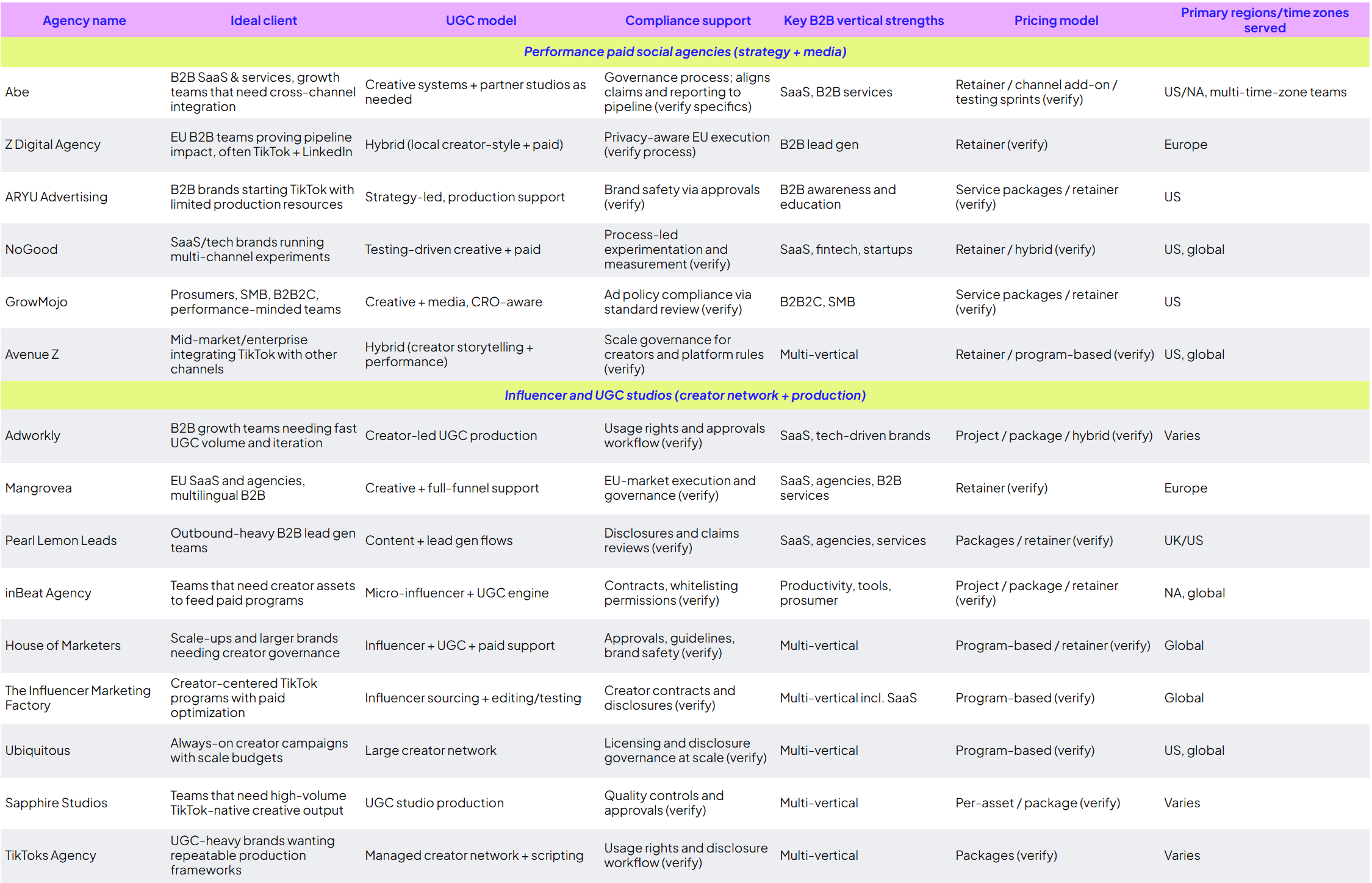
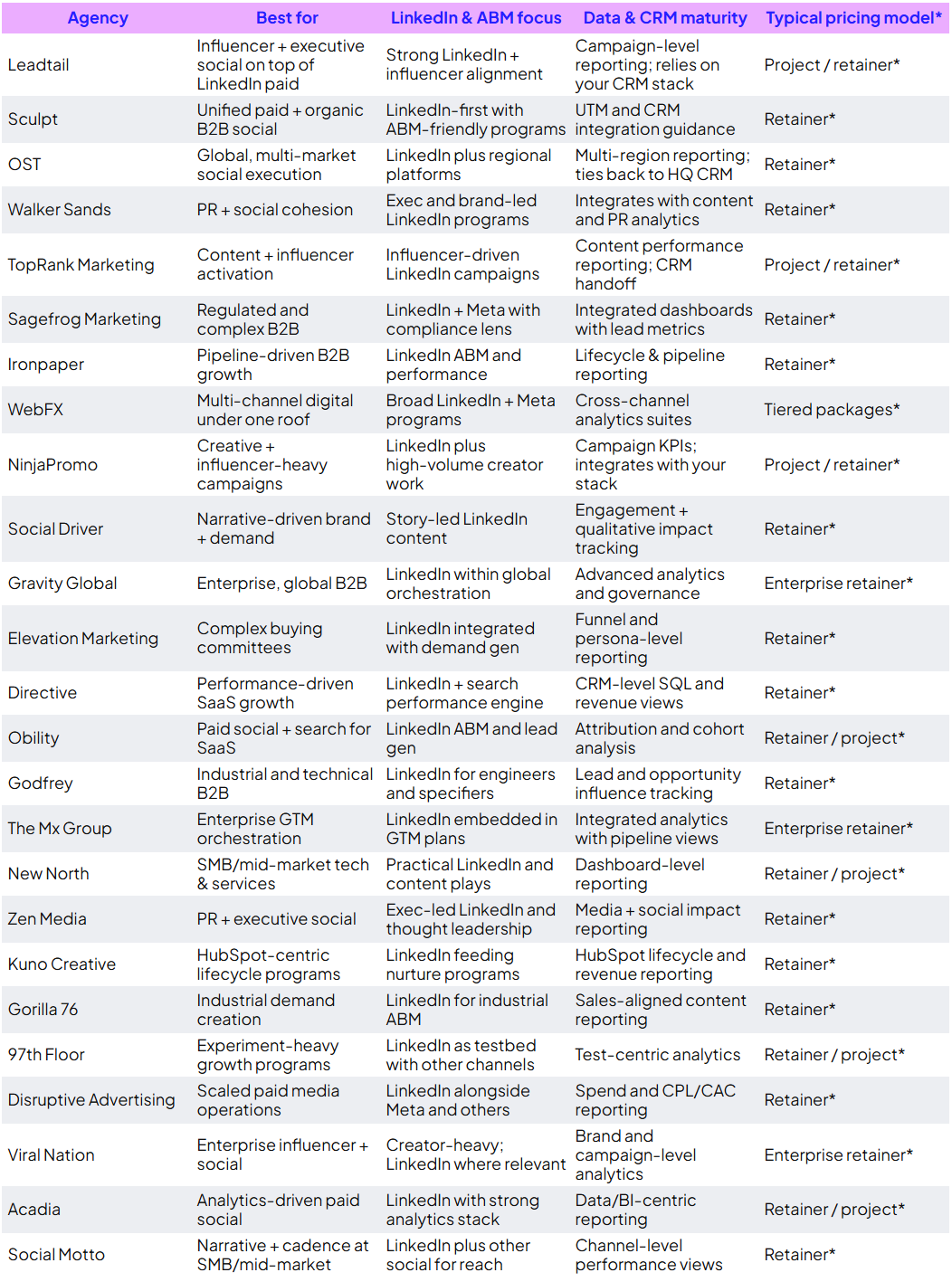
.png)
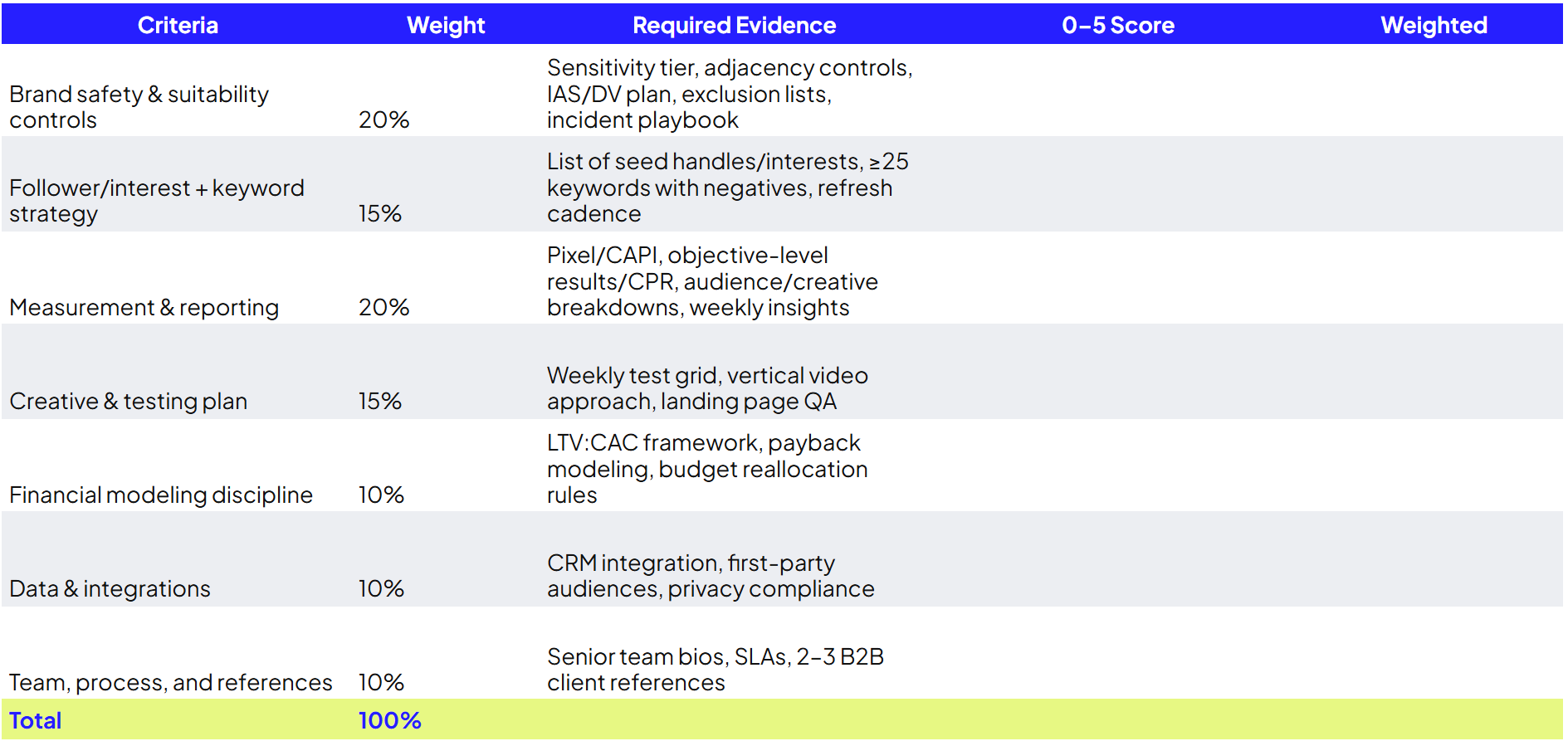
.png)
.png)